How to Choose an Engagement Ring
A ring that looks right in a photo has to feel right on the hand. Here’s how to narrow your options and know what you’re agreeing to before you pay.
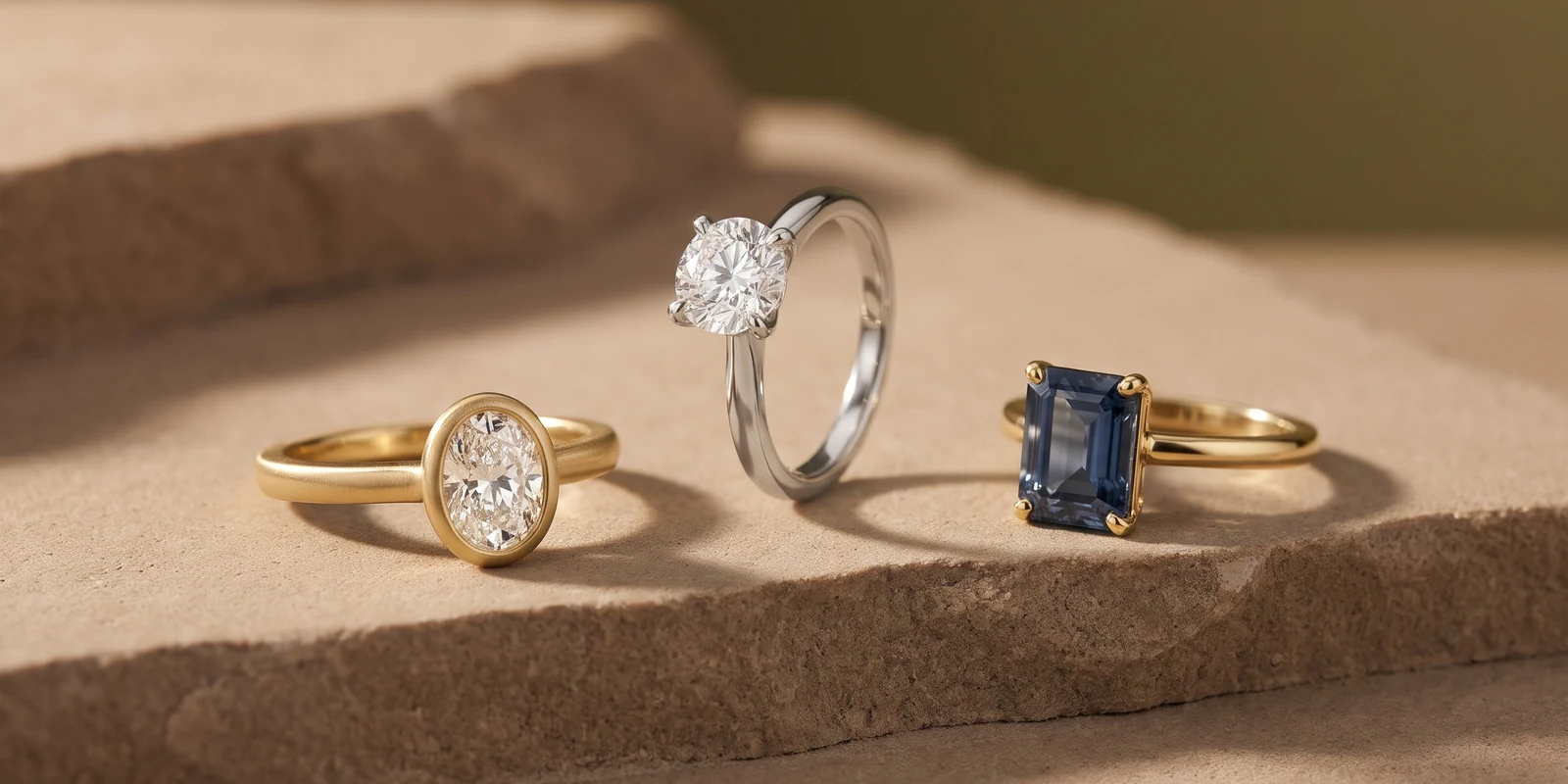
Start with the wearer and the total cost
Set a budget for the finished ring and find out what the wearer likes. Shortlist a stone and setting that suit their daily life, confirm the size and how a wedding band fits, then check the ring’s identity and the seller’s terms before paying.
Follow the six steps · Compare buying priorities · Use the buying checklist
Six decisions before you order
- Set the ceiling. Compare the total for the complete ring, including taxes, shipping and any service you already know you’ll need.
- Learn their preferences. Find out which metal colors, stone shapes and profiles they wear comfortably.
- Shortlist stones. Decide which origins and gem types you’d consider. Compare visible dimensions and appearance in similar light.
- Choose a setting and metal. Check stone height, edge protection, upkeep and access to service.
- Confirm fit and stacking. Verify the size in a similar band and check clearance with the wedding band.
- Verify the exact ring. Match the paperwork to the item and get the return, resizing and warranty terms in writing.
Set limits around what matters to them
Price the ring as a whole
A comfortable spending limit comes from your finances, independent of salary. Compare itemized quotes that include the center stone, setting, any custom work, taxes and shipping. Set aside room for a likely resize or a wedding band if those belong in the same budget. Ask whether the quote includes setting the stone and what deposit you could recover.
If you want to spend less, compare a modest change in center-stone size, a simpler band or a different stone type the wearer would enjoy. Give priority to the fit, a setting suited to their routine and written terms. A design that requires a custom wedding band or cannot accommodate a likely size change can cost more than it first appears.
Find two preferences you can act on
Look for repeat choices in the jewelry they wear and ask how they feel about stone height, metal color and a simple or detailed band. If it’s a surprise, one or two reference pictures can help a trusted friend or jeweler narrow the choices. Where size or style is uncertain, choose with them after the proposal or confirm exchange terms for an in-stock ring.
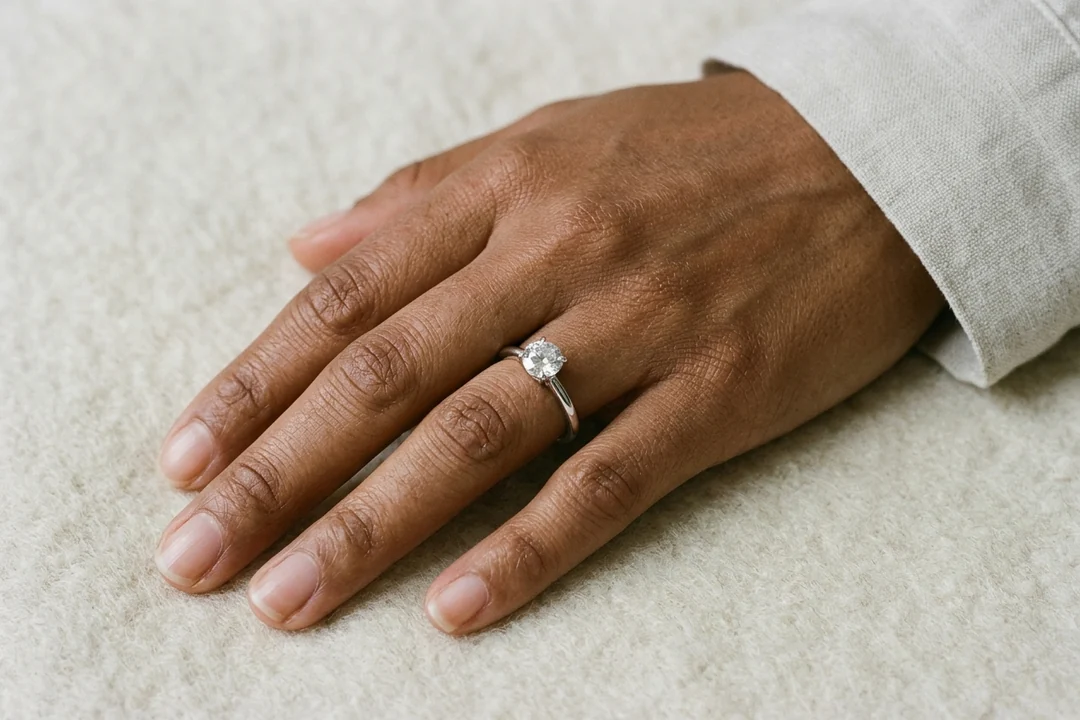
Shortlist a center stone you’d enjoy wearing
Natural or lab-grown diamond
Both are diamond. Choose whether mined origin matters to the wearer, then compare actual stones and ring quotes. Get the origin stated in writing.
Moissanite
A different gem with more pronounced rainbow flashes. View it alongside a diamond if you’re deciding how much color you want in the sparkle.
Sapphire
A relatively hard, tough choice if color is the priority. Ask about treatments and care for the specific stone, especially if it has been filled.
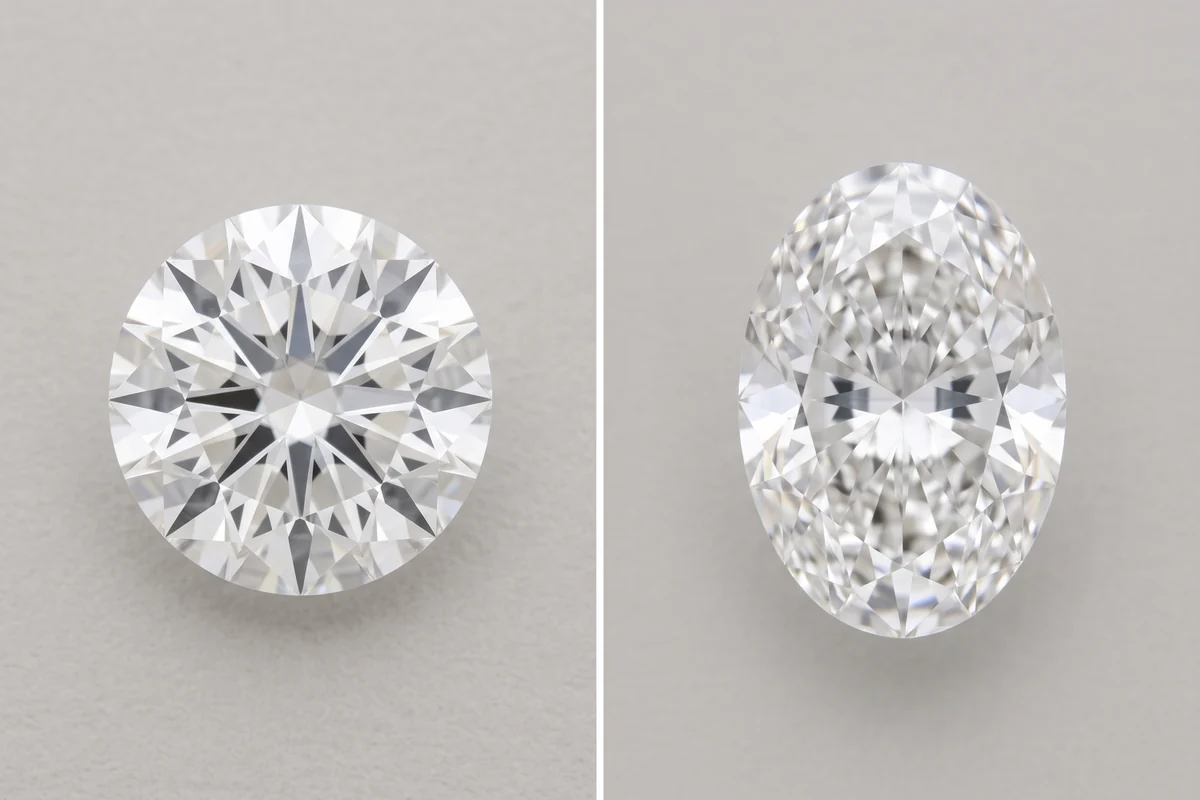
Compare the view from above
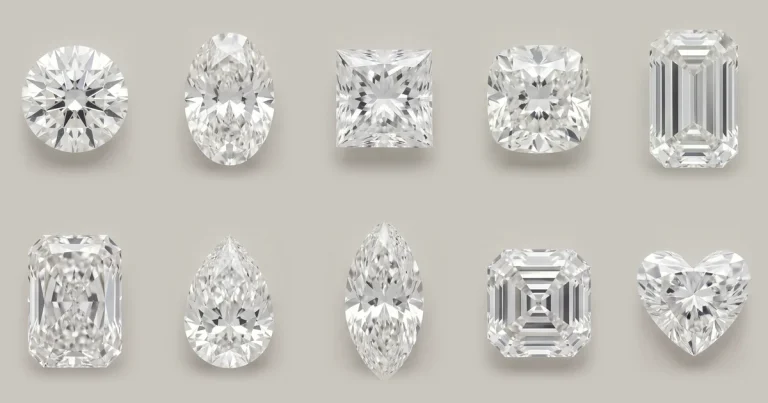
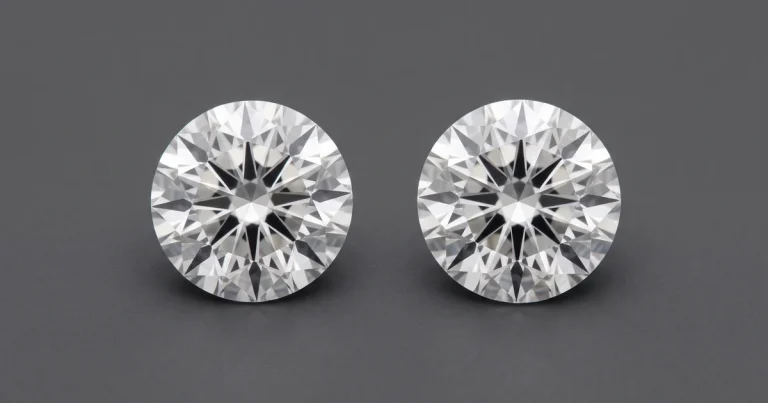
Carat measures weight. For how much room the stone takes up on the hand, compare diameter for round stones or length and width for other shapes. Check if a stone in a lower color or clarity grade still looks right at normal viewing distance. View both candidates in similar light.
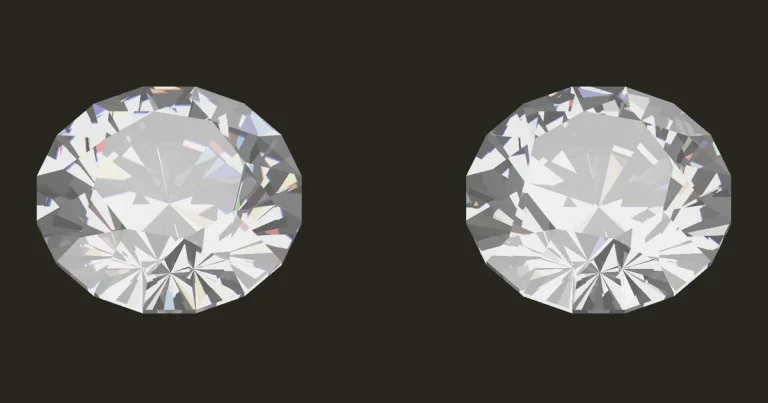
Cut quality affects the light you see. GIA issues an overall cut grade for standard round brilliants in its D-to-Z natural diamond grading system. For an oval or other fancy shape, ask for face-up and angled views so you can judge the light and dark areas yourself.
Choose the setting and metal for daily wear
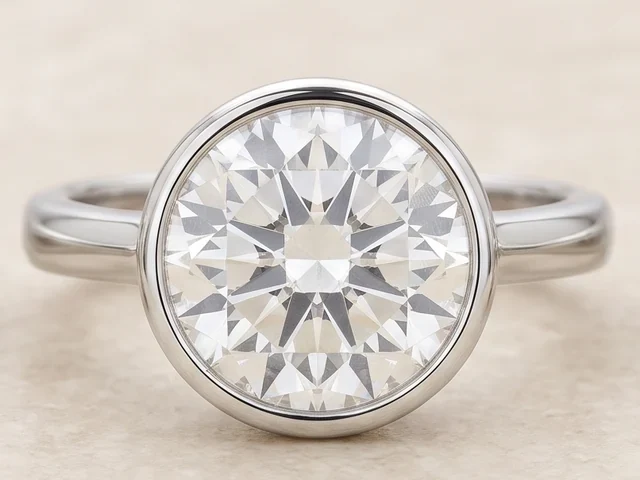
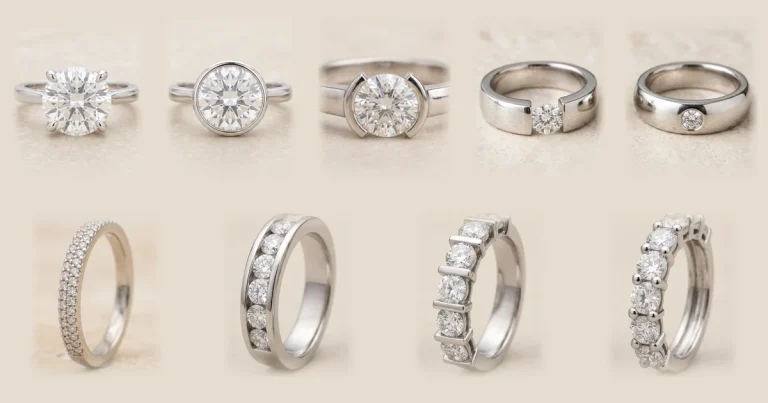
A smoother outer edge
Try a low bezel when a smoother outline matters. Check the actual rim and whether the design leaves room for a straight wedding band.
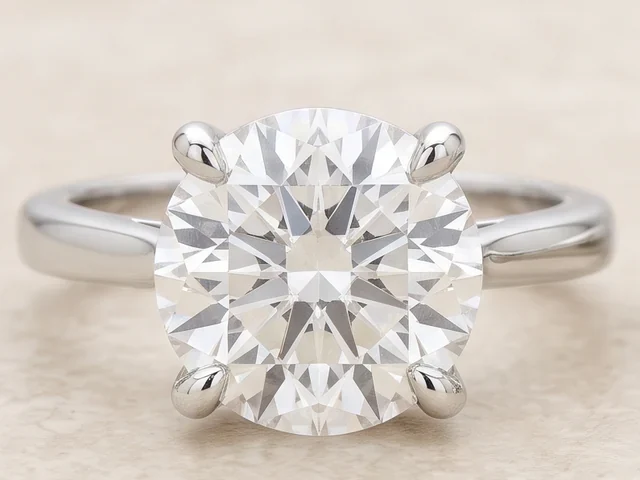
More of the stone in view
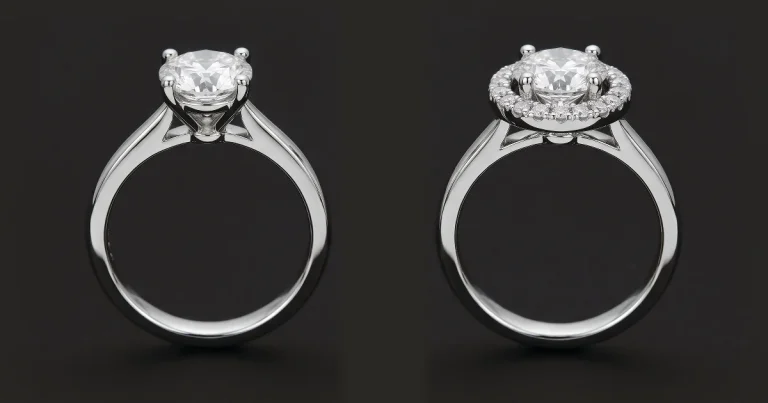
Try a prong solitaire for an open outline. Check the height, how the prong tips feel and how to arrange an inspection.
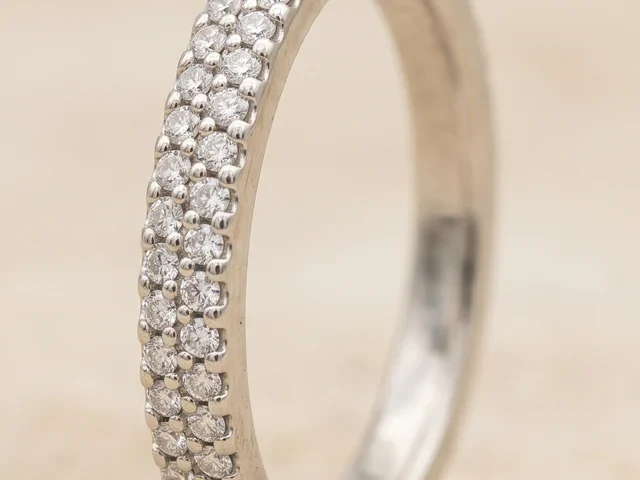
Detail along the band
Try pavé if the wearer likes small stones along the band. Ask how accent stones are serviced and where the ring can be resized.
These details show what to look for on the finished ring. If the chosen stone has a point or corner, ask the jeweler how that part is protected. If the wearer regularly grips equipment, handles heavy objects or works where jewelry is restricted, consider when they’ll take the ring off.
Ask which alloy and finish you’re buying
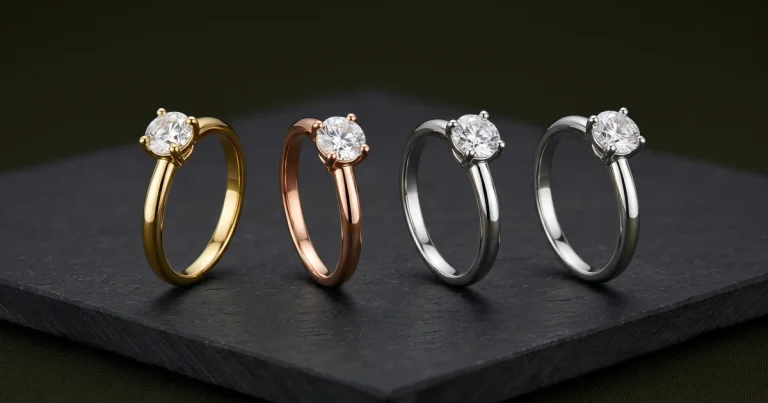
Start with a color the wearer likes. For white gold, ask whether the finish is rhodium-plated, what replating would cost and which alloy is used if metal sensitivity is a concern. Platinum doesn’t need rhodium for its white color, though it may develop a patina. For yellow or rose gold, compare the color and karat on real samples. Ask how the shop handles repairs on the exact alloy.
Compare platinum and white gold for maintenance, white and yellow gold for color and finish, or 14K and 18K gold for alloy trade-offs.
Check the fit and try on both rings
Size for the intended finger
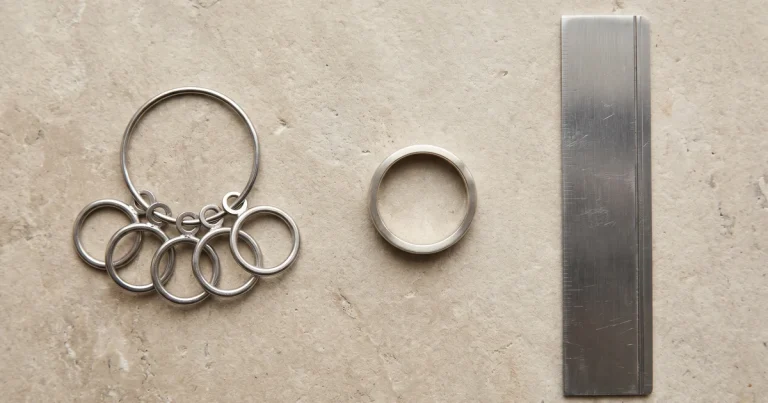
Use a jeweler’s gauge or the seller’s sizing kit for the intended finger and hand. Try a band with similar width and inside shape. An existing ring is a starting point if it fits that finger. If you’re converting a known size from another system, use the Ring Size Converter and confirm the result with the seller.
Get the allowed size range and any charges in writing. A continuous ring of accent stones, a tension setting or an engraving can restrict what’s possible. Ask about the exact model before ordering or personalizing it.
Look at clearance from the side
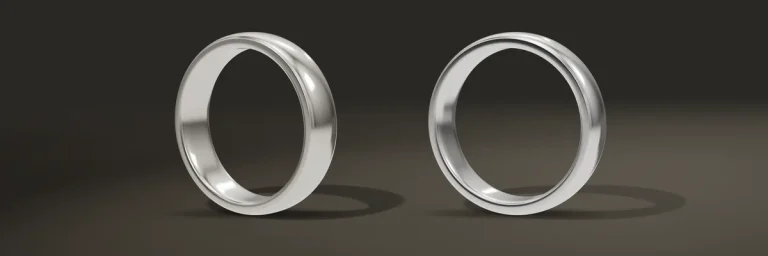
Bring the wedding band you plan to wear, or try the same width and profile. Check whether the engagement ring’s basket or bezel projects into the space for that band. Look at the gap and where the rings touch when the hand moves.
If a straight band rubs or leaves a gap you dislike, try a contoured band or another engagement ring profile. Some wearers prefer a visible gap or wear the rings separately. Confirm which arrangement you’ll be comfortable with before paying for a custom match.
Compare options by what matters most
| Priority | Compare first | Check before buying |
|---|---|---|
| Stay within a firm budget | A simpler band and two center-stone sizes | Total price, including any resizing and matching band |
| Reduce snag points | Low-profile designs with smooth edges | The ring’s height and how its edge feels on the hand |
| Make color the focus | Sapphires in two tones, beside your preferred metal color | Appearance in daylight, treatment disclosure and care |
| Use an existing wedding band | Settings with room beside the basket | Clearance and contact points with the exact band |
| Buy for a surprise | In-stock rings with written exchange or sizing terms | The deadline, allowed size range and engraving exclusions |
Verify the exact ring and the seller’s terms
Match the ring to the paperwork
Ask for the exact stone type, natural or lab-grown origin, relevant treatments, measurements, and the metal and fineness on the invoice. For a graded diamond, request the lab, report type, date and number. Check the number with the issuing lab and ask the seller how they matched that document to the stone. A report lookup verifies the record. Matching the actual stone is a separate check.
Lab documents differ by stone and service. Current GIA quality assessments for eligible colorless to near-colorless lab-grown diamonds use Premium or Standard. If a quote covers several stones, ask which measurements and weight apply to the center and which describe the ring in total.
Use the strengths of each way to shop
Online: Request photos or video of the exact stone or finished ring, ideally face-up and in profile. Confirm the delivery date, how insured shipping or returns work, and when the return period begins. Get the final specifications, quote and terms in writing.
In store: Try neighboring sizes and compare the shortlisted stones in the same lighting, including a less intensely lit view if available. Bring the wedding band or ask to try a comparable one. Request a written quote for the exact ring you handled or the one that will be made.
In either case, ask which inspections are required, what the warranty covers, whether another jeweler’s work affects coverage, and who handles loose stones, worn finishes or repairs.
Engagement ring buying questions
Should I choose the stone or the setting first?
Start with the setting if a low profile, a matching band or a family setting sets the limits. Start with the stone if its exact color or shape matters most. Have the jeweler confirm the dimensions and fit of the pair before ordering either piece.
Can I use a family stone in a new ring?
Have a jeweler inspect the stone for damage or treatments before removing it or setting it again. Ask whether a stock setting fits its dimensions or whether it needs custom work. Agree who takes responsibility for the stone while it’s at the shop.
What if I don’t know their ring size?
A ring they wear on the intended finger is a reasonable starting point. For a surprise, confirm that the chosen design can be exchanged or resized and ask how long you have. If neither is available and the size is uncertain, consider letting the wearer choose the final ring.
Does an engagement ring have to fit flush against the wedding band?
A gap can be a deliberate choice. What matters is that you like the way both rings sit and that they don’t press or rub in a way that concerns you. Try the exact pair or ask the jeweler to show the clearance in a direct side view.
Can I compare two rings by carat weight alone?
Use carat weight as one specification. Ask for the center stone’s dimensions and find out whether the listing gives center weight or total weight including accents. Then look at a photo or video at comparable scale.
What if a custom or engraved ring doesn’t suit me?
Check the specific policy before the work starts. Some shops exclude personalized rings from standard returns or exchanges, while a fitting alteration may still be possible. Ask which payments become nonrefundable and when, and keep the approval or order confirmation.
References
- GIA’s engagement ring buying guide and how GIA grades diamonds
- GIA on diamond origin and simulants and sapphire durability and care
- GIA laboratory-grown diamond services and Report Check
- GIA’s ring sizing benchmark and GIA’s white-metal guide
- FTC guidance on jewelry disclosures and FTC online shopping advice
- Blue Nile’s return and resizing policy, an example of design-specific terms