14K vs 18K Gold Durability, price and color
Compare 14K first for a daily ring on a budget. Consider 18K for more gold by weight or if you prefer the shade of an 18K sample. For white gold or known nickel sensitivity, check the alloy and finish first.
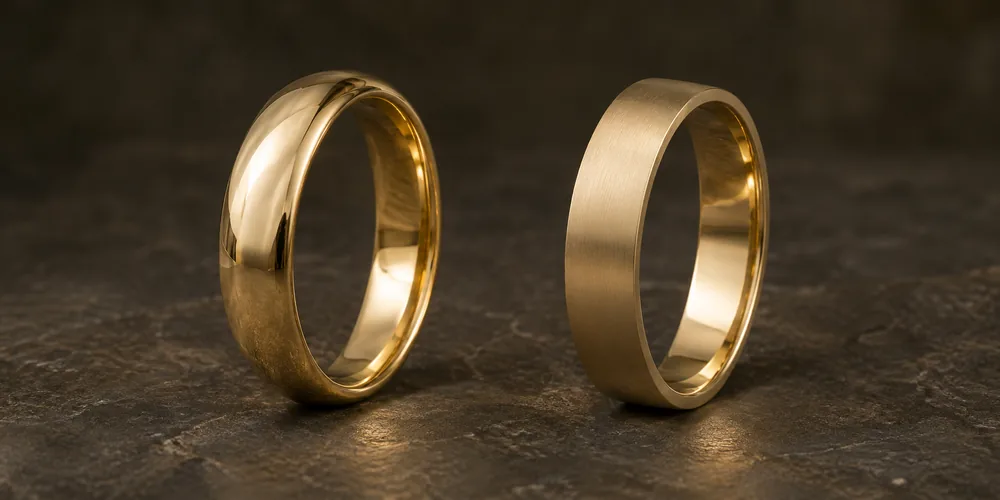
What’s the difference between 14K and 18K gold?
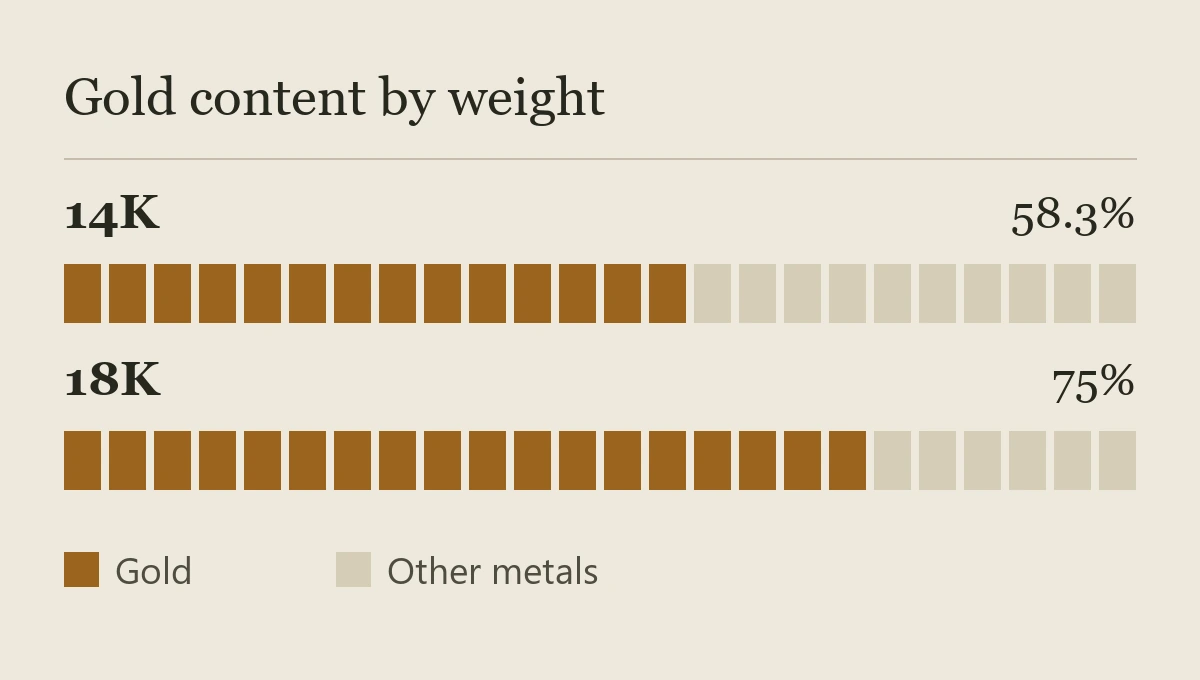
14K gold is nominally 58.3% gold by weight. 18K is 75%. The rest is a mix of other metals. That mix, how it was worked and the design of the piece all matter once you start wearing it. 1 2
| What matters | 14K gold | 18K gold |
|---|---|---|
| Gold content | 14 of 24 parts, about 58.3% by weight | 18 of 24 parts, or 75% by weight |
| Quality mark | 14K, 583 or 585 | 18K or 750 |
| Daily wear | A practical starting point for rings. Compare the actual alloy and construction. | Also suitable for daily wear in a well-built piece. Check the setting and band. |
| Yellow tone | Often a softer yellow. The recipe and finish affect the shade. | Often a richer yellow. Compare finished samples in the same light. |
| Price | Less fine gold at equal metal weight. | More fine gold at equal metal weight. Ask for a quote for the same design. |
| Nickel and upkeep | Check the alloy for nickel and ask if white gold is rhodium plated. | Ask the same questions. The karat stamp identifies gold content. |
What do the stamps tell you?
For the full purity scale, see gold karats explained.
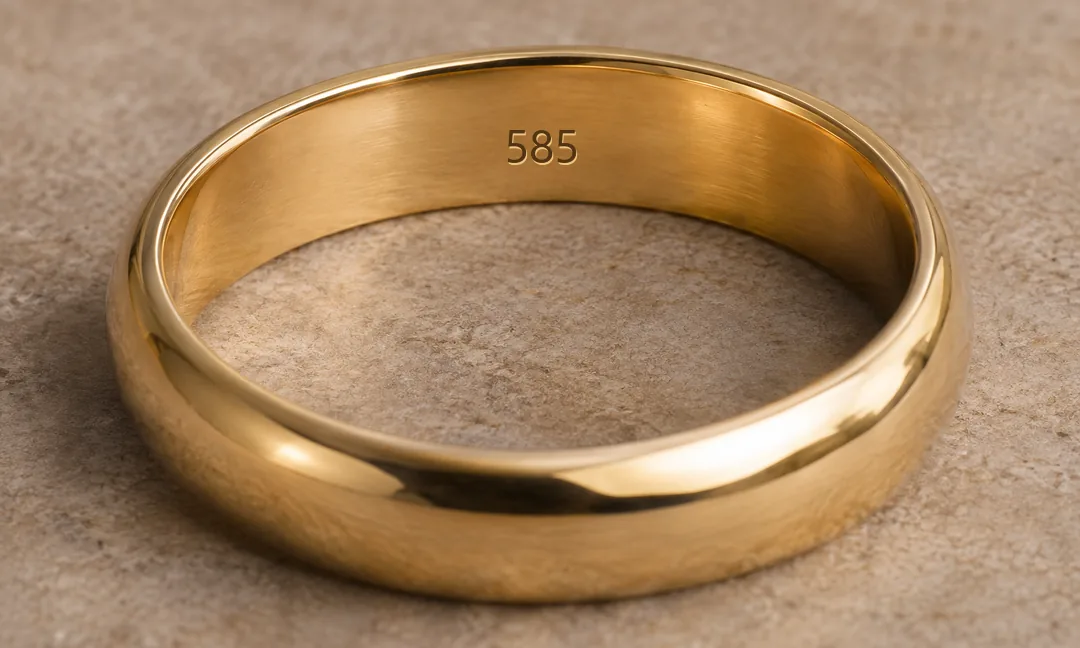
Divide the karat number by 24 to get the nominal share of gold by weight. A stamp in parts per thousand expresses fineness in a different way. 585 means 58.5%, a common fineness mark for 14K jewelry. 750 means 75%. These marks give you the gold content, while the maker’s alloy specification tells you which other metals are present. 1
Read the whole description when shopping. The FTC distinguishes an item made of a gold alloy from an item with a gold surface layer. A listing for “18K gold plated” describes the karat of the coating. Ask what the piece is made of underneath it. 3
Which holds up better to everyday wear?
If you’re choosing an engagement or wedding ring, look at how the whole ring is built. Then compare the alloys on offer.
Surface marks
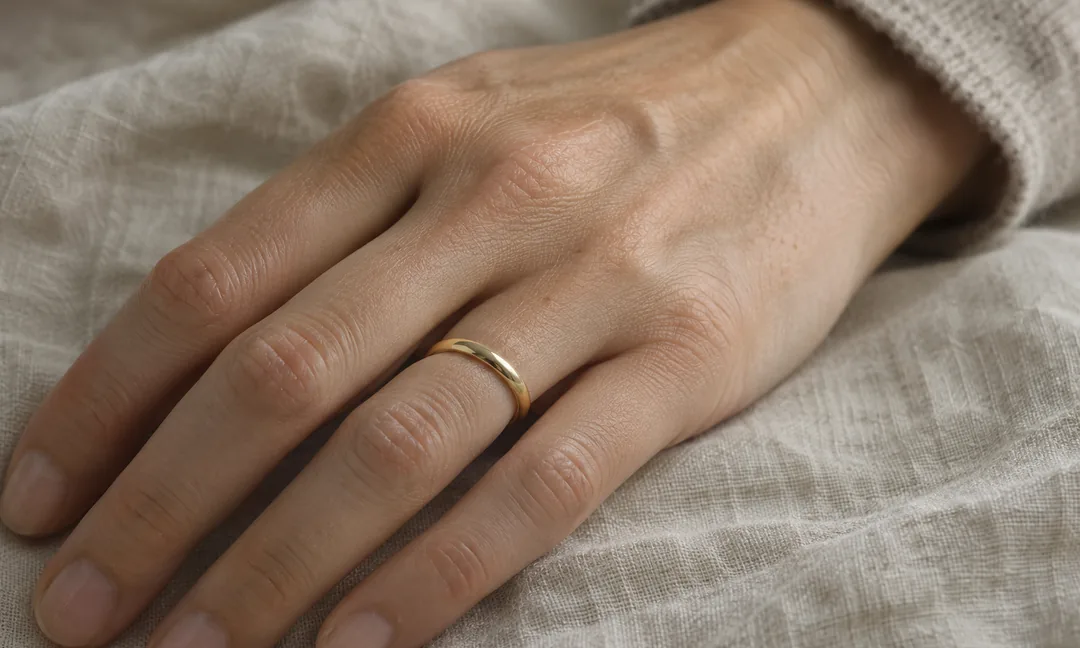
14K is often a good choice when you want a harder alloy, but recipes and processing vary. In metallurgist Christopher Corti’s data, one 18K yellow alloy went from 150 to 230 HV (Vickers hardness) after a hardening treatment. These readings describe one alloy in two states. Ask the jeweler about the specific metal in each ring. 2
Shape and setting
When comparing quotes, ask for the band width and thickness, how high the stone sits and how the setting can be serviced. Compare the same design in both karats before attributing differences in wear to the metal. 4
Rings and bracelets vs. pendants
Think about where the piece will catch or knock against a surface. If you’re buying a pendant primarily for its yellow tone, you may put color ahead of how it would perform as a daily band. For a bracelet, compare the clasp and links along with the karat.
Can you see the difference in color?
If you are choosing a white metal, compare platinum and white gold.
Yellow and rose gold
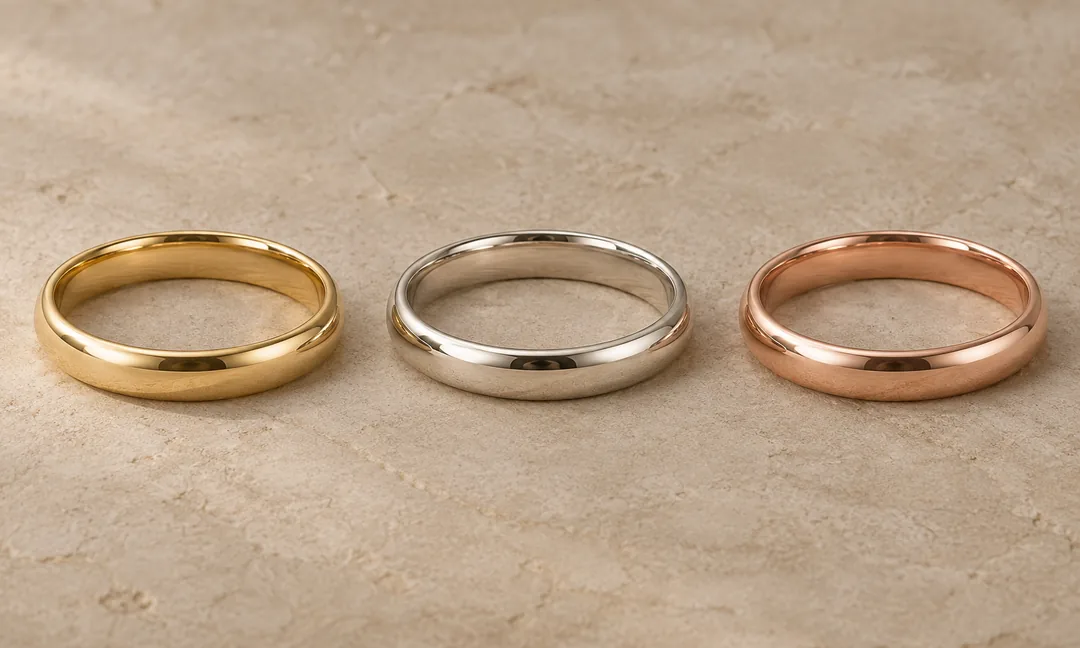
In comparable yellow alloys, 18K often looks more saturated. The balance of metals such as silver and copper can shift the shade, and copper contributes to the pink tone of rose gold. Look at actual samples with the same finish under the same lighting, especially if the new piece will sit next to a ring you own. 1
White gold
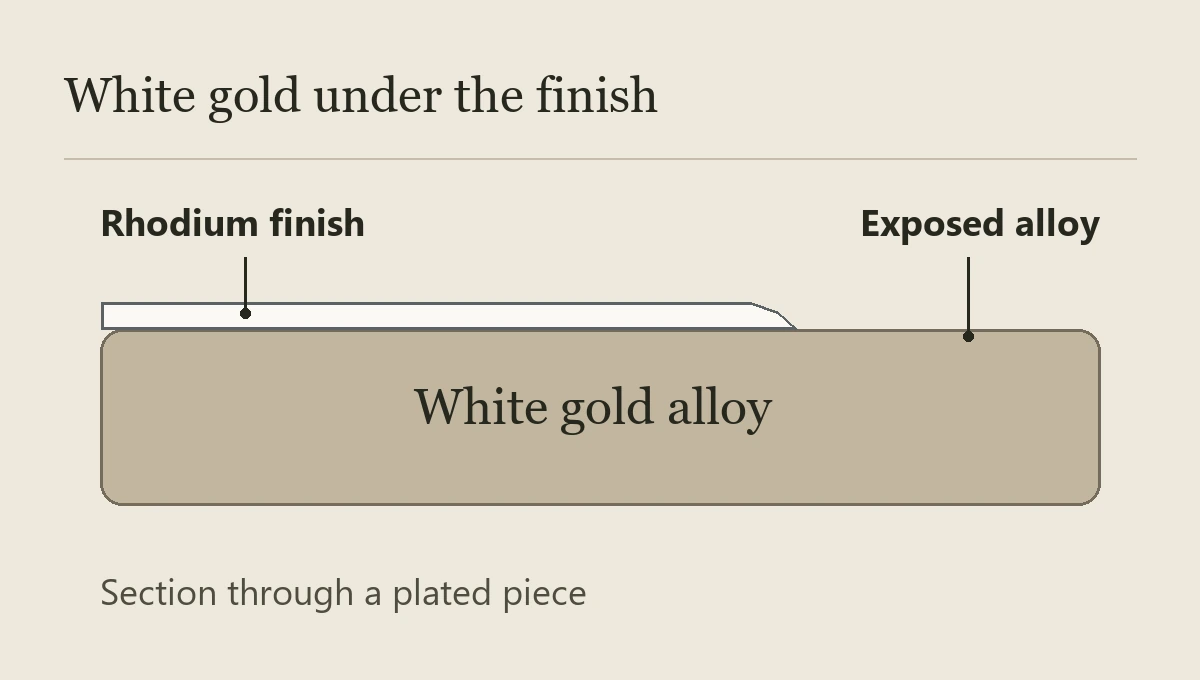
A rhodium finish can make 14K and 18K white gold look similar at first. Where the finish wears, the underlying alloy becomes visible. Ask whether the piece is plated, what the unplated metal looks like and whether the jeweler offers replating. 1
How much more gold are you paying for?
At the same weight, a piece in 18K contains more fine gold than one in 14K. The calculation shows how much fine gold each alloy contains. A finished piece is priced as a whole. 1
To compare two retail quotes, hold the design, size, stones, finish and service terms constant. Ask for the estimated metal weight in each version and whether the quote includes sizing, polishing or replating. Two rings with identical dimensions can have different weights because the alloys have different densities. Retail prices depend on the full quote. 5
| Alloy | Fine gold |
|---|---|
| 14K | About 5.83 g |
| 18K | 7.50 g |
What about sensitive skin and care?
Ask about the whole piece if you avoid nickel
The American Academy of Dermatology advises avoiding objects that contain nickel if you have a nickel allergy. Ask the seller to confirm the alloy and any metal that touches your skin, including posts, earring backs and clasps. White gold can be made with nickel or palladium. A rhodium finish leaves the underlying alloy composition unchanged. 6 1
Clean for the stones and finish you have
Remove gold jewelry before using chlorine bleach or going into a chlorinated pool. GIA notes that bleach can damage gold alloys. For many pieces, a soft cloth and mild soapy water work, but follow gemstone- and finish-specific instructions. Ask your jeweler before soaking a piece with unknown stones or treatments, or using an ultrasonic cleaner. 7
When to choose 14K or 18K
Considering a lower-karat alloy? Compare 10K and 14K gold.
A wedding band you wear daily
Compare 14K first
Get the quote for a band you like, then compare the same profile in 18K. Use the ring size converter if you’re comparing US sizing with a listing in millimeters.
A yellow-gold piece chosen for its color
Compare 18K first
Look at a finished sample and the price difference. If you prefer the shade of the 14K version in person, choose it.
A white-gold piece or a nickel concern
Check the alloy first
Get the metal and finish details for the full piece. Make your karat decision after you know what touches your skin and what maintenance the finish needs.
Sources
- GIA guide to white, yellow and rose gold
- Christopher Corti, Basic Metallurgy of the Precious Metals
- FTC guide to buying precious-metal jewelry
- GIA tips for choosing an engagement ring and setting
- Stuller alloy specifications and densities
- American Academy of Dermatology guidance on avoiding nickel exposure
- GIA tips on caring for jewelry