
Think your ruby is real? You might want to look again. With modern techniques, synthetic rubies can mimic natural ones so well that even experienced collectors are fooled.
But here’s the good news: the key to identifying a real ruby lies in the details—subtle clues in the color, inclusions, growth structures, and even the shape of the cut.
I’ve spent years studying and testing gemstones, and I’m here to share some simple, effective ways to spot the fakes.
This guide covers everything from flame fusion and Verneuil synthetics to common simulants and glass-filled stones. You’ll walk away with the knowledge to tell if your ruby is the real deal.
How to Identify Rubies

Identifying whether a ruby stone is real or fake takes more than a glance. While natural rubies and lab-grown rubies may look similar at first, there are reliable ways to identify a ruby using tools, observation, and expert techniques.
Below are practical methods to tell if your stone is a genuine ruby or a fake one—perfect whether you’re checking a ruby ring, loose stone, or other ruby jewelry.
Use a Light Test to Examine Growth Patterns
- A light test can reveal internal growth structures that differ between real and fake rubies.
- Natural rubies typically show angular, hexagonal zoning or uneven color distribution.
- Synthetic stones like Verneuil or flame fusion rubies display curved growth lines—a clear giveaway.
🔍 Expert Tip: Place the ruby in camellia oil and use transmitted light from below. Curved bands? It’s likely a lab-grown ruby.
Inspect Inclusions with Magnification
- Inclusions found in real rubies are irregular: crystals, needles, gas cavities, or fingerprints.
- In contrast, fake stones like glass or synthetic rubies often show bubbles or unnaturally clean structures.
- Natural inclusions found in real stones are a strong indicator of authenticity.
🔍 Expert Tip: Use a 10x loupe. If you spot bubbles or swirls, it’s likely an imitation ruby, not an original ruby stone.
Try a UV Light Test
- A quick UV light test can help distinguish real and fake rubies.
- Natural rubies often fluoresce a pink to red glow under UV, especially high-quality stones.
- However, synthetic rubies can also fluoresce due to similar physical properties as natural rubies.
- Most fake stones like tourmaline or glass won’t glow at all.
🔍 Expert Tip: UV is a good filter, not a final answer. Natural rubies may not fluoresce if they contain iron.
Observe Color Zoning and Hue
- Natural rubies typically show uneven coloring with zones of darker or lighter red.
- Synthetic rubies usually have a perfectly even, intense red hue.
- If the color looks too clean or artificial, it’s probably not a real one.
🔍 Expert Tip: Tilt the stone under light and look for visible zoning or inconsistent saturation. This helps determine if a ruby is natural.
Check the Cut and Symmetry
- Original rubies are often cut irregularly to preserve carat weight.
- Expect asymmetry, shallow pavilions, or overly large tables.
- Synthetic stones are easier to cut and often have near-perfect commercial symmetry.
🔍 Expert Tip: If the ruby looks flawless in shape and clarity, differentiate between real and fake by checking the proportion. Perfect usually means fake.
Drag the Ruby Across a Porcelain Plate
- A simple streak test can help check if a ruby is real.
- Drag the ruby across a porcelain plate (unglazed).
- A real ruby stone will not leave a red streak.
- If it does, it’s a piece of genuine red glass or a colored fake.
🔍 Expert Tip: Also try to scratch the ruby on a material of known hardness. A ruby typically ranks 9 on Mohs scale—only diamond can scratch it.
Clean the Ruby and Inspect Surface Features
- Clean your ruby jewelry using warm water and a soft brush.
- After cleaning, examine the surface of the ruby under strong light.
- Glass-filled rubies may show flashes, surface cavities, or bubbles.
- These features can help you identify an original ruby vs a treated or fake one.
🔍 Expert Tip: Use a microscope if possible. Look for unusual luster, swirls, or filled cracks.
Authenticate Your Ruby at a Gem Lab
- The most reliable way to authenticate your ruby is through professional analysis.
- A gem lab can confirm whether it’s natural or synthetic, and detect treatments.
- Certificates are especially important when buying high-quality rubies or selling authentic rubies.
🔍 Expert Tip: Always request a lab report for any stone of significant value. It ensures the authenticity of your ruby and protects your investment.
Is My Ruby Real?

It’s easy to wonder whether that shiny red ruby gemstone in your ring or pendant is actually real. Some look perfect—but perfection can be a red flag.
If you’re unsure about the authenticity of a ruby, you’re not alone. Luckily, there are easy ways to check if your ruby is genuine or just a piece of glass made to fool the eye.
What Color Is a Real Ruby?
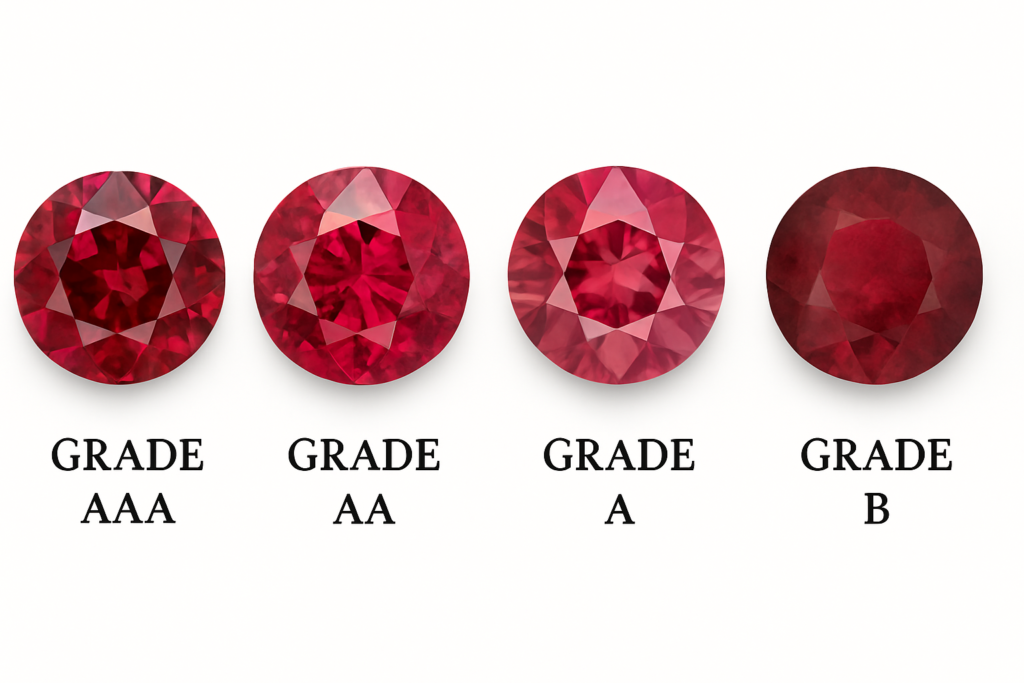
A real ruby has a deep, rich red. Sometimes it leans a little toward pink or purple, but never orange or dull. If the stone looks like it’s glowing from within, that’s a good start. But color alone doesn’t prove a ruby is genuine.
Compare this:
| Color Trait | Real Ruby | Fake Ruby / Glass |
|---|---|---|
| Tone | Deep, vibrant red | Bright or overly saturated |
| Hue | Slight purple/pink undertones | Orange or brownish |
| Consistency | Uneven, natural zoning | Flat, uniform color |
💡 Tip: If the color is too perfect, it’s likely not a real stone. High-quality natural rubies can be vibrant, but they also show variation.
What Does a Natural Ruby Look Like?
Natural rubies show signs of their formation deep inside the Earth. These signs include tiny inclusions—small imperfections like crystals, thin needles, or fingerprints. They won’t always be visible to the naked eye, but even a basic magnifier can help you identify a genuine ruby.
Use these ways to tell:
- Look for internal lines or spots (found in natural rubies)
- Check for bubbles (a red flag—it’s glass!)
- Examine the cut: natural stones are rarely perfect
- Tap it lightly; glass feels warmer and softer

Leave a Reply