How to Clean Gold Jewelry Check the piece before you wash it
For plain, uncoated gold in good condition, use lukewarm water, mild dish soap, and a soft cloth. Check the finish, stones, and setting first.
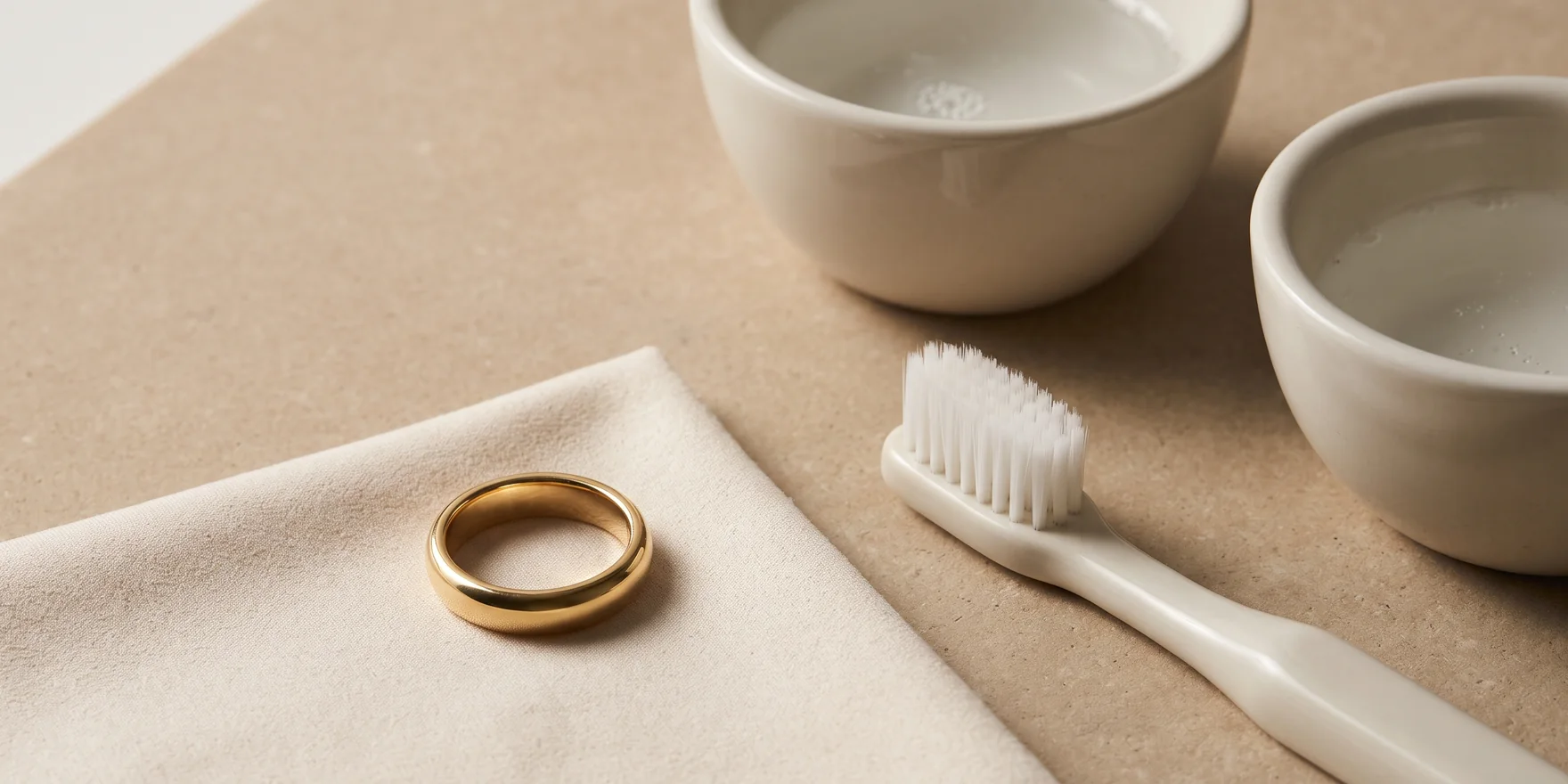
Check your gold jewelry before getting it wet
Look for three things under good light. What is the metal or coating? Is anything set or glued into it? Are the clasp, seams, and settings intact? If you can’t answer one of these, start with the maker’s care instructions or ask a jeweler.
Choose a method for the whole piece
10K, 14K, 18K, and 24K describe gold content. A karat stamp leaves open whether the item has a coating, hollow links, glue, a repair, or a delicate stone. Check the receipt, maker’s description, and condition as well as the marks on the jewelry.
| What you have | Start here | Check first |
|---|---|---|
| Plain, sound gold alloy | Use the illustrated wash after checking the maker’s instructions. | Unknown finish, cracked link, or a seam that could trap water. |
| 24K / near-pure gold | Start with a soft cloth and very light pressure. | Details or finish you cannot identify. Ask before using a brush. |
| Yellow, rose, or white gold | Check the finish first. A plain, sound, uncoated piece follows the same route. | Rhodium coating on white gold or a deliberately matte finish. |
| Gold-filled, plated, or vermeil | Follow the maker’s instructions. Start with a clean, plain soft cloth. | Worn plating, exposed base metal, or unknown coating. Check before soaking. |
| Gold with a stone or inlay | Confirm the gem, treatment, setting condition, and the maker’s care method. | Pearls, porous gems, filled stones, glued parts, or unknown materials. |
| Loose, repaired, vintage, or damaged | Ask a jeweler to check the piece before wet cleaning if condition or repair is unclear. | A raised prong, moving stone, open seam, or weak clasp. |
Gold content, color, and finish
Yellow, rose, and white gold can all be alloys. A solid-gold part is made of gold or gold alloy throughout its metal. The part can still have a hollow shape. Near-pure gold scratches more readily than many gold alloys, so use very light pressure. White gold may have a rhodium finish, and cleaning once the coating has worn can’t restore it. The gold karats guide explains what the number tells you.
Gold-filled jewelry has a bonded layer of gold. Gold-plated jewelry has a surface coating. Start gently with each and check its own care directions. A polishing product or firm scrubbing can change the finish. Compare how the two surfaces are made.
Stones and settings follow their own rules
Check the maker’s care guidance for each stone before washing a gem-set piece. Even a diamond deserves a check for a loose setting, a filling, or an adjacent delicate stone. Pearls, porous or treated stones, and glued components may need different handling. If you don’t know the stone or treatment, ask before soaking or brushing.
Old repairs, damaged prongs, a cracked seam, or a clasp that doesn’t close are reasons to pause. Have a jeweler assess the piece before wet cleaning. You can check what you see without pressing on a stone or trying to move it.
What you’ll need for the gentle wash
Set up on a steady, well-lit surface. The following supplies are for plain, uncoated gold jewelry in good condition.
- Two small, stable bowls and a soft surface to work over.
- Lukewarm water for washing and fresh lukewarm water for rinsing.
- A small amount of mild liquid dishwashing soap. Choose a simple formula without bleach or abrasive particles.
- Clean, soft, lint-free cloths for wiping and drying.
- A clean, very soft brush, if you need to reach a groove on a suitable piece.
If the maker recommends a specialized cleaner, check that the label covers the exact metal, finish, and any stones or other materials on the piece. Follow that cleaner’s instructions on dilution, contact time, and rinsing. A product labeled “for gold” may still exclude some finishes or stones.
How to clean gold jewelry in six steps
Use this sequence for an identified, uncoated gold piece in sound condition. Tiffany’s jewelry care guide describes mild soap, a gentle rinse, and a soft cloth for suitable pieces.
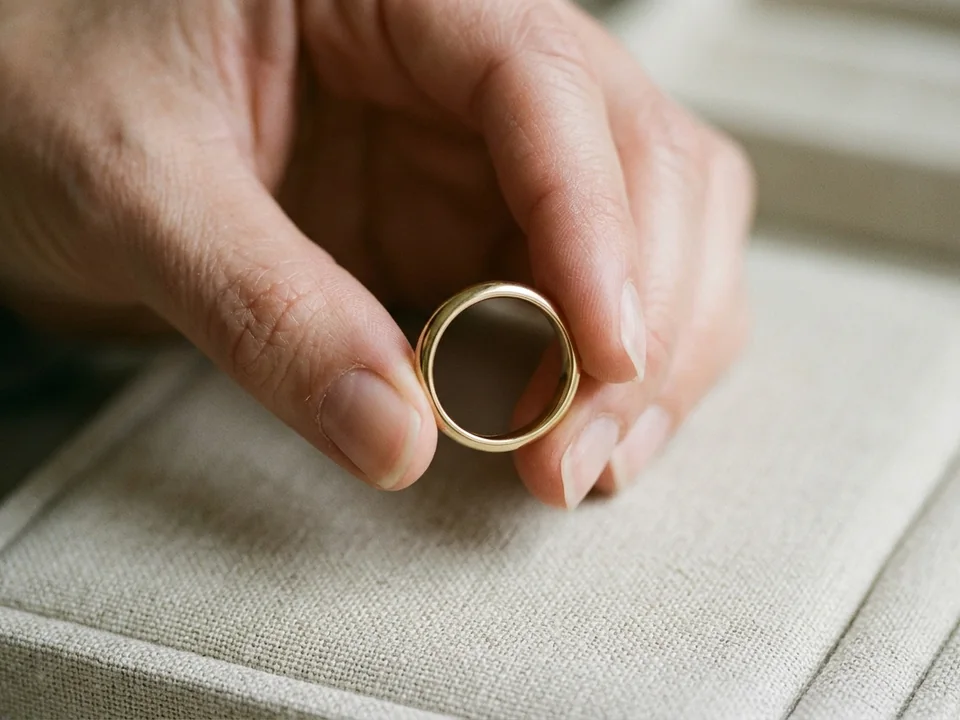
Turn the piece over to check the surfaces you don’t see when wearing it. Check the piece in good lightLook at seams, clasps, prongs, and the finish. Leave loose, cracked, or repaired pieces for a jeweler to assess. Choose the appropriate route above before getting the piece wet.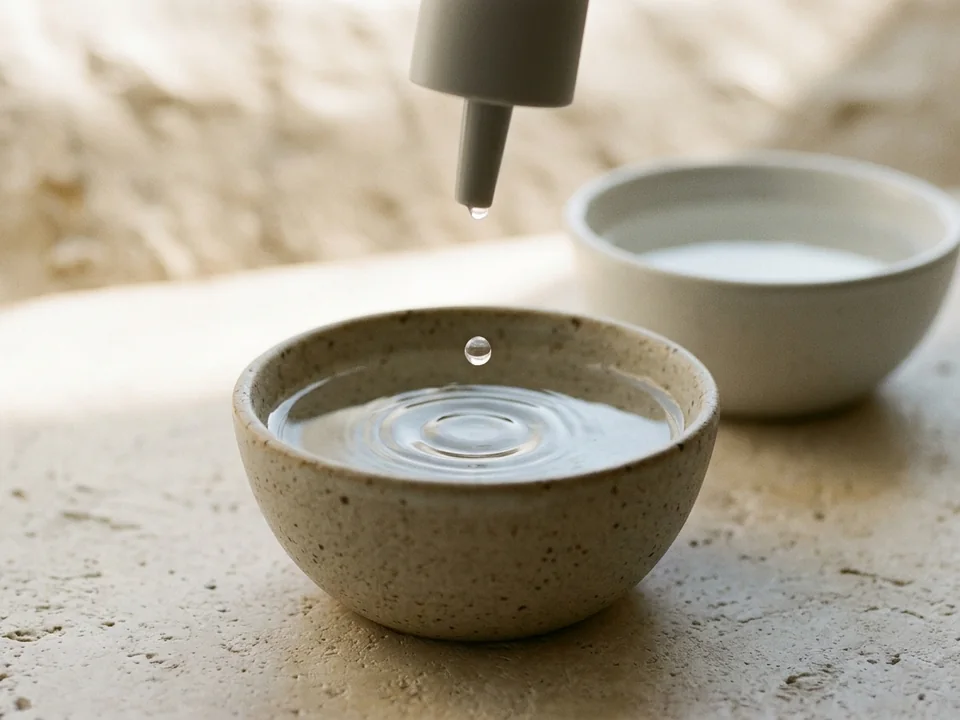
Set aside plain rinse water before adding soap to the wash bowl. Prepare the wash and rinsePut lukewarm water in two stable bowls. Stir a small amount of mild dishwashing liquid into one bowl. Keep the other bowl plain. Work away from an open drain.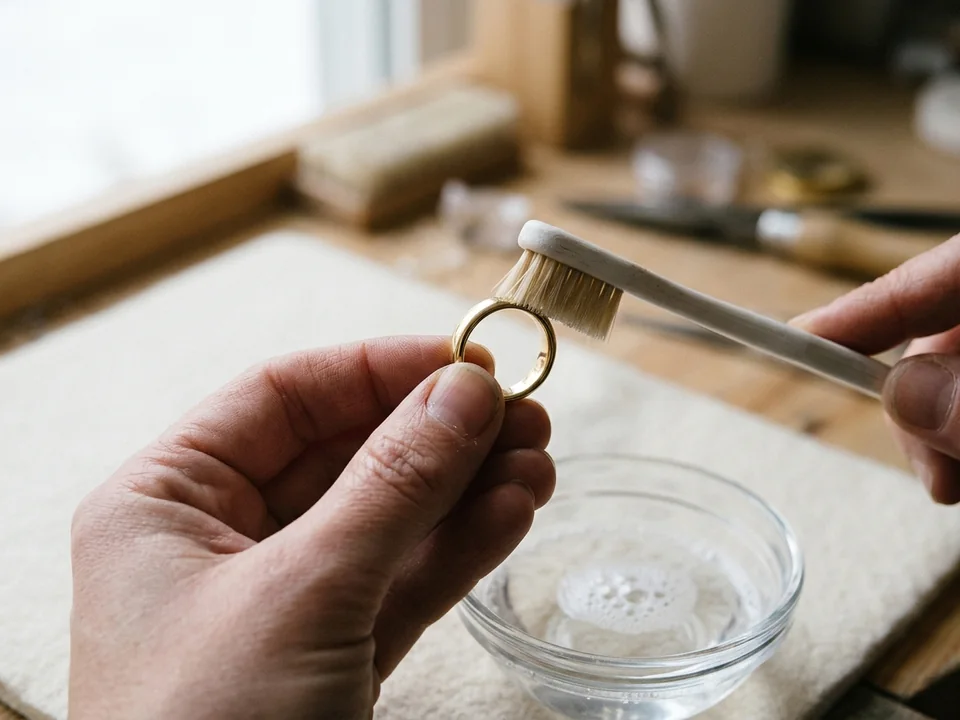
Let the tips of the soft bristles do the work. Keep pressure light. Wash with light pressureWork on one piece at a time. Wet a soft cloth in the solution and wipe the gold. If a sound, plain piece needs it, use a wet, very soft brush on accessible areas.Check the surface again before moving to the rinse bowl. Lift the jewelry and look for residueLift the piece above the wash bowl and check grooves and inside surfaces. Wipe away loosened film with a clean, soft cloth. If buildup stays caught, leave it for a jeweler to assess.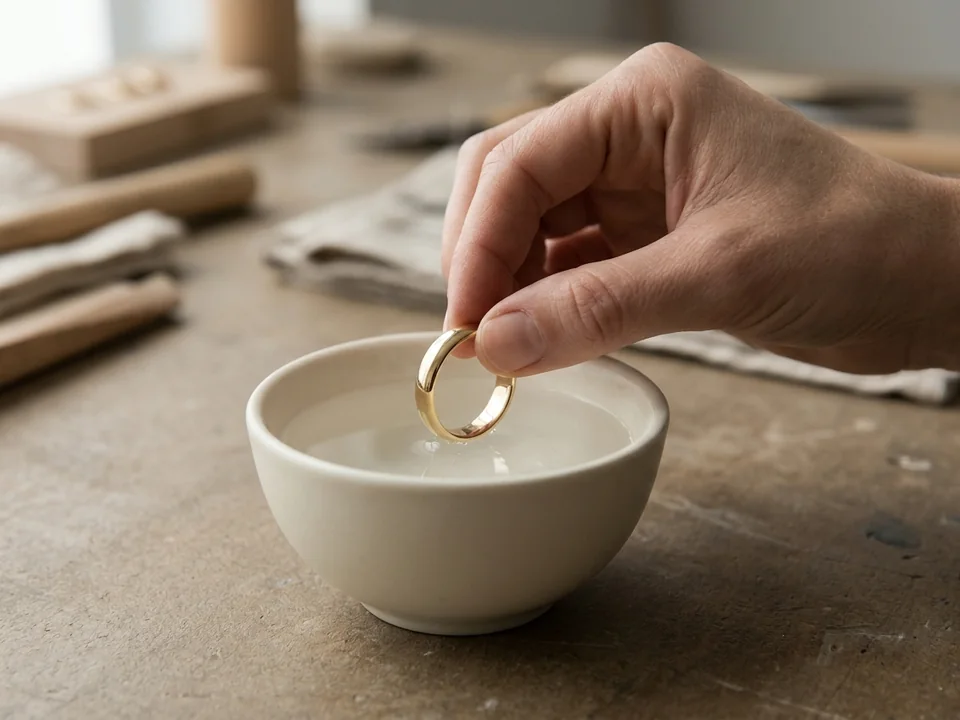
A separate clean bowl lets you rinse without working over a drain. Rinse in the bowl of plain waterHold the jewelry securely and rinse off the soap in the clean bowl. Replace the rinse water if it becomes sudsy. Set the piece down on a clean cloth.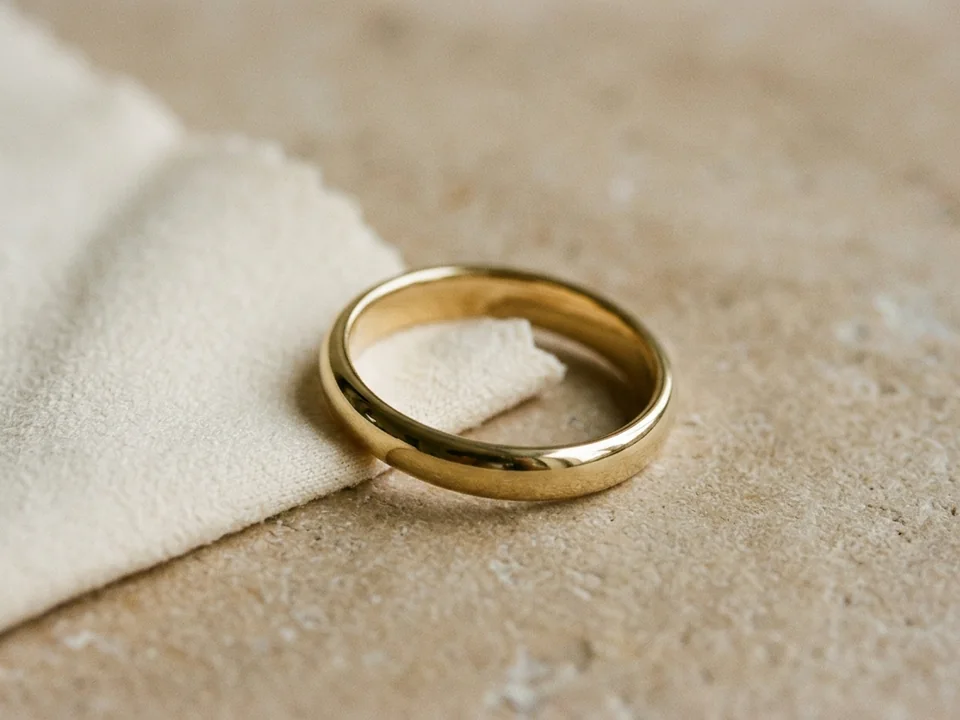
Blot away moisture with a soft cloth, then let the piece finish drying. Blot dry and inspect againBlot with a clean, lint-free cloth. Let any remaining moisture dry at room temperature before storage. Check for a gap, loose clasp, or dull patch that stayed after cleaning.
When to stop and ask a jeweler
A gentle wash can remove skin oil and residue. If the change stays after cleaning, it may be wear, a coating issue, or a problem with the setting.
- A stone shifts or a prong catches
- Set the piece aside and ask for an inspection before cleaning or wearing it again.
- A warm patch shows through white gold
- Ask whether the rhodium finish has worn. A jeweler can tell you whether the surface should be left alone or refinished.
- You can’t reach trapped buildup
- Ask about cleaning under the setting. A sharp tool can scratch metal or disturb a stone.
- The piece is an heirloom or has an undocumented repair
- Get the metal, finish, and fastenings checked. Tell the jeweler about any repair you know of.
Keep the finish in good condition between washes
Remove jewelry before using bleach or household cleaners and before swimming in a chlorinated pool. Leave toothpaste, baking soda pastes, and scouring products out of the routine. Danbury Mint’s care instructions explain why to avoid harsh chemicals and store pieces separately.
Leave steam and ultrasonic cleaning to a jeweler when you’re unsure of the gem, treatment, or setting. Heat and vibration can affect some stones and filled fractures, and loose settings need inspection first.
Wipe off visible residue with a clean, plain cloth. Give each dry piece a separate spot so it stays clear of harder stones and other metal edges.
Questions about cleaning gold jewelry
How often should I clean gold jewelry?
Let visible buildup and the maker’s guidance determine when to wash. For a piece you wear often, a gentle wipe can remove surface residue between washes. Ask about inspection intervals for rings or other pieces with settings, hinges, or clasps.
Can I use dish soap on a plain gold chain?
A mild solution can work on a sound, uncoated chain made of gold alloy. Support the links on a soft surface as you work and wipe gently. If the links are hollow, there’s a weak spot, or you can’t tell what the chain is made of, confirm the method first.
Why does my white gold still look yellow after cleaning?
On a rhodium-plated piece, a warmer patch can be the underlying white gold showing through. Soap removes surface film. A jeweler can identify wear and tell you whether refinishing or replating will change the appearance.
Is a polishing cloth the same as a lint-free cloth?
A plain cloth lifts moisture and surface film. Some polishing cloths are treated to remove tarnish or polish metal. Check the label before using one, especially on a plated, matte, or textured surface.
What if makeup stays trapped inside a ring or pendant?
Stop scrubbing and leave the deposit in place if you can’t reach it with a cloth or very soft brush on a suitable piece. A jeweler can check access behind the setting and select a cleaning method for the construction.
Will washing remove fine scratches from gold?
Washing can remove a film that makes gold look dull. Scratches, dents, and worn coatings need a different assessment. Ask before having an heirloom or textured piece polished, since refinishing can change details you want to keep.