- Buying & Guides
- Diamond Shapes and Cuts
Diamond Shapes and Cuts: Visual Buying Guide
Diamond shapes change the silhouette, the way flashes are arranged and how large a stone looks on the hand. Cut quality depends on the proportions, finish and light behavior of the individual diamond.

Diamond shapes at a glance
Ten common diamond shapes are round brilliant, oval, princess, cushion, emerald, radiant, pear, marquise, Asscher and heart. For a softer outline, look at round, oval and cushion. For a straight-edged outline, compare princess, emerald, radiant and Asscher. Pear, marquise and heart get much of their character from their points.
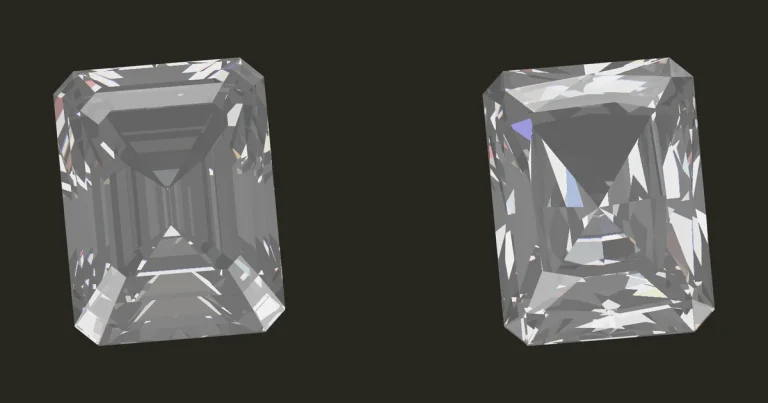
In a name like “emerald cut,” cut describes a design that combines the shape (the face-up outline) with a faceting style (the arrangement of the flat surfaces). Cut quality describes how well the cutter executed that design. Two stones with the same outline can have very different patterns of light.
See the shape chart · Compare visible size · Shortlist a shape
Diamond shape chart
Start with the outside edge, then look at the pattern inside it. These face-up illustrations share a studio setup. The apparent size here is illustrative.
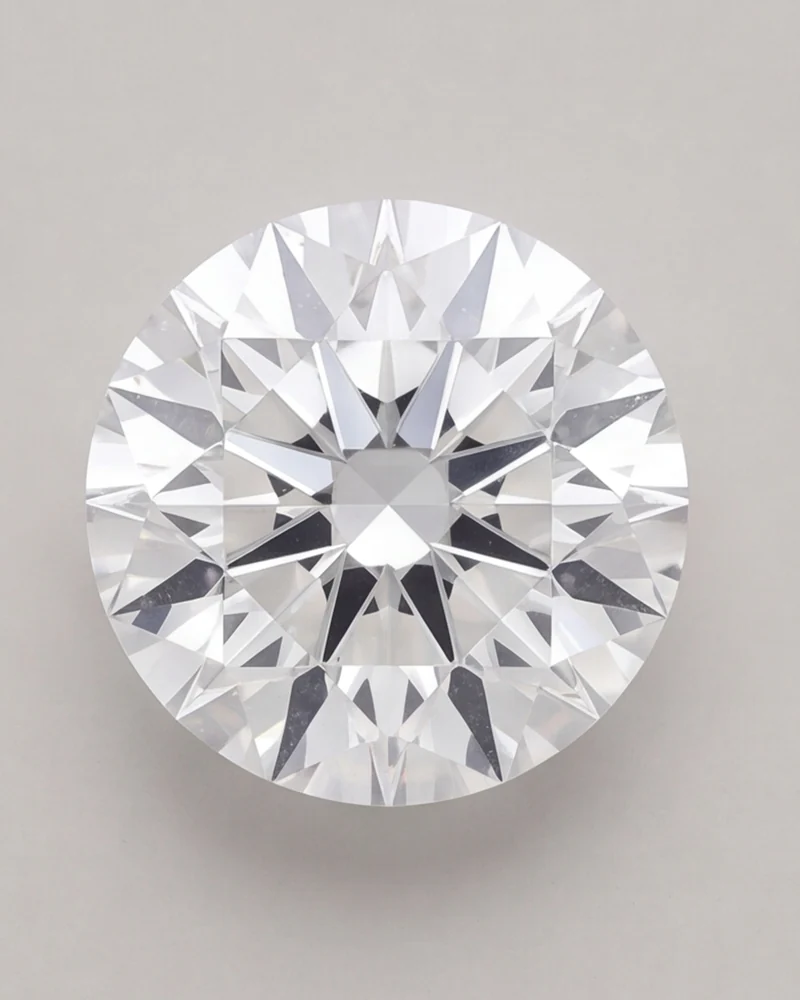
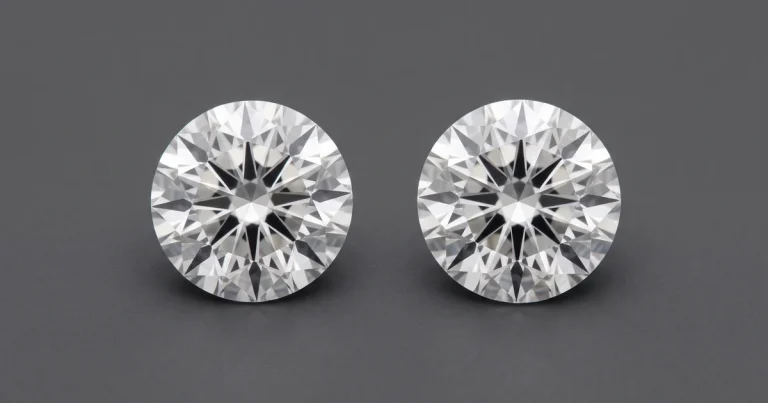
01Round brilliant diamond
A circular outline with a radial pattern of kite- and triangle-shaped facets.
- Look
- A well-cut round can look bright and lively from edge to center. Its familiar outline fits many settings, and a standard D-to-Z round brilliant has a GIA overall cut grade.
- Inspect
- Compare two stones of similar diameter in diffuse light, then rock them. Check the grade alongside the pattern you see.
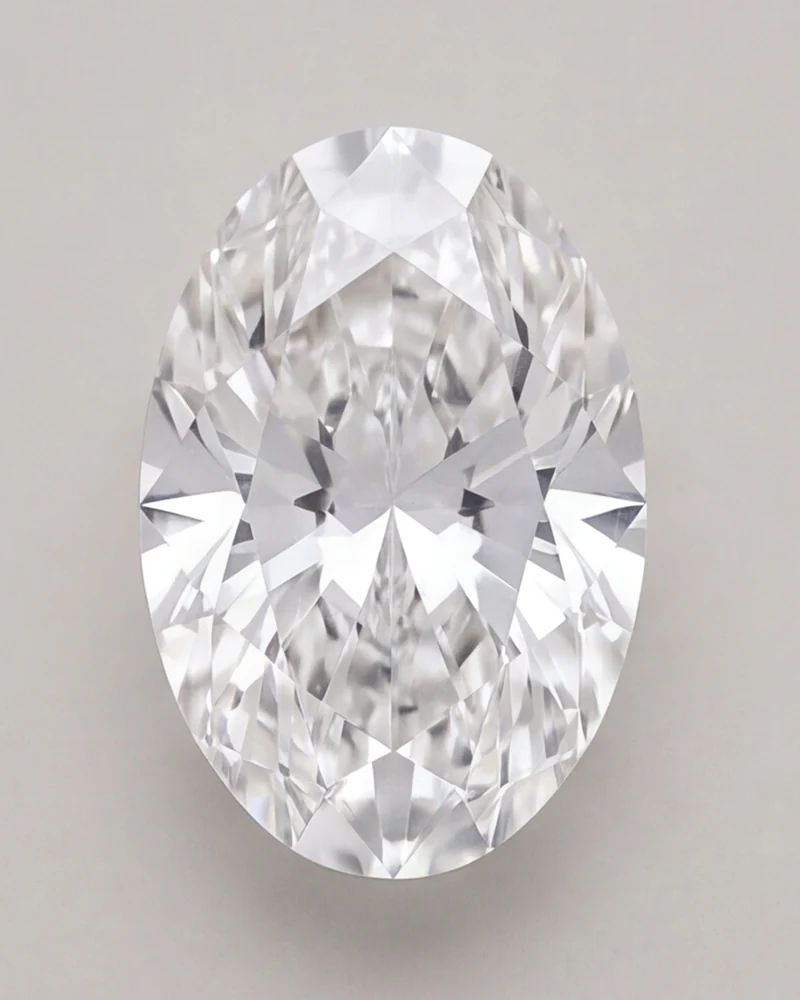
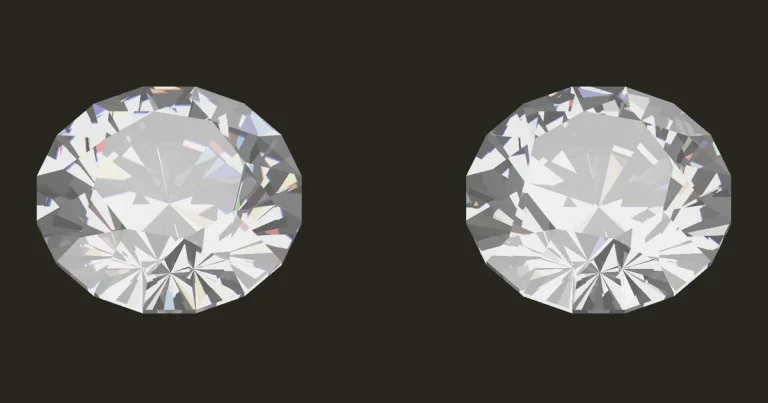
02Oval diamond
An elongated outline with curved sides and rounded ends.
- Look
- A longer oval can cover more length on the finger without filling more width. The length-to-width ratio describes that silhouette, and choices range from plump to slender.
- Inspect
- Check that both shoulders curve evenly. Rock the stone in diffuse light and see whether a dark bow tie stays prominent.
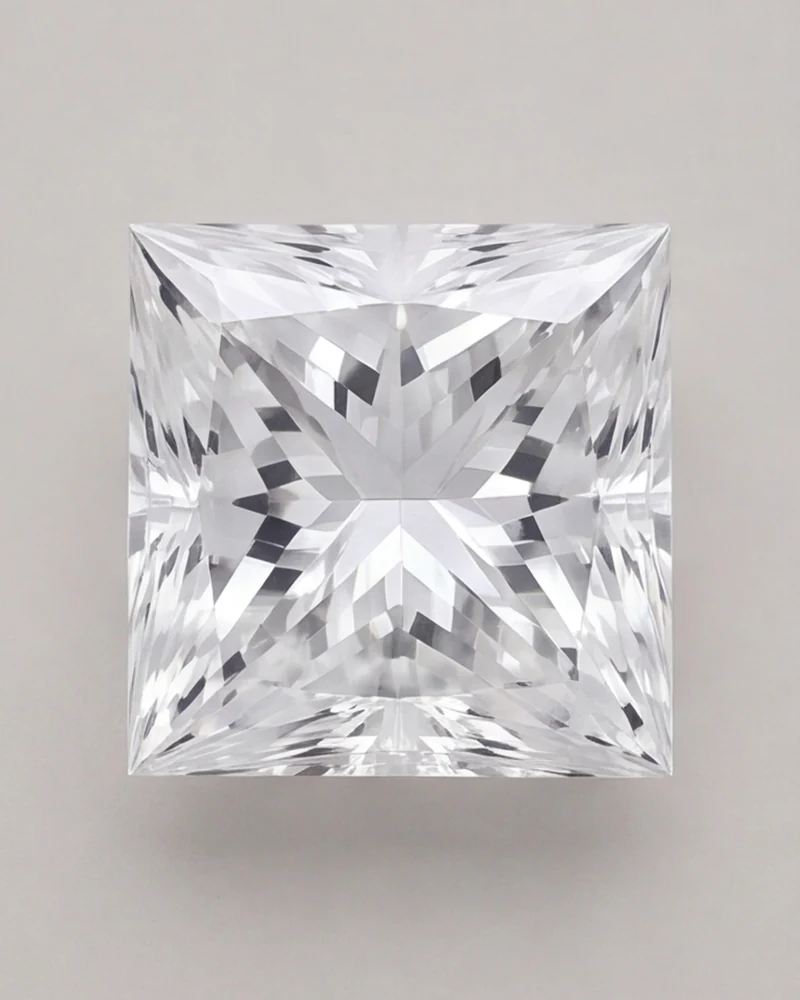
03Princess diamond
A square or near-square outline with four pointed corners.
- Look
- Princess cuts use modified brilliant faceting, often with chevron-like facets on the pavilion. The arrangement can change the size and rhythm of flashes.
- Inspect
- Inspect each corner for chips or inclusions near the girdle. Ask the setter how the finished ring will cover all four corners.
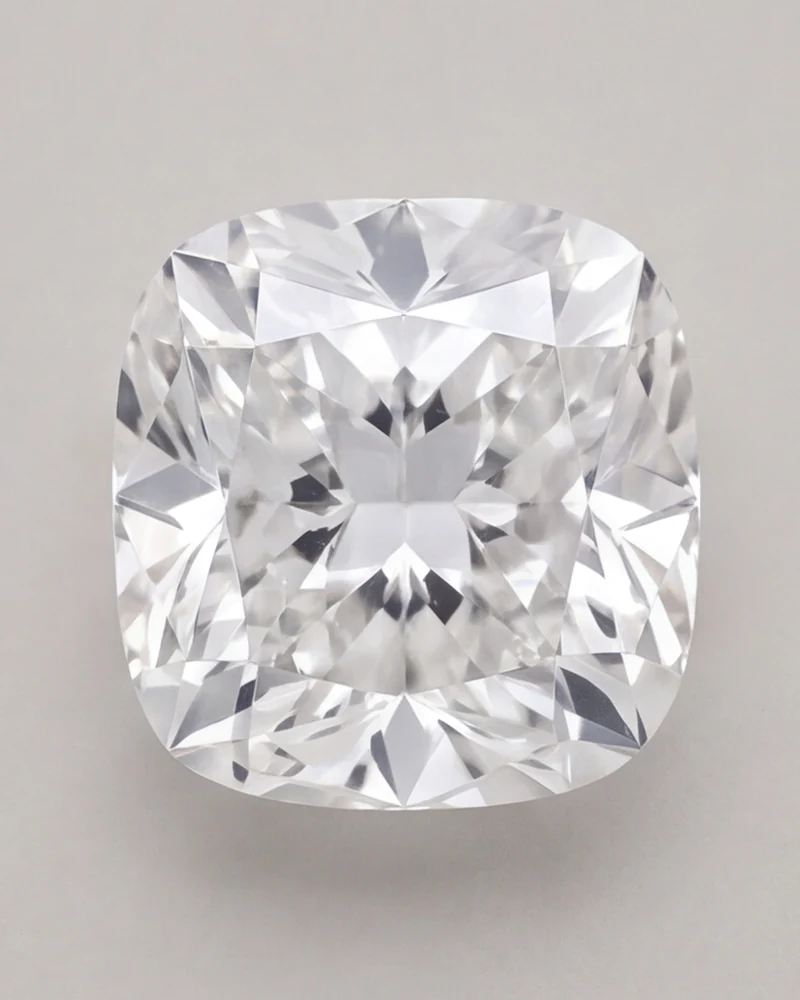
04Cushion diamond
A pillow-shaped outline with soft corners and gently curved sides.
- Look
- A cushion can be compact or elongated. Some show distinct broad flashes. Others scatter many smaller flashes across the face, the look often called crushed ice.
- Inspect
- View several cushions at the same magnification. Compare the curve of the sides as well as the outline’s length-to-width ratio.
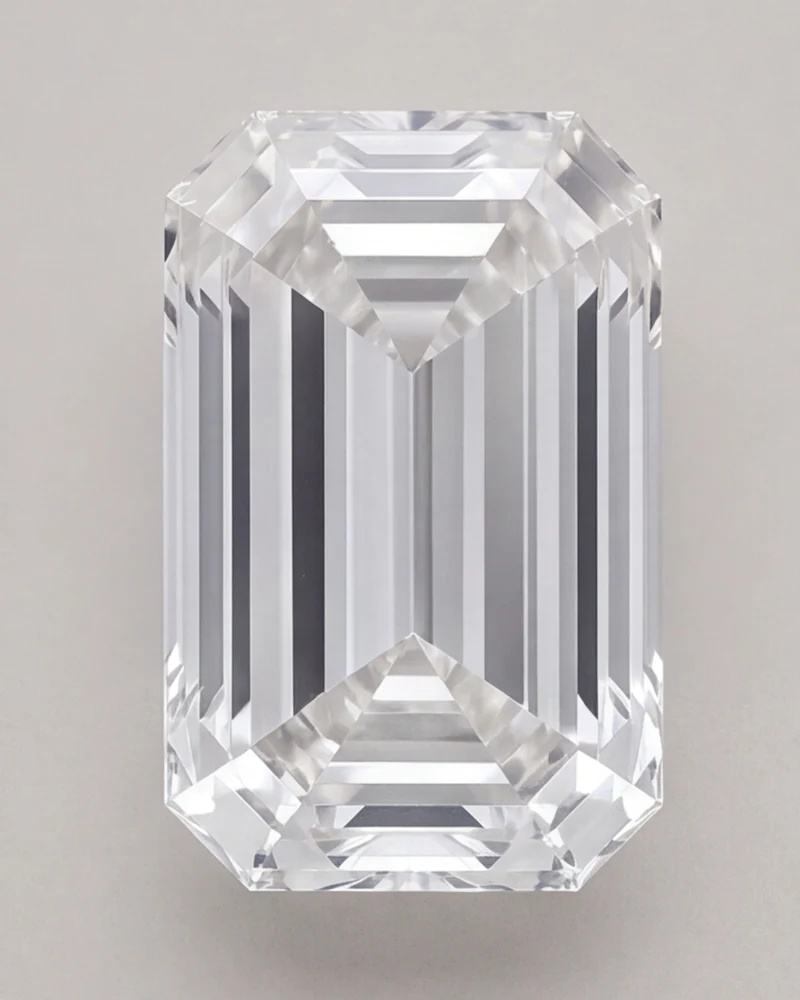
05Emerald diamond
An elongated rectangle with clipped corners and long, tiered facets.
- Look
- Wide step facets create deliberate bands of light and dark. The open-looking center can make inclusions or haze easier to see face-up.
- Inspect
- Compare length and width together. Inspect the center in diffuse light, then tilt to see whether the bands move cleanly.
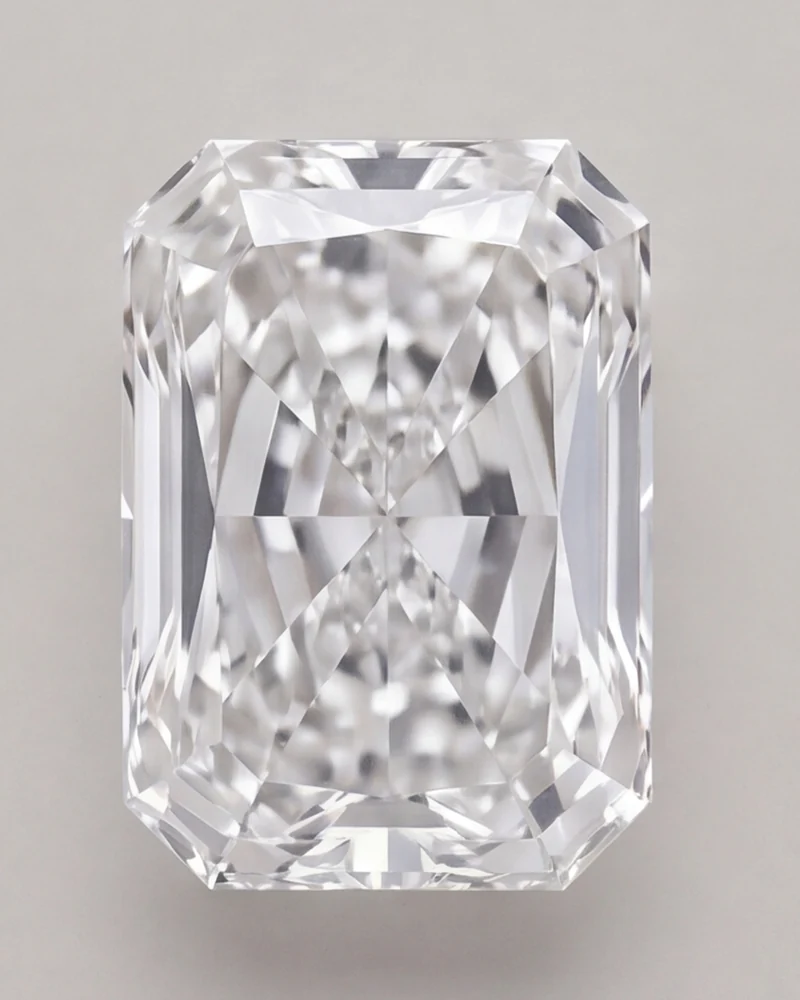
06Radiant diamond
Straight sides and clipped corners in a square or rectangular outline.
- Look
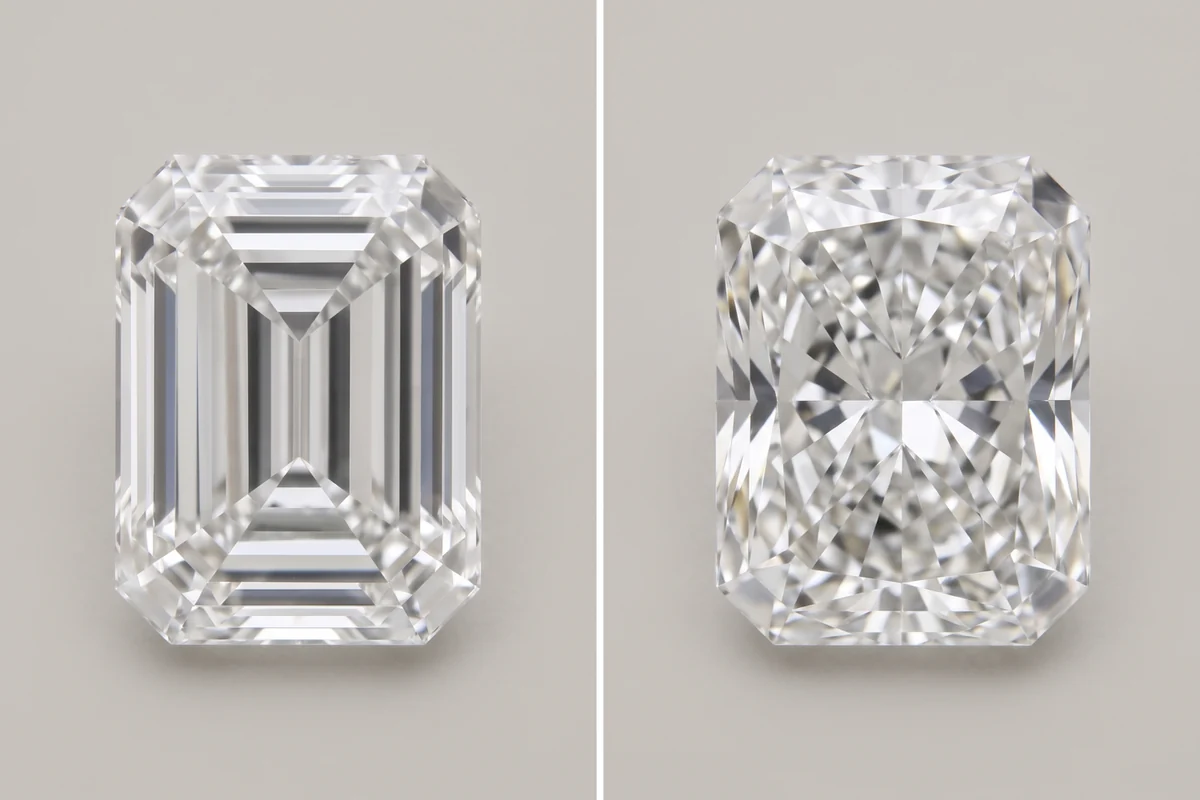
- A radiant can share an emerald cut’s outline while showing smaller, busier reflections. Its clipped corners also distinguish it from a typical sharp-cornered princess.
- Inspect
- Compare overall brightness across the face in soft light. For a closer comparison, see emerald cut vs radiant cut.
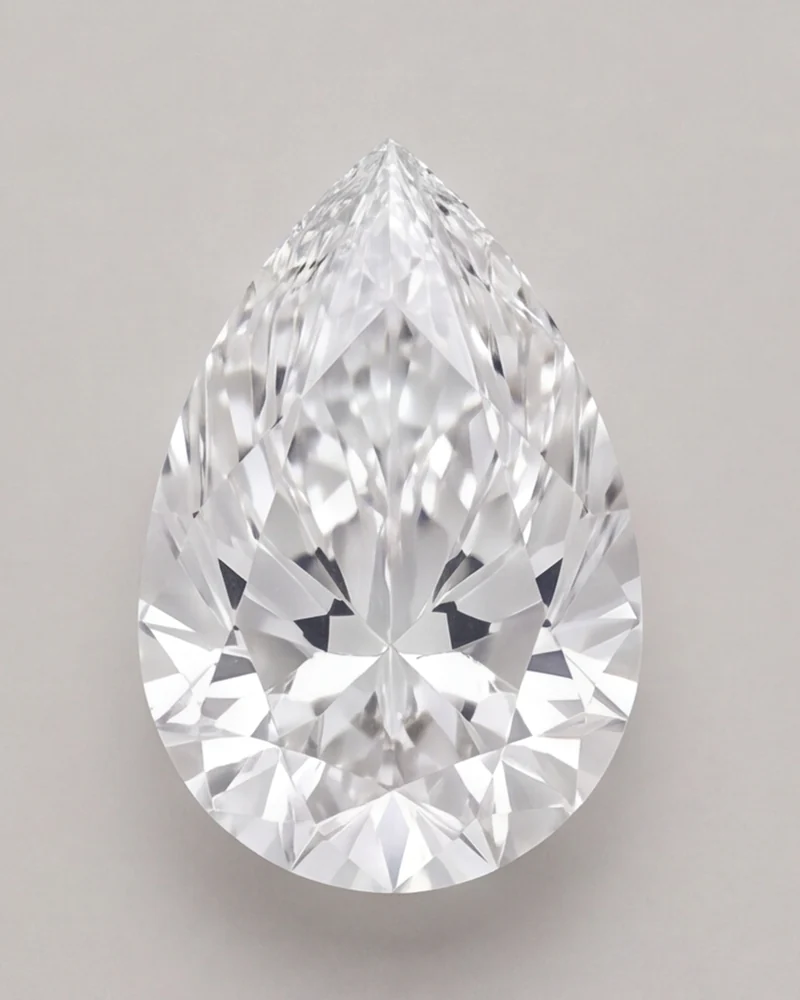
07Pear diamond
A teardrop with a rounded head, tapered shoulders and one point.
- Look
- The shoulders should look balanced around an imaginary line from the rounded end to the tip. A pear can point toward or away from the fingertip, and its direction matters in a pendant or an earring pair.
- Inspect
- Turn it both ways before choosing. Watch for a persistent dark center and confirm that the point will be protected.
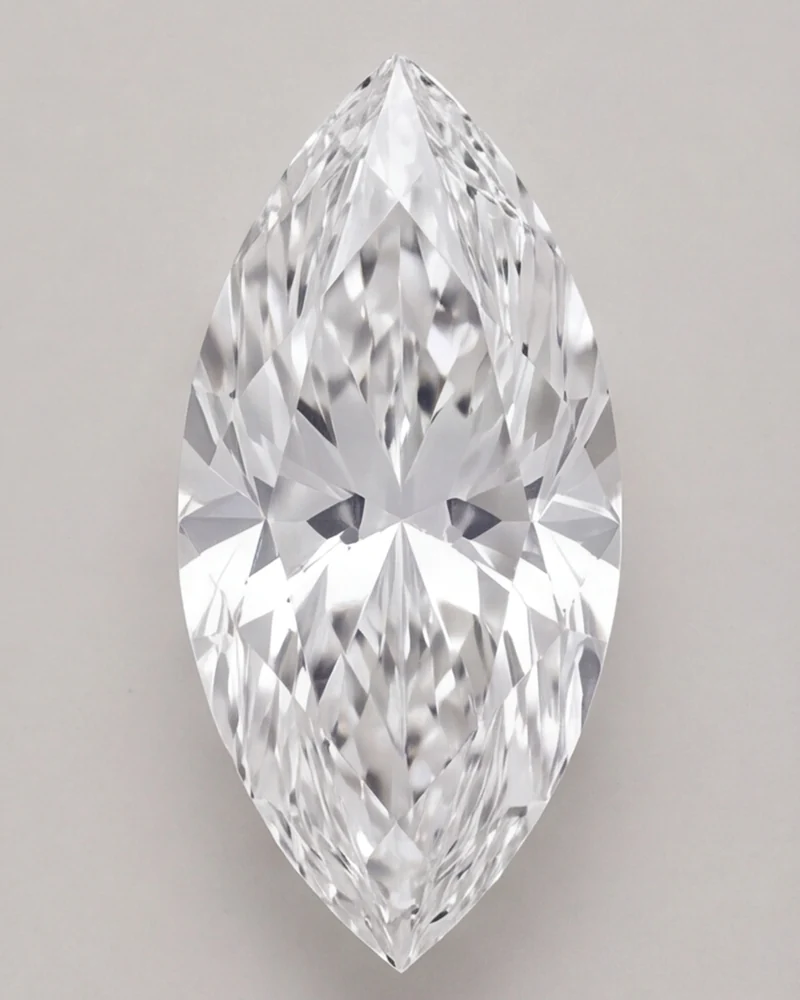
08Marquise diamond
A narrow, boat-shaped outline with curved sides and a point at either end.
- Look
- A marquise gives a long line on the finger, while its tapered ends contribute little width. Bow-tie contrast can be visible across the center.
- Inspect
- Look for tips on the same axis and balanced sides. Inspect both ends for damage and see a video of the stone rocking.
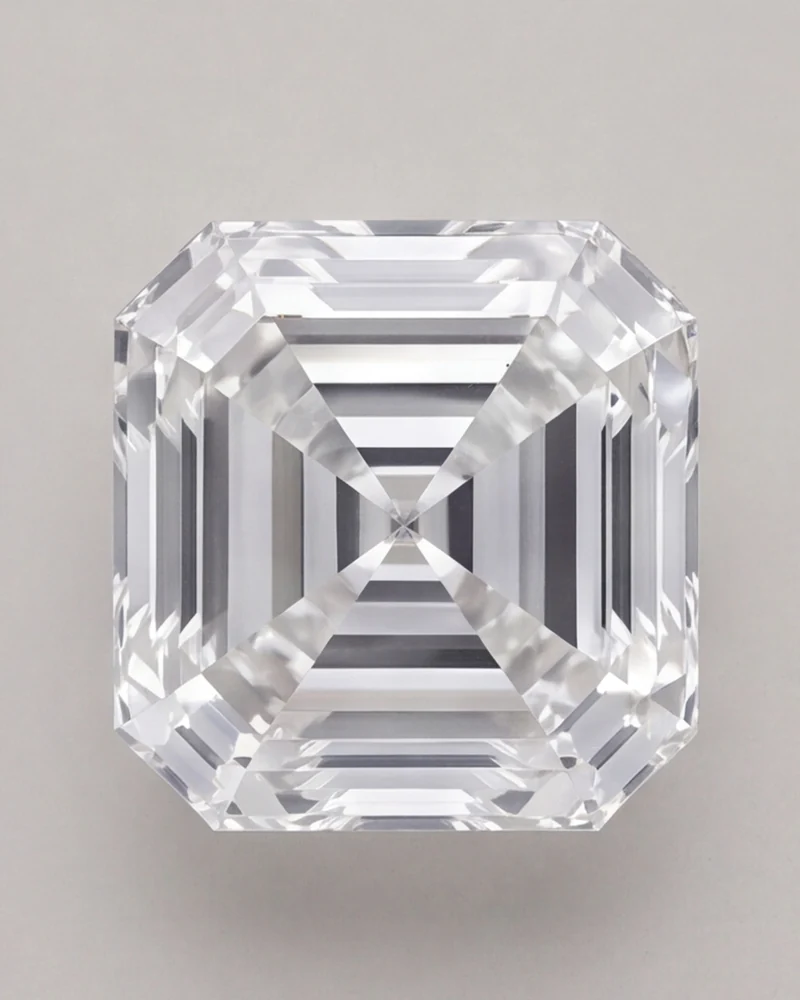
09Asscher diamond
A square step cut with clipped corners that can make the outline look nearly octagonal.
- Look
- Its square proportions draw the stepped reflections inward in a nested pattern. An emerald cut usually stretches the same kind of steps along a longer axis.
- Inspect
- Look for centered, balanced reflections as you tilt it. Inspect the center in diffuse light, where a visible inclusion can interrupt the pattern.
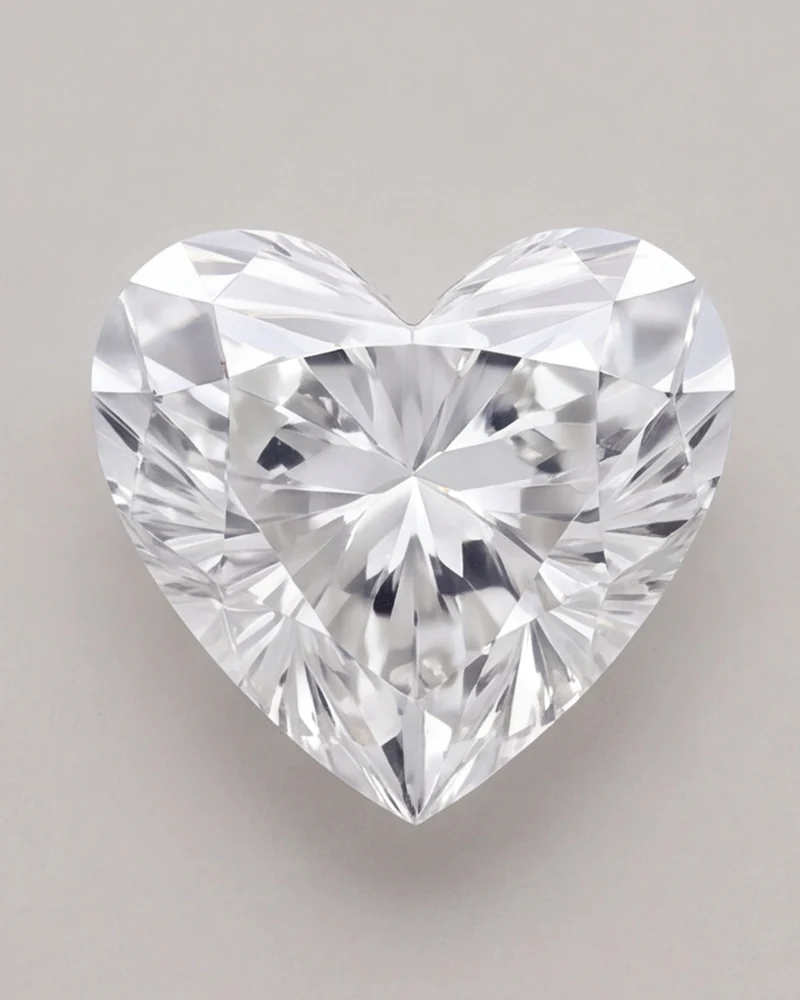
10Heart diamond
A two-lobed outline with a central notch and a single lower tip.
- Look
- A symmetrical heart has balanced lobes, a distinct cleft and a centered point. Small stones can lose the cleft visually once prongs or a rim frame the edge.
- Inspect
- View it at intended size in the setting. Ask how the exposed point will be covered without crowding the two lobes.
How the ten shapes compare
| Diamond shape | Outline | Faceting style | Visual characteristics | Shopping considerations | Setting considerations |
|---|---|---|---|---|---|
| Round brilliant | Circle | Brilliant | Even radial pattern and crisp flashes | Compare diameter, center contrast and movement | A centered prong or bezel can follow the curve |
| Oval | Rounded elongated outline | Usually brilliant-style | Long silhouette with possible center contrast | Divide length by width and inspect the center in motion | Check the ends and head fit if set east-west |
| Princess | Square or near-square, sharp corners | Modified brilliant | Crisp corners and broken flashes | Check the four corners and the evenness of the pattern | Ask about V-prongs or a fitted bezel |
| Cushion | Rounded square or rectangle | Brilliant or modified brilliant | Broad flashes or fine, busy sparkle | Compare different facet patterns in the same light | Use a head made for the actual outline |
| Emerald | Clipped-corner rectangle | Step cut | Broad, parallel flashes | Look through the center for visible inclusions or haze | Check that the prongs fit the clipped corners |
| Radiant | Clipped-corner square or rectangle | Usually modified brilliant | Fragmented flashes within a straight-edged outline | Compare the center and corners as the stone moves | Match the head to the exact corner cuts |
| Pear | One rounded end, one point | Usually brilliant-style | Directional outline with possible bow tie | Align the tip with the center of the rounded end | Ask how the tip is covered |
| Marquise | Curved sides with two sharp points | Usually brilliant-style | Strong length with narrow ends | Compare point alignment, width and center contrast | Protect both tips and check for snagging |
| Asscher | Clipped-corner square | Step cut | Nested octagonal reflections | Check centered steps and clear face-up appearance | Check head fit and corner coverage |
| Heart | Two lobes, a cleft and one point | Usually brilliant-style | Recognizable outline depends on symmetry | Judge the lobes and cleft at actual size | Protect the lower point and preserve the cleft |
Faceting and face-up appearance vary by stone. Confirm the setting against the actual outline and girdle.
Diamond shape vs. cut quality
A clipped rectangular outline can frame an emerald cut or a radiant. The face-up pattern changes when the cutter changes the shape, size and alignment of the facets. Even within one style, differences in angles and depth change how the diamond looks when you tilt it.
- Outline and facets
- Outline shape is the perimeter you see from above. The facet arrangement is the layout of flat polished surfaces on the crown and pavilion.
- Proportions
- The dimensions, depths and angles that determine how the facets meet and help shape what you see face-up.
- Symmetry and polish
- Symmetry concerns the alignment and regularity of the outline and facets. Polish concerns the finish of the individual facet surfaces.
- Light performance
- How a stone returns light and changes in appearance as lighting or viewing angle changes. Look at brightness, contrast, fire and sparkle in motion.
GIA applies its standard overall cut grade to eligible standard round brilliants in the D-to-Z color range. Its standard fancy-shape reports can still list polish and symmetry. The supplemental AGS Ideal Report covers eligible diamonds, including some fancy shapes and facet arrangements. IGI offers fancy-shape cut grading using its own criteria. Read the lab name and the exact field before comparing grades.
Which diamond shape looks biggest?
Oval, marquise and pear shapes can look larger when you notice length first. A wider stone can give more coverage across the finger, and a tapered stone can look very long while leaving more of the band visible. Compare actual stones in the setting you want.
Carat measures weight. One metric carat is 0.2 grams. Face-up dimensions describe the outline in millimeters. Face-up area is the projected area inside that outline, so multiplying length by width gives only the bounding rectangle. Length-to-width ratio is length divided by width and describes how long the outline looks relative to its width.
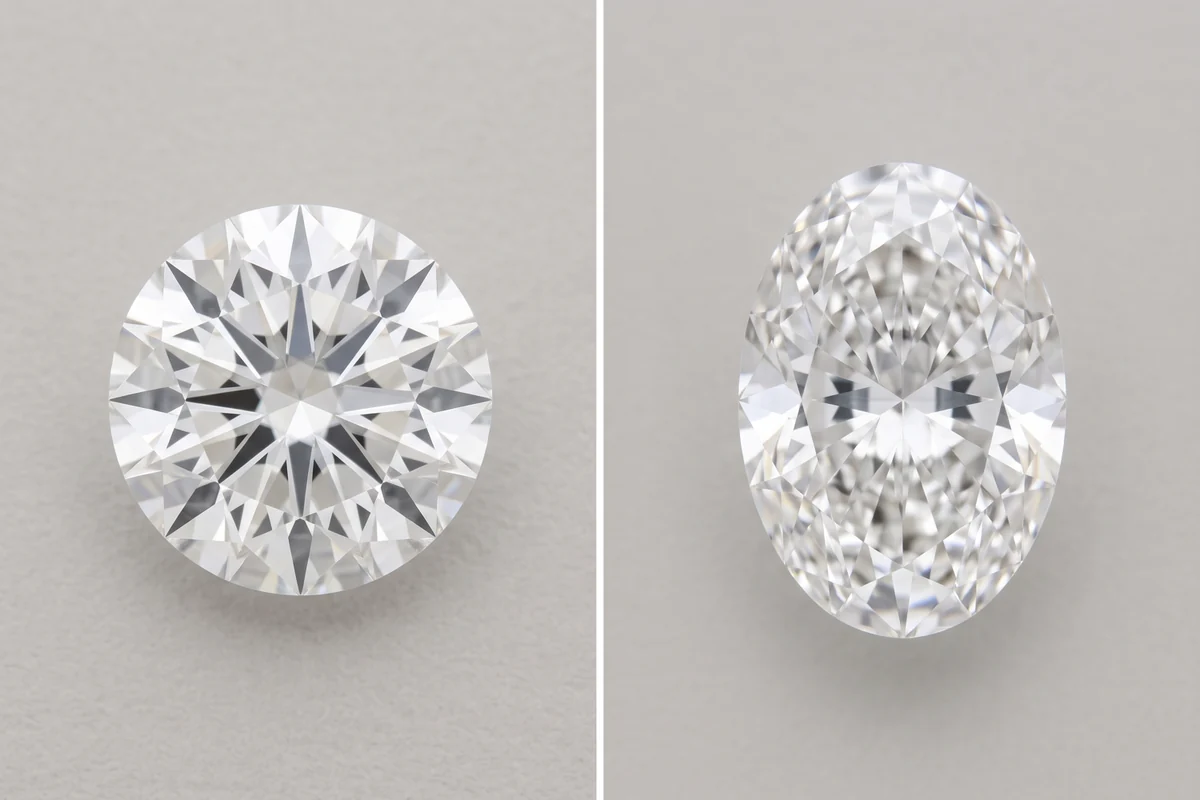
For a shortlist, use diameter for a round and length × width for a fancy shape. Ask to see both stones at the same magnification and on a hand. A narrow 8 mm stone can read differently from a broad 8 mm stone, and two stones with the same face-up measurements can differ in depth and weight.
Diamond shapes and sparkle
Try a stone under diffuse room light for brightness and contrast, then under small spotlights for fire. Slowly tilt it to see how the pattern changes. The shape is a starting point. Facet geometry, proportions, finish and lighting all help determine what you see.
- Brilliance
- The apparent brightness from white light the diamond returns. Look for brightness across the face as the stone moves.
- Fire
- Flashes of spectral color from dispersed white light. Small, bright sources can make fire easier to see.
- Scintillation
- Flashes and shifting light-dark patterns as you, the stone or the light source moves.
- Broad flashes
- Larger reflections that are easy to follow individually. Step-cut bands are one common example.
- Crushed ice
- A patch of many small reflections. Pay attention to how lively those tiny flashes look in real lighting.
The GIA study of oval, pear and marquise diamonds found that observers differed in how much bow-tie contrast or crushed ice they liked. Inspect a dark area through several viewing angles. A band that repeatedly lights up will read differently from one that stays dark.
Diamond shapes and engagement ring settings
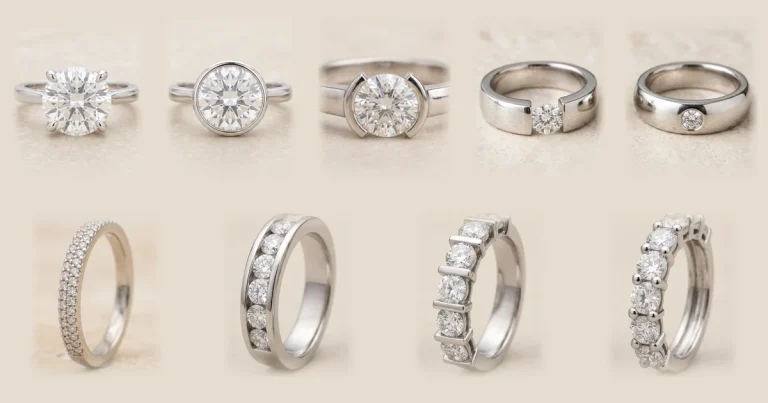
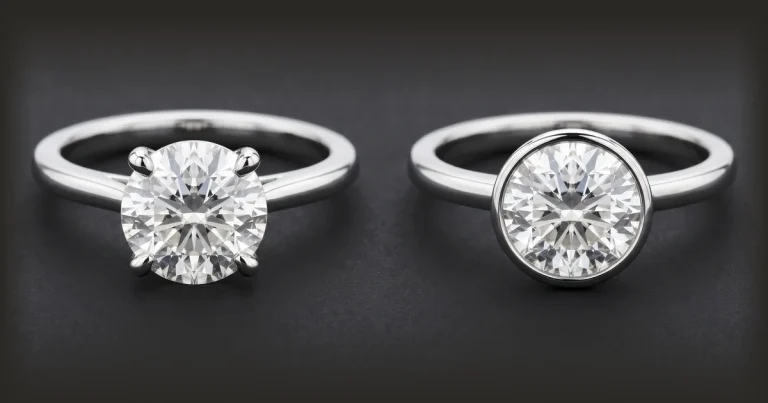
The setting changes how clearly the outline reads and how much of the edge is exposed. Check it from above for the silhouette and from the side for height, tip coverage and fit beside a band.
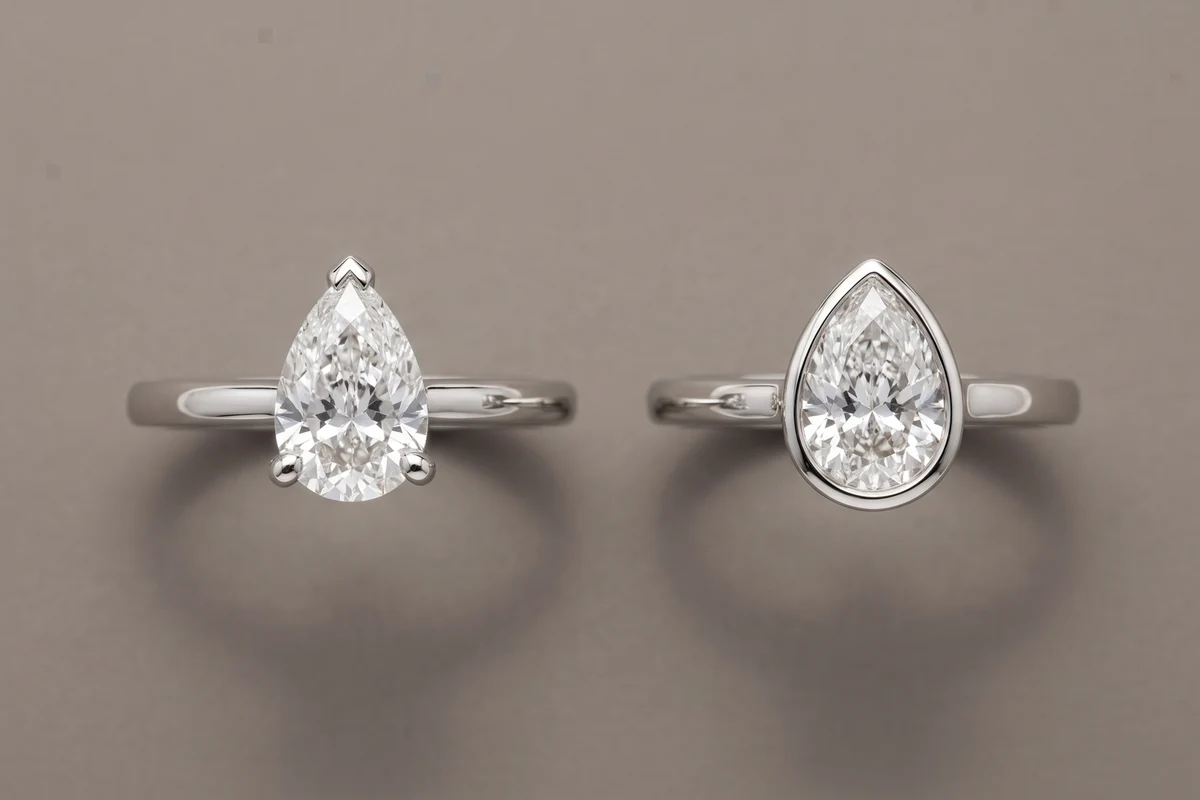
- Prongs
- Leave much of the outline visible. For a pointed tip or sharp corner, ask which prong wraps around it and whether it sits snugly.
- Bezel
- A full bezel traces the perimeter with a metal rim. A wider rim adds a frame, which can make a small heart’s cleft or a cushion’s soft corners less distinct.
- Halo
- Accent stones broaden the ring’s outline. Decide whether you want the halo to repeat the center shape or provide a contrasting outline.
- Solitaire
- A design centered on one stone, which can be held by prongs or by a bezel. With no surrounding accents, the stone’s outline and the head’s profile stand out.
GIA’s guide to preventing chips identifies exposed tips, sharp corners and thin girdle areas as concerns. Ask your jeweler to examine the proposed setting with the actual stone, especially if you wear the ring every day.
How to choose the right diamond shape
Pick two or three shapes from the table, then judge individual stones side by side. Decide how much of your total budget goes to the setting, particularly if a pointed stone or unusual proportions require a fitted head.
| Buyer preference | Shapes to consider | Why they may fit | What to inspect | Potential trade-offs |
|---|---|---|---|---|
| A familiar, balanced silhouette | Round brilliant | Even curve from every direction | Diameter and overall cut assessment | Less length at a width you like |
| More length along the finger | Oval, marquise, pear | Long axis and tapered or rounded ends | Actual width, symmetry and bow tie | A narrow look or exposed tips |
| Big, distinct flashes | Emerald, Asscher, some cushions | Broad reflections you can follow | Center clarity and movement | Inclusions can interrupt open steps |
| A straight-edged center | Princess, radiant | Crisp sides and brilliant-style flashes | Sharp vs. clipped corners and head fit | Setting may need custom fitting |
| A shape with a clear point | Pear, heart | Orientation can change the design | Point alignment, cleft and prong placement | The tip needs protection |
| Comfort for daily wear | Round, oval, cushion | Rounded corners suit many low-profile heads | Side height, rim fit and band clearance | A deeper stone may still sit high |
| More flexibility within budget | Compare several shapes | Prices and setting costs vary by candidate | Total quote, report and return terms | A fitted head can offset stone savings |
Buying checklist
- Pick a silhouette. Try your shortlist face-up and on the hand. For a pendant or earrings, check orientation and whether a pair matches.
- Check the millimeters. Record length, width and depth from the report. See how each outline fits across and along the finger.
- Watch the stone move. Ask for unfiltered video from above and on a tilt, then compare under ordinary light. Watch for persistent darkness or a see-through patch in the center.
From the side, check how high the stone sits and where a second band meets the setting. Try the setting. Check snagging, profile height, band clearance and coverage at every vulnerable tip or corner.- Compare the full quote. Keep diamond origin and key report details comparable. Include the setting, any custom head and return terms.
Diamond shape FAQ
What is the most popular diamond shape?
GIA describes round as the most common diamond shape used in jewelry. It is a useful starting point when browsing ready-made settings. If you are comparing current popularity for engagement rings, check the market and year behind the figures. Preferences vary.
Which diamond shape looks the biggest?
Start with an oval or marquise if you want more length along the finger. Compare the actual millimeter dimensions before choosing. For a bigger-looking ring overall, also compare how much width the setting adds and how clearly you can still see the center stone’s edge.
Which diamond shape sparkles the most?
A well-cut round brilliant is a useful benchmark for crisp sparkle. For a meaningful comparison, ask to see both stones in the same diffuse light and then under a few small light sources. Compare how much of the face lights up as you rock each stone.
What is the difference between diamond shape and cut?
On a report, a description such as “pear brilliant” combines the outline and the facet style. Diamonds sharing that description can still look different because the cutters used different facet angles, depths and arrangements. Check whether the report gives a separate cut assessment.
Which diamond shapes are best for engagement rings?
A round offers a symmetrical starting point. Try oval for a longer outline with rounded ends, cushion for a softer square, or emerald for broad steps. For a ring you wear daily, try on the finished profile and check how the head fits against any wedding band.
Are fancy-shaped diamonds graded differently?
Yes. Compare reports using the issuing lab’s terminology, since overall cut grades and supplemental light-performance assessments have different scopes. An online retailer’s house label such as “ideal” needs its own definition. Check which assessment actually appears on the document.
Which diamond shapes have pointed corners?
Princess cuts have four pointed corners. Pear and heart shapes have one tip each, and a marquise has two. Emerald, radiant and Asscher cuts have clipped corners that still require a setting fitted to the actual stone.
What is a bow-tie effect?
It is a bar or pair of dark-looking areas across the center, often seen in oval, pear and marquise diamonds. A pattern that lightens or shifts with movement can add contrast. A wide band that stays dark through several ordinary viewing angles can dominate the look.
Does diamond shape affect price?
Yes. Demand for the shape and how much polished weight the cutter can retain may affect price. Compare finished-ring quotes and keep origin, carat range, color and clarity comparable. If a different shape saves money on the stone, check whether a custom setting changes the total.
How do I choose a diamond shape?
Shortlist two outlines and compare a few stones of each at their actual size. Keep a screenshot of each candidate with its report measurements and setting quote. The best choice is the one whose look you still prefer under ordinary light and whose setting suits your daily wear.