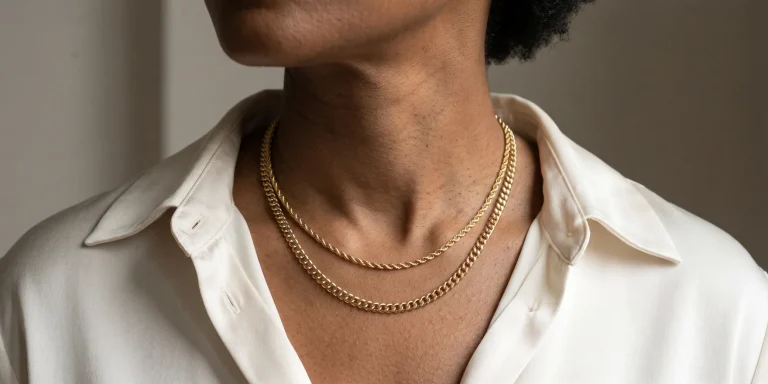
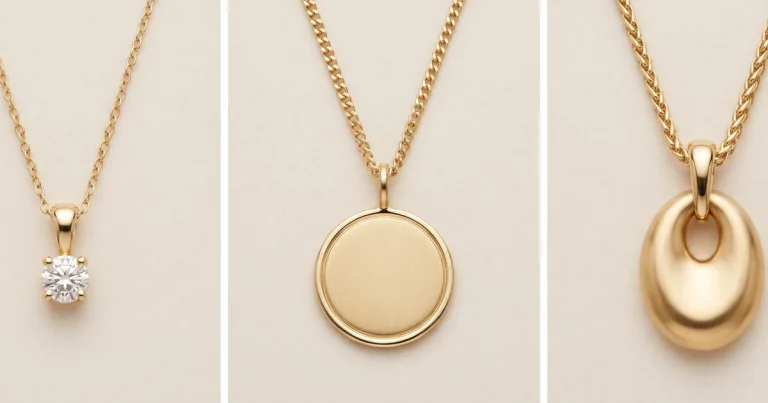
Cuban vs Curb Chain: Differences, Strength and Style
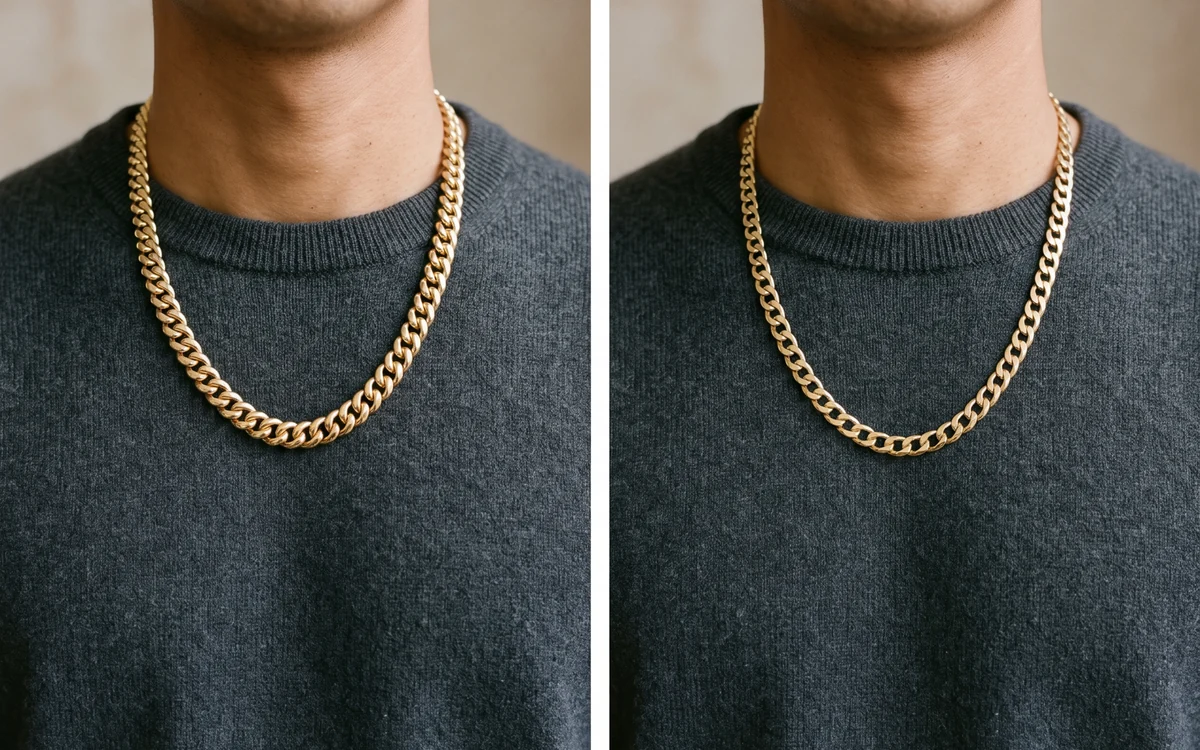
Miami Cuban links give a curb-style chain a fuller outline. A classic curb can look flatter and more open. Compare the link edge, weight and clasp when choosing between them.

- Cuban Chain
- Closer, rounder links
- Curb Chain
- Flatter, more open links
Cuban vs Curb Chain: Quick Answer
A Cuban is commonly a fuller, closer-set curb-style chain. A classic curb usually shows flatter faces and more open space. Choose for the look, then judge strength from the actual links, joins and clasp. The style name alone gives you no load rating.
Start with a Cuban if
- You want a dense line of gold for a solo necklace.
- You like rounded link shoulders and fewer visible gaps.
- You can try the actual piece to check how it feels.
Start with a classic curb if
- You prefer a flatter line with more visible openings.
- You want a low-profile layer or a chain for a compatible pendant.
- You can check how the links and clasp move.
Cuban and classic curb chains at a glance
| Feature | Cuban Chain | Curb Chain |
|---|---|---|
| Link shape | Typically rounder, compact ovals. | Classic examples have flatter, often more elongated ovals. |
| Spacing | Links often sit close with smaller visible openings. | Classic examples can show more space between the links. |
| Profile | Rounded shoulders may give the band more visual depth. | Flattened faces may make it sit closer to clothing. |
| Weight | A dense, solid example can feel substantial. Ask for grams. | A flatter example can feel lighter. Ask for grams. |
| Flexibility | Close-fit links can move through a shorter range. | More clearance may allow looser movement. Try the actual piece. |
| Durability factors | Alloy, link section, closure, clasp and wear. | The same factors apply. Inspect the exact chain. |
| Appearance | A compact band of repeated highlights. | More visible openings and broader flat reflections. |
| Typical use | A bold solo necklace or substantial bracelet. | A lower-profile necklace, layer, pendant carrier or bracelet. |
What is a Cuban chain?
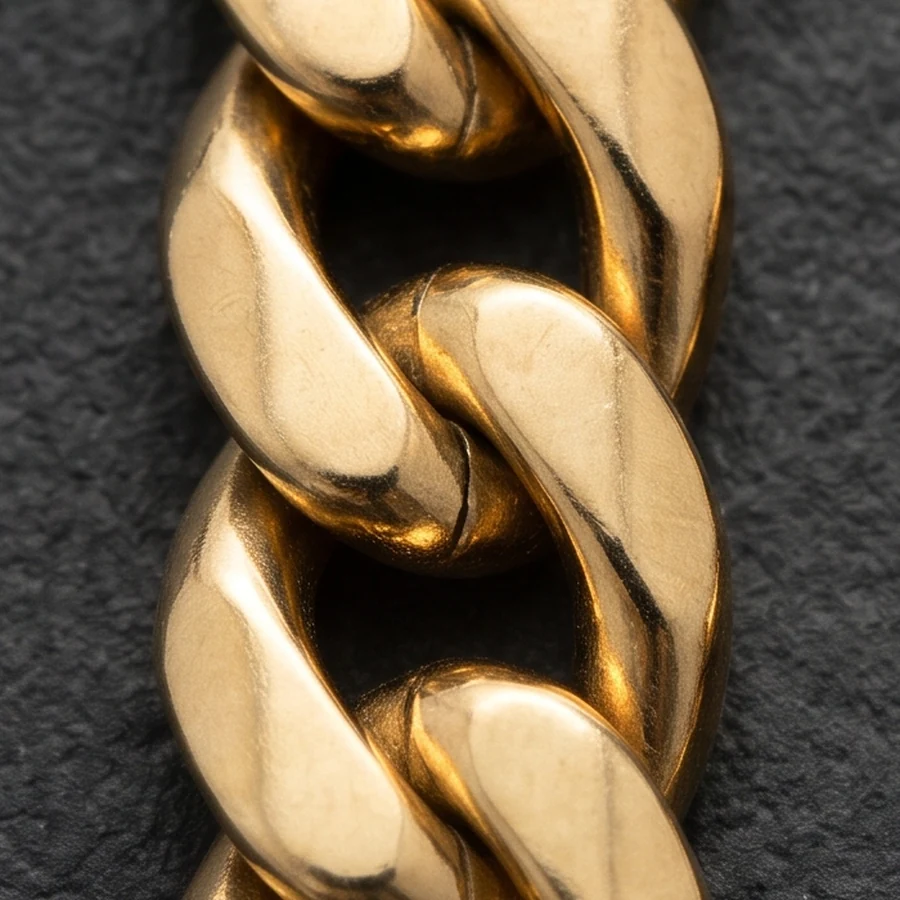
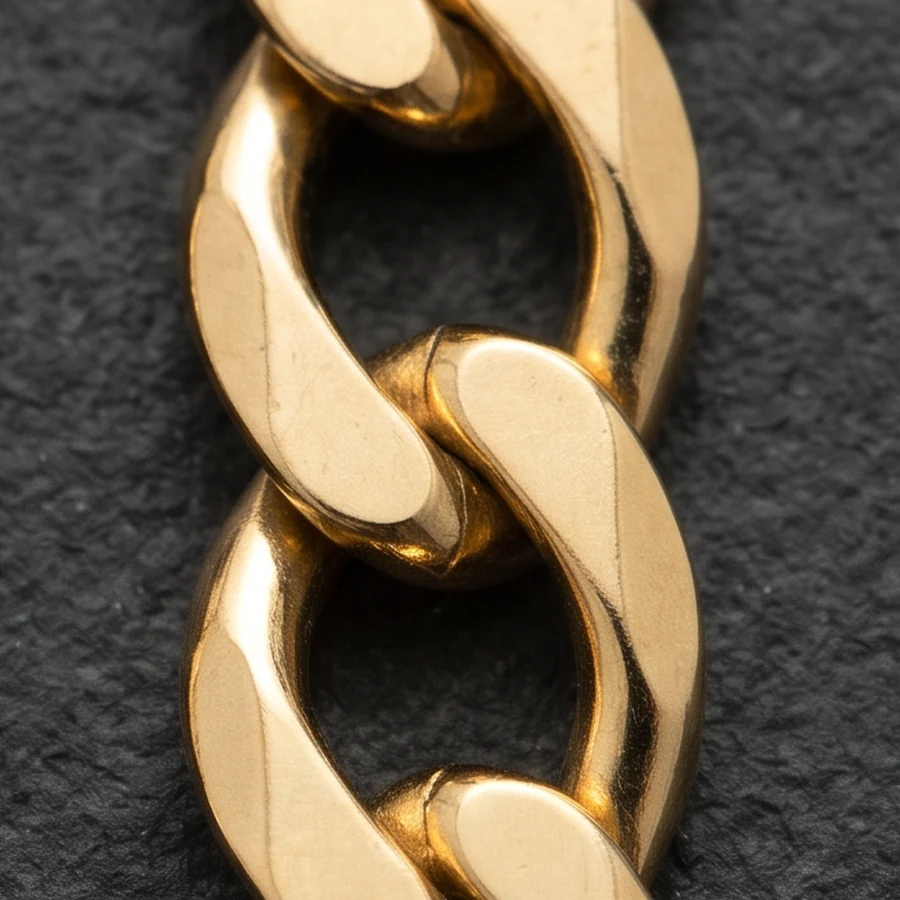
In a typical Miami Cuban, rounded or oval links interlock closely and settle into a flat-laying band. The close spacing creates a fuller look, even when another chain has a similar outside width. Miami Cuban is a recognizable style within the broader curb family. Some makers cut or bevel its faces more sharply.
Ask whether the links are solid or hollow, what the finished piece weighs, and how the seller measures width. One trade catalog uses the combined name Cuban Miami curb, illustrating why the wording alone can be ambiguous.
What is a curb chain?
A curb starts from an interlocking chain pattern. Its links are twisted so they can lie flat together. A classic curb often has flatter faces and more elongated openings than a close-set Miami Cuban. Link shape, width and finish vary across both names.
From the front, look at how much background you can see through each opening. From the edge, look at how far the band stands up from the surface. Both guides are useful when listings use the names differently. Rio Grande’s chain guide covers the underlying curb construction.
Key differences in link construction
Shape and spacing. In the Miami Cuban example, each oval is fuller and the repeat is closer. The classic curb has a longer visible opening. Those are visual cues, not fixed dimensions.
Profile and surface finish. Outside width is measured across the band. Thickness is what you see from the edge. A flat or beveled face catches light differently from a rounded shoulder. Diamond-cut describes facets on the surface. Either style can be faceted.
Flex and drape. Link clearance and the section of the metal affect how the chain moves. Try draping the piece over your fingers or ask for a short video of it flexing. Close-set links can show less movement even if the chain looks substantial.
Solid or hollow. Either link style can use solid wire or a hollow wall. The hole through the middle of the link is part of the interlock. A hollow core is inside the metal section itself.
Which chain is stronger?
Neither style has an automatic strength advantage. Visual volume describes the shape you see. Grams describe the mass you carry. Mechanical strength concerns how the finished chain behaves under a load. A thick-looking chain can contain less metal than its appearance suggests.
- Material and alloy
- Ask for the exact metal and alloy if known. Gold karat tells you the gold fraction. It does not rate the link strength. See how gold karats work.
- Link section
- Metal thickness and shape matter at the thinnest parts. Ask if the links are solid or hollow and compare the specific constructions.
- Closure and end links
- Ask the seller to show the link joins and the clasp in operation. Check the end rings and whether the fastener fully engages.
- Wear or damage
- Look for flattened contact spots, dents, gaps or a clasp that does not stay closed. Have a jeweler inspect a used piece before counting on it for daily wear.
Published chain testing across other link designs illustrates how strongly construction and dimensions can affect test results. Those tests do not establish a Miami Cuban versus classic curb ranking. They support asking for evidence on the exact chain if someone makes a strength claim.
Weight, price and comfort
Two chains of similar width and length can contain different volumes of metal. Closely spaced links, heavier link sections, different alloys and clasp sizes can all change the final weight. A hollow link uses a wall around an interior space and can retain a full outside outline with less metal.
Compare the quoted price for the same measured length and a similar width. Ask each seller to specify the material, measured grams, solid or hollow construction, clasp and finish. The quote can also reflect fabrication, design and service.
Try the chain over a shirt and against the skin. Notice how the clasp feels at the neck, how the links settle as you move, and whether you like the weight for a full day.
Cuban or curb: which should you buy?
| Buyer Goal | Style to Consider | Reason | What to Check |
|---|---|---|---|
| Bold standalone necklace | Miami Cuban | A dense band of links reads clearly on its own. | Width, length, grams and side profile. |
| Everyday chain | Low-profile curb or slim Cuban | Both can sit close when the dimensions suit you. | Flex, edges, comfort and ease of closing. |
| Wear a pendant | A compatible curb or narrow Cuban | A lower profile can leave the ornament in focus. | Bail opening, widest end fitting and weight compatibility. |
| Layering | Flatter curb or a narrow Cuban | A restrained profile leaves room for another piece. | Length separation, overlap and clasp positions. |
| Bracelet | The curb or Cuban that sits best on the wrist | The link band can be quiet or substantial. | Fit while bending the wrist, clasp and end links. |
| Stay within budget | Compare solid and hollow options in either style | Exterior width and metal content can vary independently. | Material, construction, grams, price and repair terms. |
Buying checklist
- Confirm width and length. Ask for face-on and edge photos, then see how that length sits on you.
- Get the weight in grams. Compare chains of similar length and width before deciding how substantial you want the piece to feel.
- Verify material and construction. Ask for the alloy or finish and whether the links are solid or hollow.
- Try the clasp and inspect connections. Ask how it closes, look at the end rings, and have a jeweler check any visible gaps or wear.
- Bring the pendant or layers. Test the bail against the widest end fitting and see how the chain and ornament hang together. Follow the jeweler’s advice for the specific weight.
For a pendant you already own, the Cooksongold pendant-chain guide explains why checking the bail matters.
Cuban and curb chain FAQ
Is a Cuban chain a type of curb chain?
Cuban links are commonly grouped with curb-style chains. Both use interlocking links arranged to lie flat. A product named “Cuban Miami curb” can describe a real overlap in trade terms. Compare the shape and spacing if you want the dense Miami look.
Is a Cuban chain stronger than a curb chain?
A name or top-view photo cannot tell you which finished chain will withstand more pull. The link metal, metal section, joins, clasp and condition all matter. Ask for evidence for the specific piece if performance is important.
Why are Cuban chains often heavier?
A compact link pattern can put more metal into the same length, and thicker links can add mass. A hollow Cuban may weigh less than a solid curb of similar outside dimensions. Compare the measured weight in grams for the exact length you’d order.
What is a Miami Cuban chain?
It usually describes a close-set Cuban curb-style design with rounded link shoulders and a flat-laying band. Some versions have flatter or more beveled faces. Look at face and edge photos if you want a particular profile.
Which chain is better for a pendant?
Start with a chain that fits your pendant’s bail and that a jeweler considers suitable for its weight. A slim curb is one option. A Cuban can work if the end fitting clears the bail and the ornament sits the way you want.
Can Cuban and curb chains be hollow?
Yes. A supplier may sell solid and hollow versions under similar style names. Ask whether the link itself is solid metal through its cross-section or has a hollow core. The link opening you see from above is present in both.
Which chain is better for everyday wear?
Compare two actual pieces with the top or other jewelry you wear most often. A thin Cuban can be comfortable, while a wide curb can feel substantial. Check grams, edge finish, movement and whether you can operate the clasp easily.
Why do jewelers use different names for similar chains?
Some use curb for the broad family. Others reserve it for flatter examples and use Cuban or Miami Cuban for tighter patterns. Look for measurements and close-ups that tell you how the seller’s piece is built.
References
- Jewelers of America, Chain styles guide, curb and Cuban descriptions.
- Ganoksin, Hollow Carat Gold Jewelry, hollow-link fabrication and joint considerations.
- Jewelers of America, Tips and Tools for Keeping Chains Intact, trade repair examples.