Best Chain for a Pendant: Weight and Link Guide
Weigh the pendant and measure its bail. Then compare the chain’s link profile and the end that threads through. Try the pair together to see how it hangs.
- Fit check
- Link profile and threading end
- Wear check
- Clasp and pendant drop
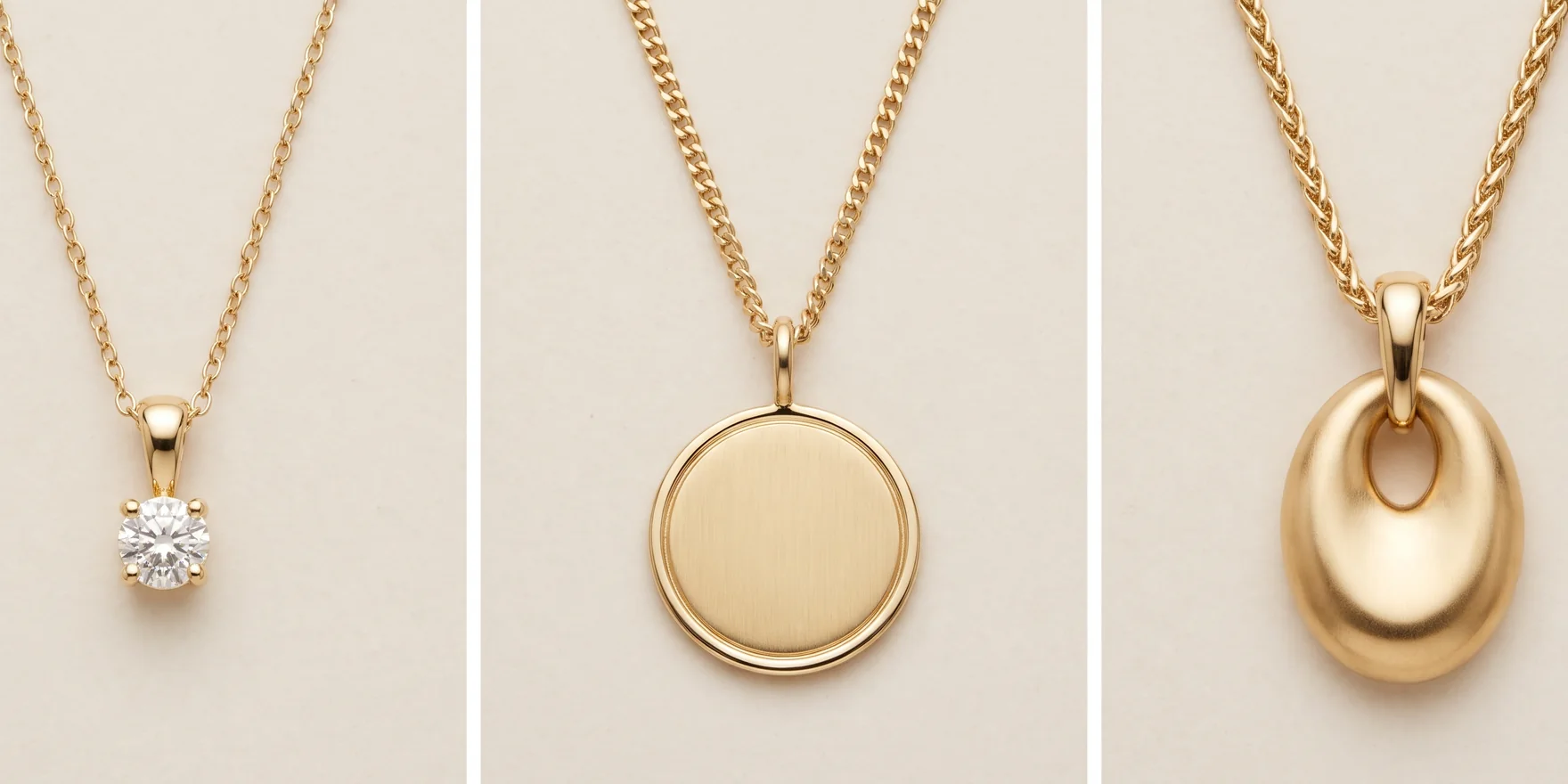
What Is the Best Chain for a Pendant?
Start with a cable, box or wheat chain that can carry your pendant, passes through its bail and lets it hang freely. A low-profile curb can suit a flat medallion. A rope chain can work when the bail has room for its rounded body and end cap. The right chain depends on the exact pendant, the end fittings and how often you will wear it.
Weigh the pendant, including its bail, and measure the clear opening. Then compare the chain body and the end you would thread through it. The Rio Grande guide to jewelry chain also treats the weight of the design and the intended look as separate buying considerations.
| Pendant Scenario | Chain Options | Construction Considerations | Fit Check | Trade-offs |
|---|---|---|---|---|
| Small, lightweight pendant | Fine cable or compact box | Even, intact links and ends sized for the chain | Try the smaller end first. Check that the pendant moves freely. | A very fine chain may need closer wear checks. |
| Medium everyday pendant | Cable, box, wheat or low-profile curb | Compare link profile, join quality and clasp condition | Try it on and check that the pendant settles facing forward. | A fuller profile may move less freely through the bail. |
| Large or heavy pendant | Substantial wheat, box, curb or rope | Confirm the exact construction and have the pairing assessed | Try the actual pendant. Check the end fitting and hanging angle. | A larger chain can add bulk or require a different bail. |
Best Chain Types for Pendants
Compare the profile at the bail and the way the chain drapes. These six styles cover the most useful choices for matching a pendant. Use the necklace chain types guide to identify other patterns.
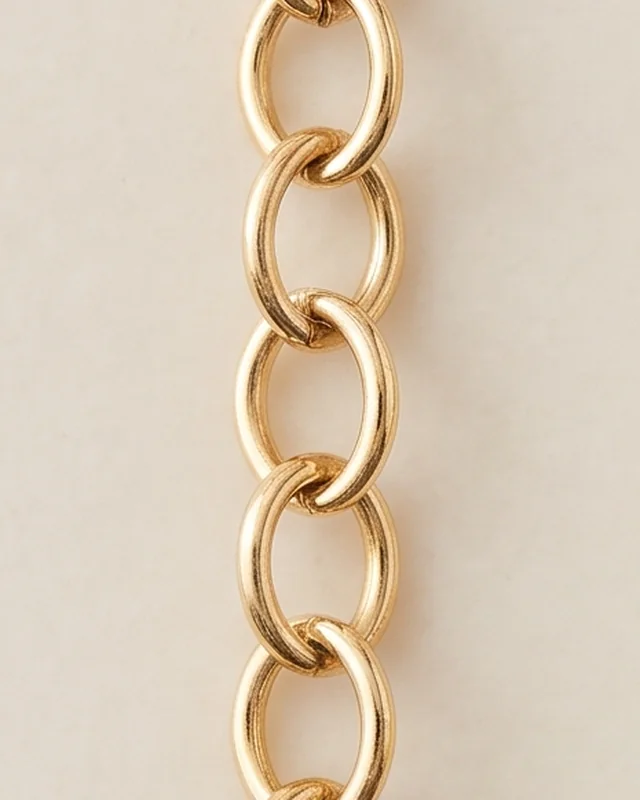
Cable chain
Oval links alternate direction, so the openings and the individual links are easy to see.
- Good fit
- Small solitaire or everyday charm
- Advantage
- Simple profile keeps the pendant in focus
- Watch for
- Very fine links can wear where the bail rubs
- Check
- Closed joins and the smaller end ring
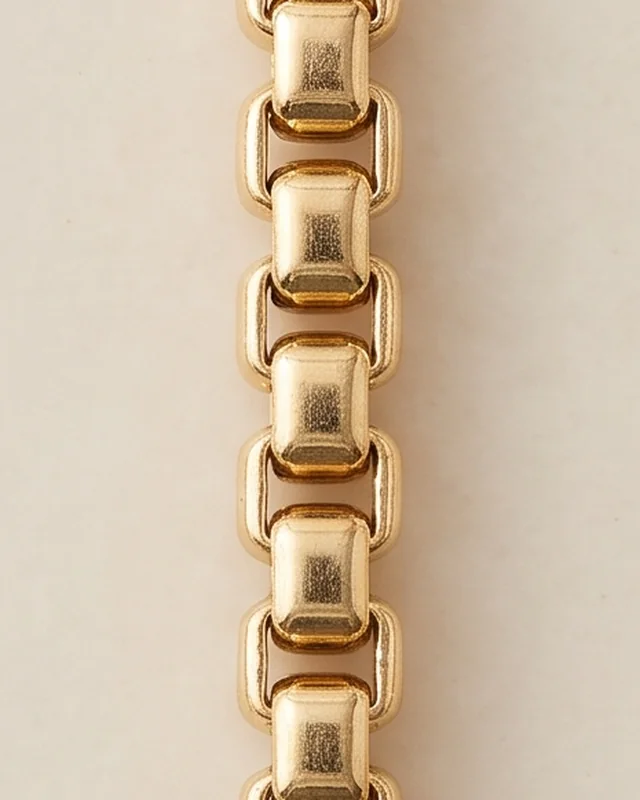
Box chain
Interlocking square links make an even, squared profile with relatively little open space.
- Good fit
- Solitaire, small locket or compact medallion
- Advantage
- Compact, tidy outline
- Watch for
- Corner orientation matters on a narrow bail
- Check
- Outside dimensions, corner clearance and end tag
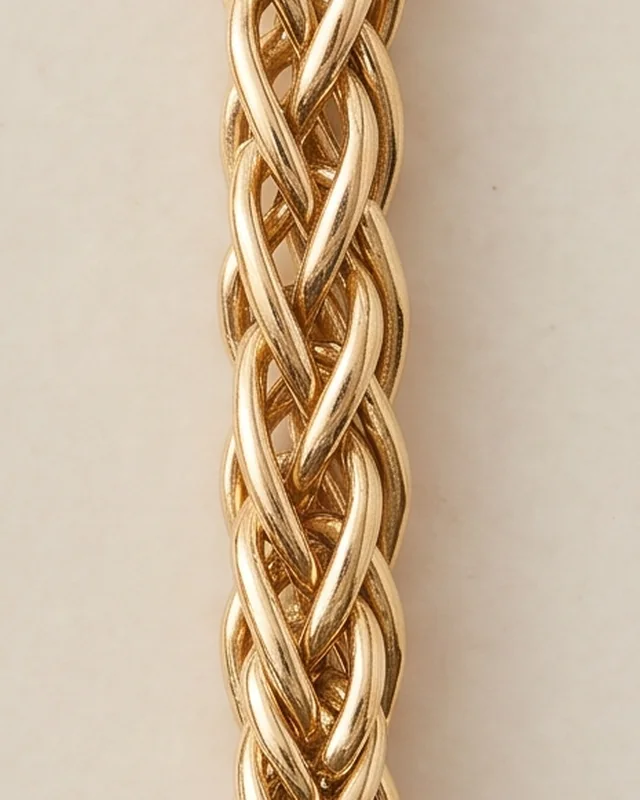
Wheat / Spiga chain
Closely woven links create a braided profile with more depth than many flat styles.
- Good fit
- Everyday medallion or a substantial pendant
- Advantage
- Braided drape with a continuous-looking surface
- Watch for
- A rounded or squared profile can fill a shallow bail
- Check
- Actual profile depth and end cap
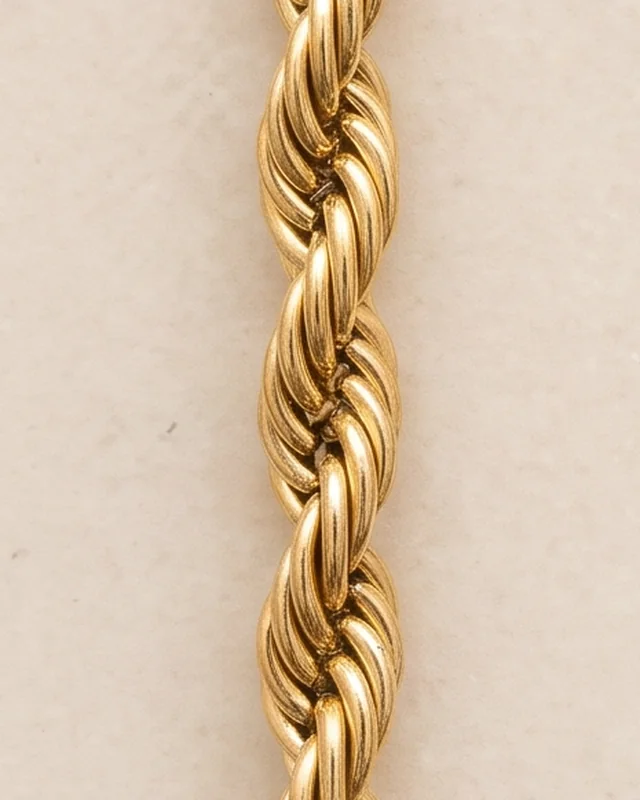
Rope chain
Linked elements spiral around the chain axis, giving it a rounded, textured outline.
- Good fit
- Medallion with an open bail or a bold drop
- Advantage
- Texture that can balance a plain pendant
- Watch for
- Bulk at the end cap. Hollow rope can be difficult to repair.
- Check
- Outside diameter and whether the links are hollow
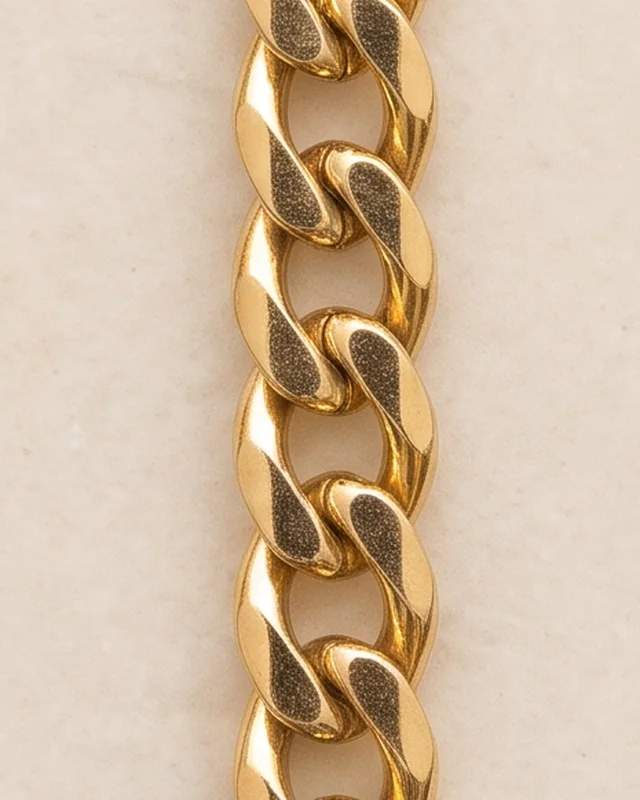
Curb chain
Twisted oval links lie in a common plane, producing a flat face and visible side profile. Compare Cuban and curb chain profiles.
- Good fit
- Flat medallion or an open-backed pendant
- Advantage
- Shallow profile on the chest
- Watch for
- A wide face or a broad end tag may catch
- Check
- Face width, side clearance and the end tag
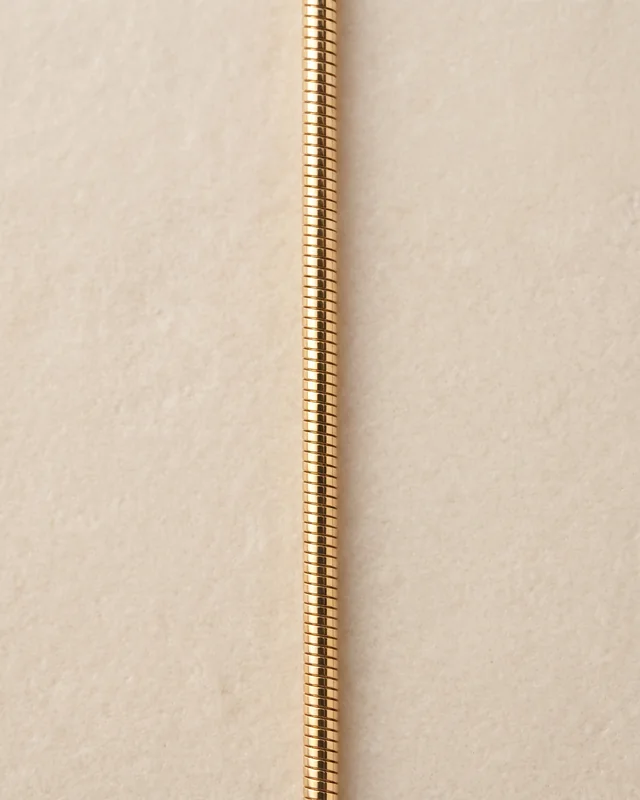
Snake chain
Closely fitted elements make a smooth, almost continuous tube-like surface.
- Good fit
- Light slide pendant with a compatible opening
- Advantage
- Smooth surface and minimal visible link texture
- Watch for
- A sharp bend can leave a kink. Check the specific construction.
- Check
- Manufacturer guidance and any flat spots or kinks
| Chain Type | Suitable Pendant Styles | Advantages | Limitations | What to Check |
|---|---|---|---|---|
| Cable chain | Small solitaire or everyday charm | Simple profile keeps the pendant in focus | Very fine links can wear where the bail rubs | Closed joins and the smaller end ring |
| Box chain | Solitaire, small locket or compact medallion | Compact, tidy outline | Corner orientation matters on a narrow bail | Outside dimensions, corner clearance and end tag |
| Wheat / Spiga chain | Everyday medallion or a substantial pendant | Braided drape with a continuous-looking surface | A rounded or squared profile can fill a shallow bail | Actual profile depth and end cap |
| Rope chain | Medallion with an open bail or a bold drop | Texture that can balance a plain pendant | Bulk at the end cap. Hollow rope can be difficult to repair. | Outside diameter and whether the links are hollow |
| Curb chain | Flat medallion or an open-backed pendant | Shallow profile on the chest | A wide face or a broad end tag may catch | Face width, side clearance and the end tag |
| Snake chain | Light slide pendant with a compatible opening | Smooth surface and minimal visible link texture | A sharp bend can leave a kink. Check the specific construction. | Manufacturer guidance and any flat spots or kinks |
Snake and herringbone need extra care around tight bends. Herringbone uses closely overlapping flat links and is prone to twisting and kinking, as Jewelers of America explains. For a snake chain, a light slide pendant with a smooth, roomy passage can be a reasonable fit if the maker recommends it. If the bail makes the chain fold sharply, or the chain already has a kink, choose another pairing.
How to Match a Chain to Pendant Weight
Use the actual pendant weight to narrow your shortlist. Ask the seller for the finished weight including the bail, or weigh the detached piece if you own it. Two similar-looking medallions can feel different in the hand. The outline alone tells you little about the amount of metal, stones or backing.
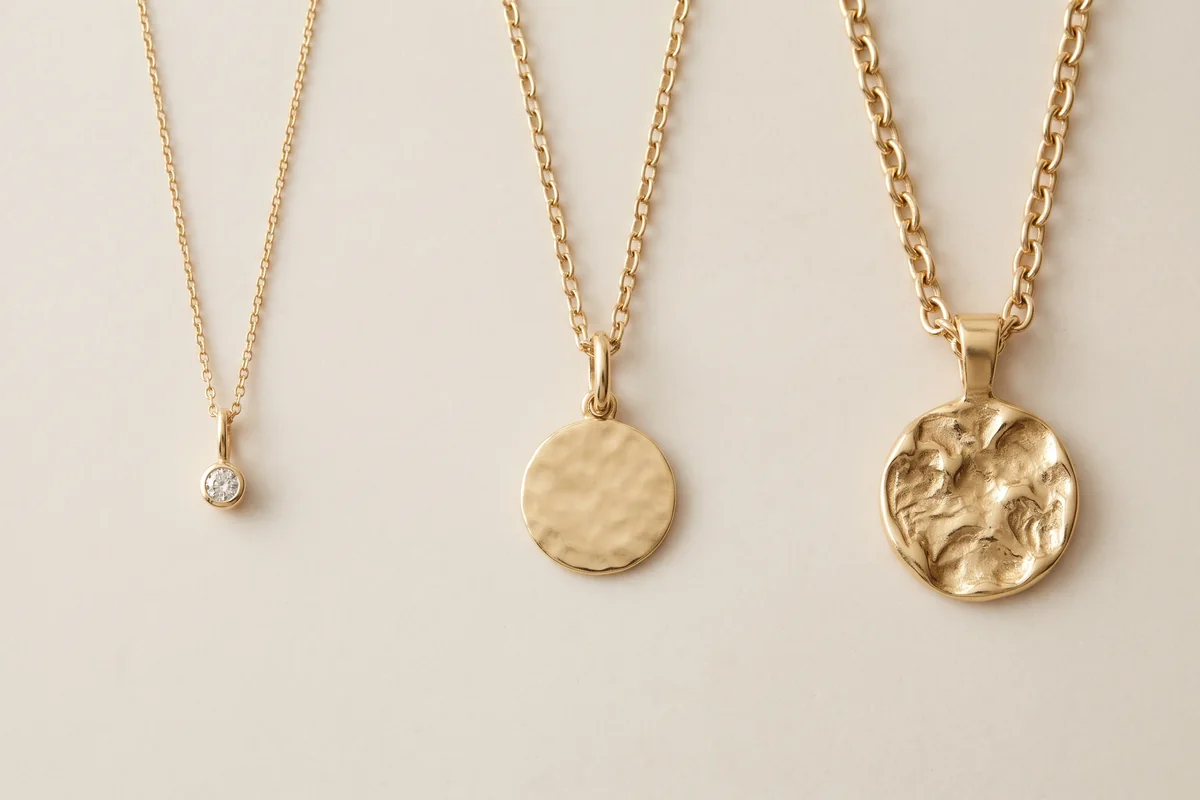
- SmallSolitaire
- MediumMedallion
- LargeSculptural drop
Small and lightweight
Start with a compact box or fine cable if the bail is tight and you want the stone to lead visually. Check the end ring against the bail before choosing a finer chain just to get the clasp through.
Medium and worn often
Compare a few well-finished cable, box, wheat or low-profile curb chains. Look at the area where the bail rests. Use a chain that drapes without a sharp bend and has a clasp and end ring that close cleanly. Check the same spots more often if you wear it daily.
Large, deep or heavy
Bring the pendant to a jeweler if it feels substantial, is hard to replace or hangs away from the chest. Compare several specific candidates with enough room in the bail, such as a substantial wheat, box, curb or rope chain. Ask what the seller recommends for this chain, its clasp and your pendant. A wide link or heavy-looking chain gives no load rating.
Inspect the whole assembly. Link width and thickness, the alloy, solid or hollow construction, join quality and the end connections all matter. Look for opened joins, flattened or stretched links, dents, a loose end ring and a clasp that fails to shut. Check the bail itself for a worn groove or rough inner edge. Set a damaged piece aside for repair. For a maker’s load claim, ask which exact model, configuration and test it applies to.
Pendant Bail and Chain Compatibility
A pendant bail is the loop, passage or fitting that connects the pendant to the chain. It can be visible above the pendant, integrated into its body or hidden behind it. When a listing says “bail size,” ask for the clear opening. Fire Mountain Gems’ bail measurement guide distinguishes the opening from overall size and the depth used to hold the pendant itself.
- Measure the clear opening. With the pendant resting securely, use a caliper suitable for the opening or ask a jeweler for the inside width and height at the narrowest usable point. Note taper, corners and anything protruding into the passage.
- Measure the right chain end. Check the maximum width and thickness of the end that would go through first, including the ring, tag or cap. Start with the smaller end if it can be threaded on its own.
- Check the link profile. Compare the chain’s outside width and depth at its broadest point. Try the orientation that the chain takes while threading and resting. A circle, flat oval and square of the same listed width can fit differently.
- Try the movement. With both pieces over a soft surface, thread gently and close the clasp. Lift the chain and tilt it slightly. The bail should move through its intended range without scraping, binding or forcing a sharp bend.
If the body fits and neither end clears the bail, ask a jeweler about compatible end hardware or an appropriate bail. For an opening bail, check that the closure seats securely around the chosen link. Avoid squeezing links or forcing an end through.
How Thick Should a Pendant Chain Be?
Think about width as the visible span across the chain face and thickness as its front-to-back profile. A seller may call the outside width of a round chain its diameter. The dimensions of the individual link material also affect a chain’s build. Ask which dimension the listing gives.
A thin visual line can keep a pendant prominent. A wider chain can look more balanced with a broad pendant, provided it threads and moves in the bail. Compare the same pendant at the same position before changing length. Buy the construction and fit you can verify.
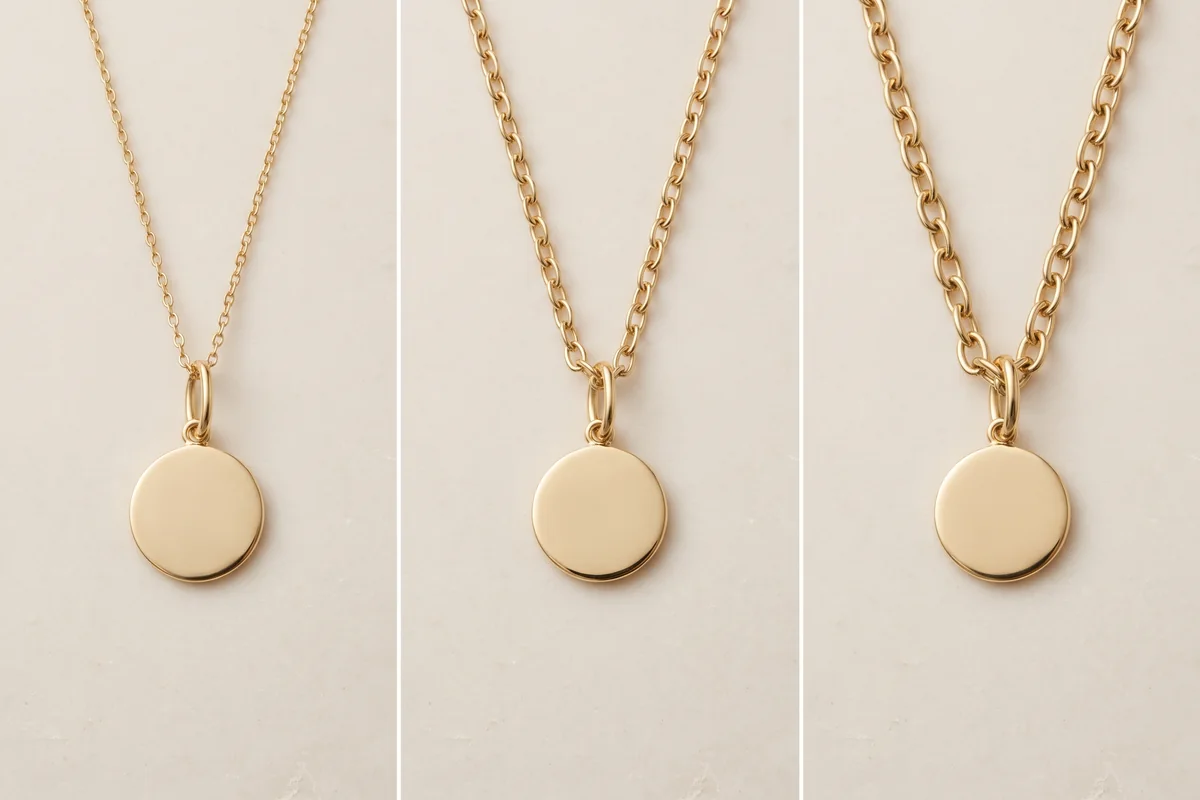
- NarrowerPendant leads
- MediumLinks more visible
- WiderCheck profile and ends
Choosing the Right Chain Length
Decide where you want the bottom of the pendant to sit. The chain sets the starting point. The bail and pendant add their own drop below it. Try the combination with the neckline you wear most often and check how the pendant sits when you move or bend.
For layering, separate the drops enough to see each pendant and try them together to check for catching or rubbing. An adjustable chain makes it easier to switch necklines. Check that any end tag or slider is compatible with the bail. See the necklace length chart or use its necklace length visualizer to compare where the chain itself will fall. Our guide to necklace styles shows how a suspended pendant differs from a fixed-center necklace.
Solid vs Hollow Chains for Pendants
Solid and hollow describe the link material’s cross-section. A solid link is metal through the section. A hollow link may be formed from thin-walled metal with a void inside, as described in the technical review of hollow carat gold jewelry. A chain can be gold alloy throughout its walls and still be hollow.
With comparable outer dimensions, length and alloy, a hollow design can give more visual volume for less metal and lower weight. It may cost less for that reason, although workmanship and seller pricing also matter. Thin walls can dent or flatten, and some patterns need a specialist or replacement when damaged.
A solid version is a sensible candidate when you are comparing similar models for frequent wear. Actual performance still depends on the amount and shape of metal, link joins, clasp, alloy and condition. A heavy pendant or an uncertain hollow construction warrants a fit check and a recommendation for the exact pieces.
Pendant Chain Buying Checklist
Take this list to the counter or ask the seller to confirm the details in writing if you are ordering online.
- Record the pendant weight and bail opening. Include the bail in the weight and note the smallest usable part of the opening.
- Ask about the chain construction. Confirm the link pattern, solid or hollow build, metal and alloy. Get outside width and thickness if the shape is not round.
- Check the clasp and end fittings. Find out which end goes through first and make sure the fastener and end connections close as intended.
- Confirm length and hang. Fit the chain with the pendant, check the neckline and try any intended layers.
- Look for wear and get model-specific advice. Note dents, bent links, loose ends or a rough bail. Ask the maker about your configuration, especially for substantial or valuable pendants.
Common buying mistakes
Checking the nominal chain width and forgetting the end tag is the easiest mistake to make online. Other common misses are estimating weight from the face size, assuming every thick-looking chain has solid links and measuring where the chain ends without allowing for the pendant drop.
Measure the pendant, shortlist chains by construction, test the bail, then choose the length. If you are replacing a damaged chain, have the pendant bail looked at before fitting the replacement.
Pendant Chain FAQ
What type of chain is best for a pendant?
For a simple first shortlist, try cable, box or wheat. For a pendant with a wide, flat opening, also try curb. A rounded rope can work with a roomy bail. If you intend to switch between several pendants, fit the chain to the smallest usable opening and assess the heaviest piece separately.
Is a box chain good for pendants?
Yes, a box chain is a useful option for many everyday pieces. Check the squared profile against a narrow or tapered bail and ask how wide and thick the end tag is. A chain that looks compact in a front photo may have more depth than you expect.
What is the best chain for a heavy pendant?
Have a jeweler assess the actual pendant and chain together. Take the pendant along with its measured weight and any maker instructions. Ask to compare the links, joins, clasp and end connections on substantial candidates such as wheat, box, curb or rope.
How thick should a pendant chain be?
Check the outside dimensions and braid or link profile of a specific chain against the bail. A rectangular opening can favor a flatter profile, even if two chains share the same listed width. If an online listing gives one measurement, ask whether it is face width, outside diameter or thickness.
Can a pendant damage a thin chain?
Yes. A rough or worn bail can rub the part of a fine chain where it sits, while a snag can strain the links or end connections. If you spot a gap, a flattened section or a persistent bend, set the piece aside for inspection.
Are hollow chains suitable for pendants?
Some can be worn with a compatible pendant when their design and manufacturer guidance support the combination. For an heirloom, ask about wall construction and whether the maker or a local bench jeweler can repair that exact chain. The look of the chain cannot answer either question.
How do I know if a chain will fit through a pendant bail?
Measure the smallest inside height and width of the passage and the largest part of the chain end you would thread. If the holes are tapered or angled, try the real pieces together. For online buying, ask the seller for a photo of the end fitting beside a measurement or for a fit check with your pendant model.
What chain length is best for a pendant?
Choose the length that places the bottom of the pendant where you want it. If you are between two lengths, try both with the intended neckline and check whether the pendant sits above the edge or drops below it as you move.