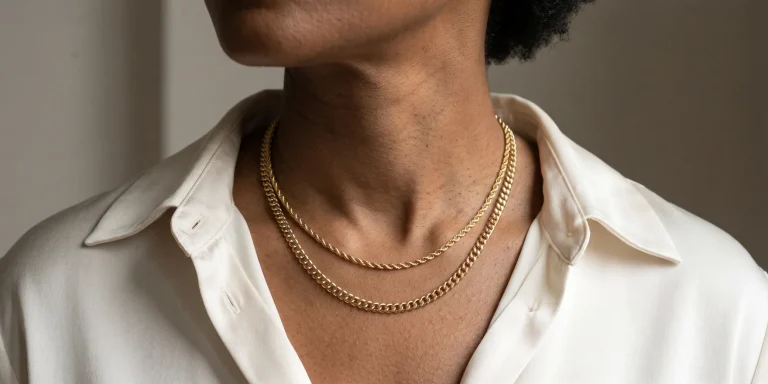
Types of Necklaces: Styles, Lengths and Uses
Start with the outline and the detail your eye goes to first. Necklace length tells you where the piece may land. The links, focal ornament and way it hangs tell you how the whole design will look and wear.
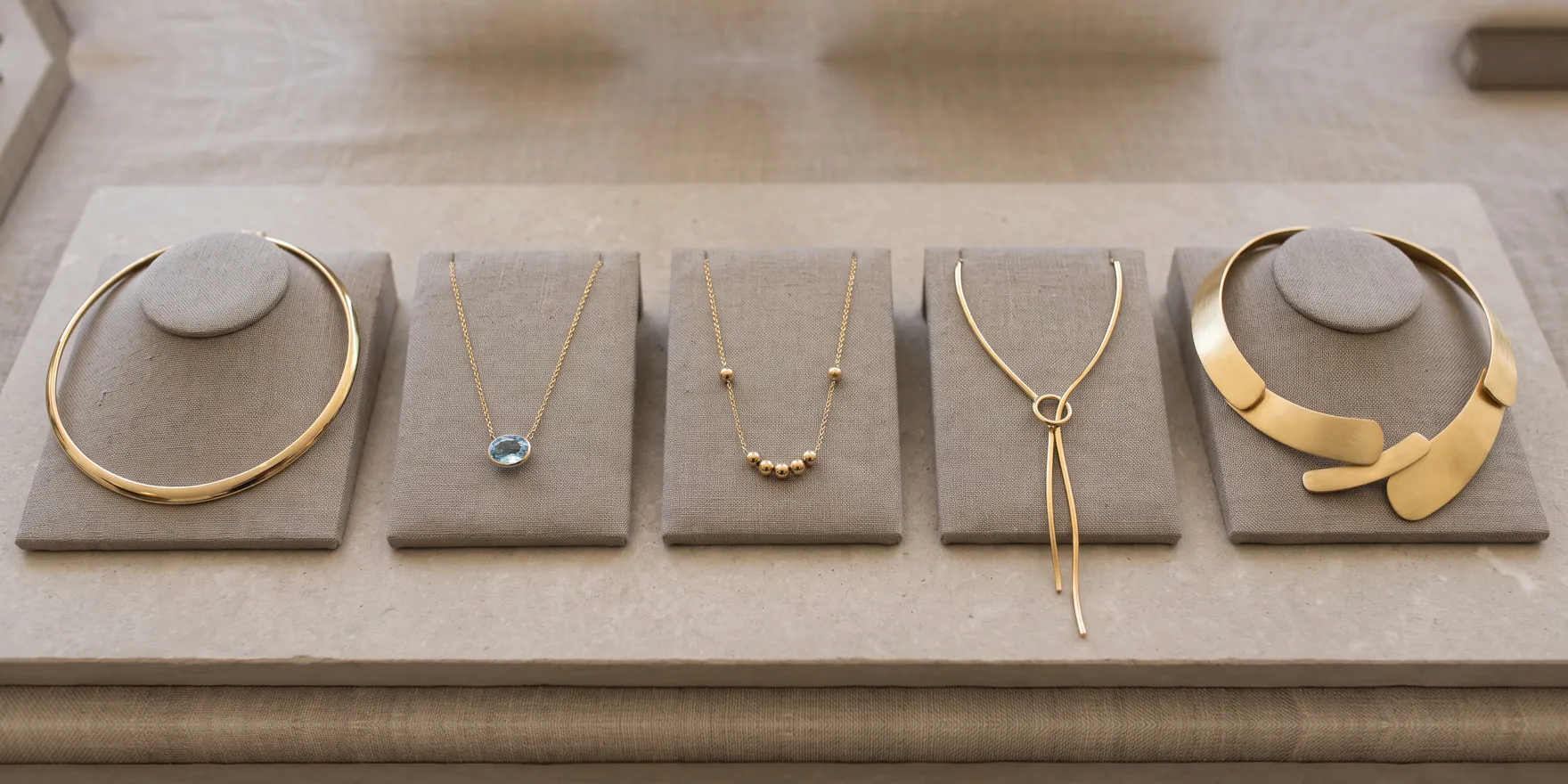
What are the main types of necklaces?
Common types of necklaces include chokers and collars, pendants and solitaires, station necklaces, lariats and Y-necklaces, bib and statement pieces, tennis necklaces, and multi-strand designs. You’ll also see length names such as princess, matinee, opera and rope.
Describe the finished piece in layers of detail. A necklace can be a pendant style, use a cable chain, measure 18 inches and form the lower layer of a stack. All four descriptions can be true at once.
- Style describes the finished design, such as a tennis line or a choker.
- Chain type names the link construction, such as cable or box.
- Length describes how much necklace wraps around you. Ask whether the measurement includes the clasp and any extender.
- Pendant means a hanging ornament. Other decorative elements can sit fixed in the chain or repeat along it.
- Layering is how you arrange several pieces when worn together. Some necklaces build that look into one piece.
Explore the visual atlas · Compare named lengths · Choose a style
Necklace styles at a glance
Find a feature you can see: where the necklace sits, what draws your eye, or how the strands join. These front views illustrate the silhouettes. Fit and dimensions vary by piece.
Close fit and traditional lengths
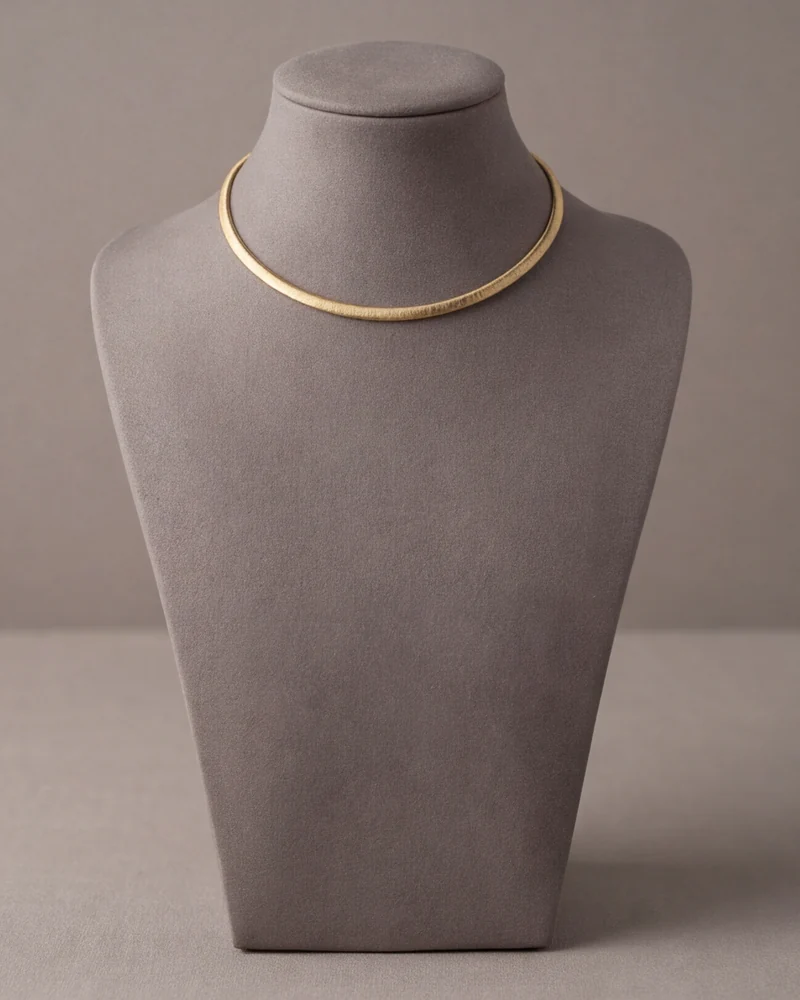
01Choker
A necklace designed to sit close around the neck.
- Look for
- A slim, high arc that follows the neck.
- Use
- A short focal line or the first layer of a stack.
- Check
- Check the shortest and longest settings. Turn your head and swallow normally.
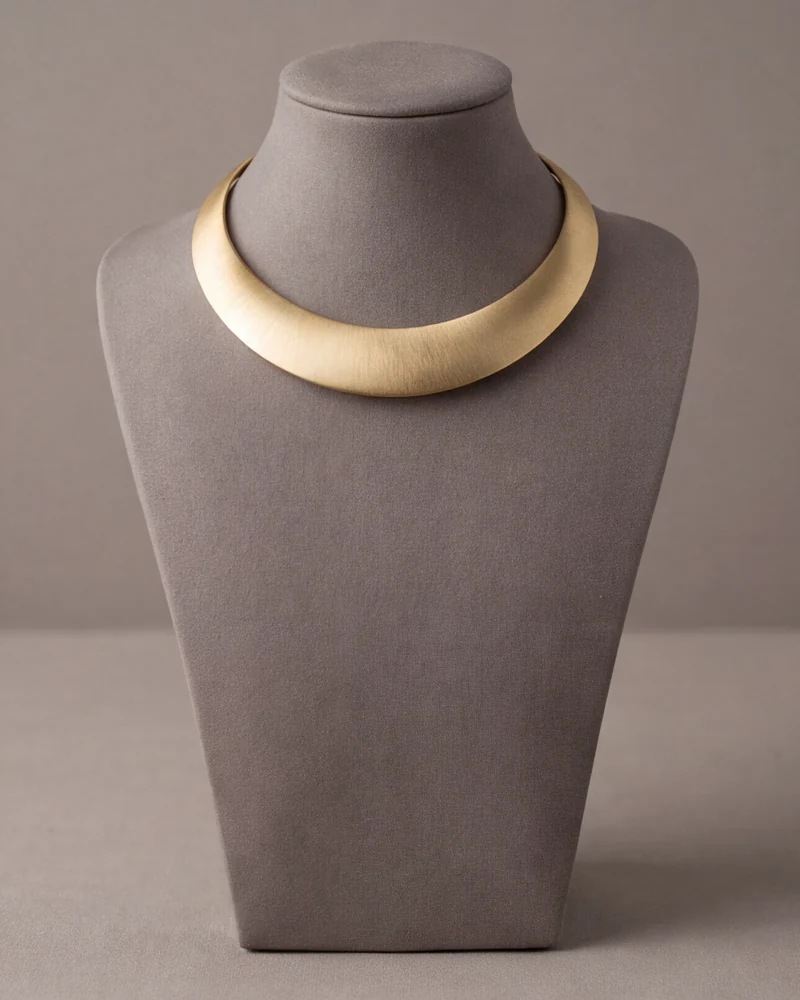
02Collar necklace
A close-fitting necklace that may form a wider band at the base of the neck.
- Look for
- A shaped arc framing the base of the neck and shoulders.
- Use
- A sculptural piece worn alone or over a simple neckline.
- Check
- Try a rigid collar on. Verify the opening, inner shape and edge comfort.
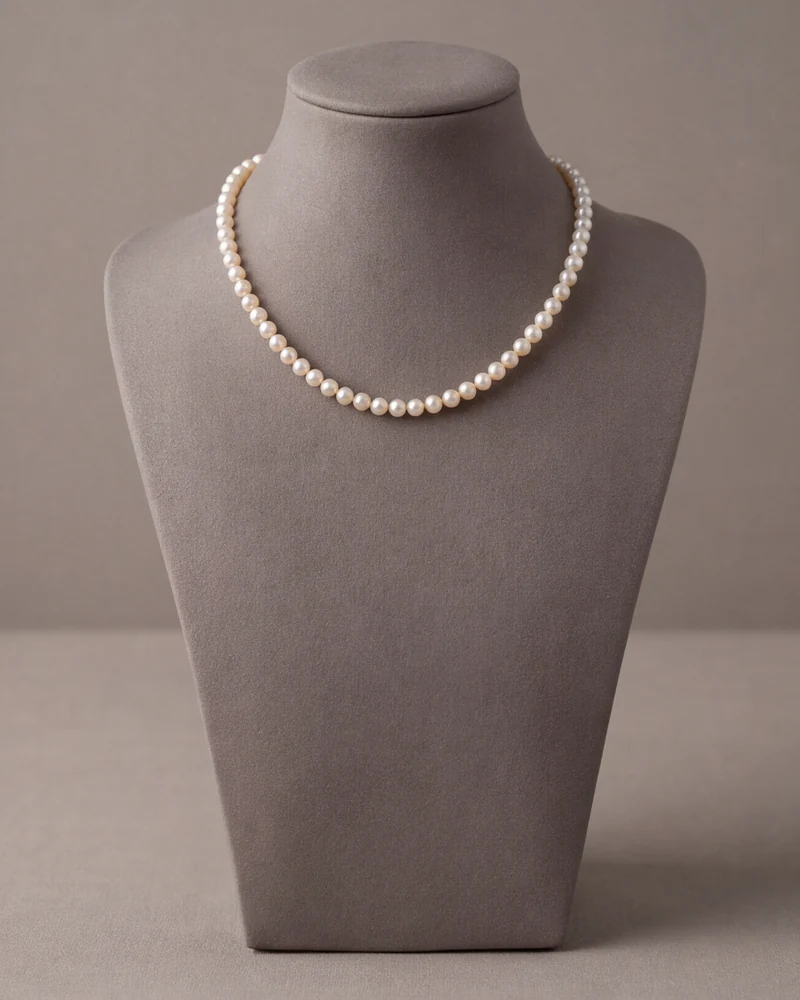
03Princess-length necklace
A traditional mid-short length name used for pearl strands and borrowed for other necklaces.
- Look for
- A shallow curve near or just below the collarbone on this bust.
- Use
- A single strand or a short pendant necklace.
- Check
- Check the measured clasp-to-clasp length and add the pendant’s drop.
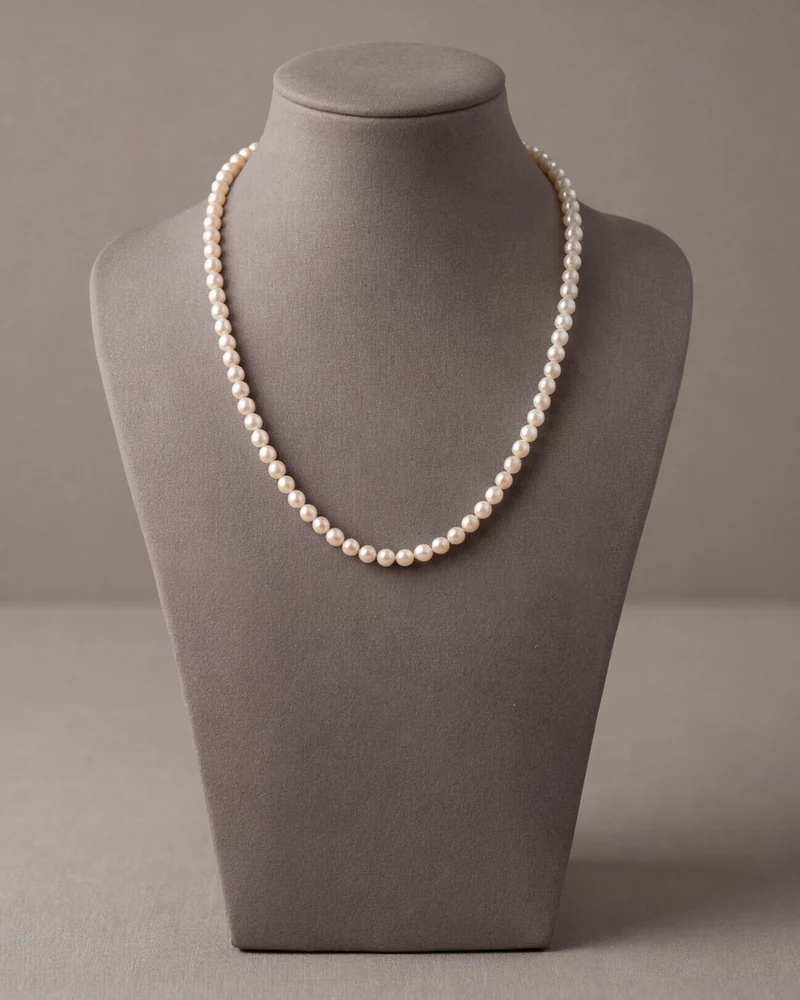
04Matinee-length necklace
A traditional length name for a strand longer than princess.
- Look for
- A deeper U-shaped curve on the upper chest in this example.
- Use
- A longer solo strand or a lower layer beneath a short chain.
- Check
- Try it with the shirt or sweater you plan to wear.
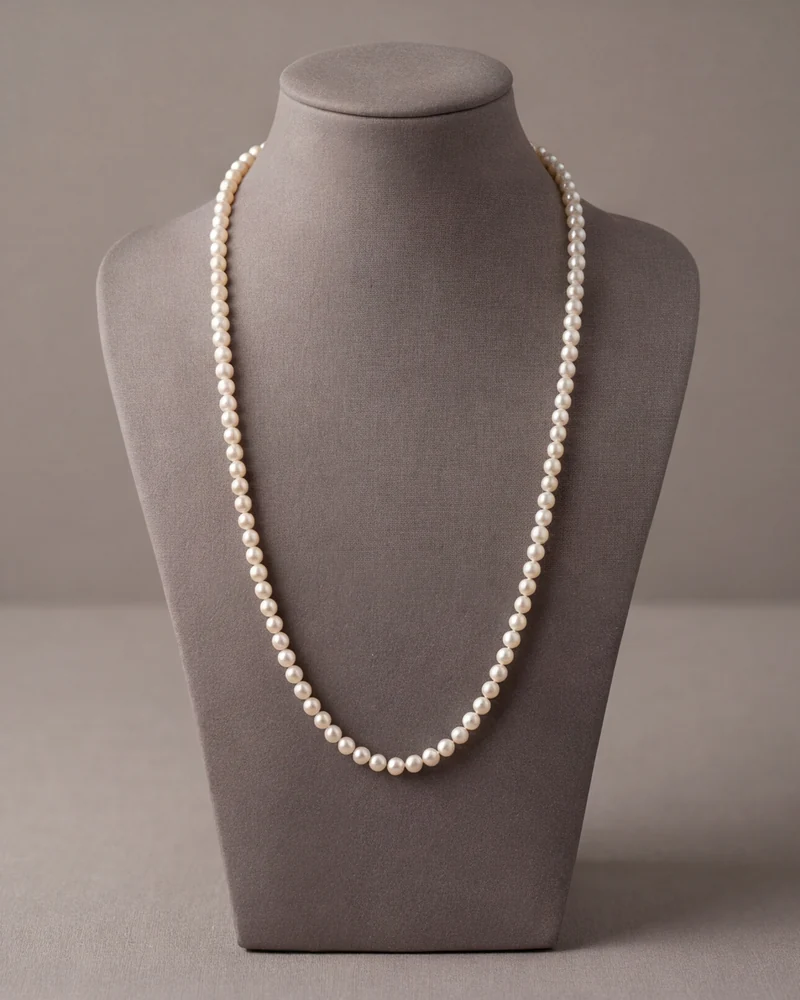
05Opera-length necklace
A long strand that can sometimes be worn in two loops, depending on the piece and the wearer.
- Look for
- A deep, continuous loop reaching lower on the chest.
- Use
- A long line over a plain top or a doubled strand if there is room.
- Check
- Check the actual length and whether its fastening allows the second loop.
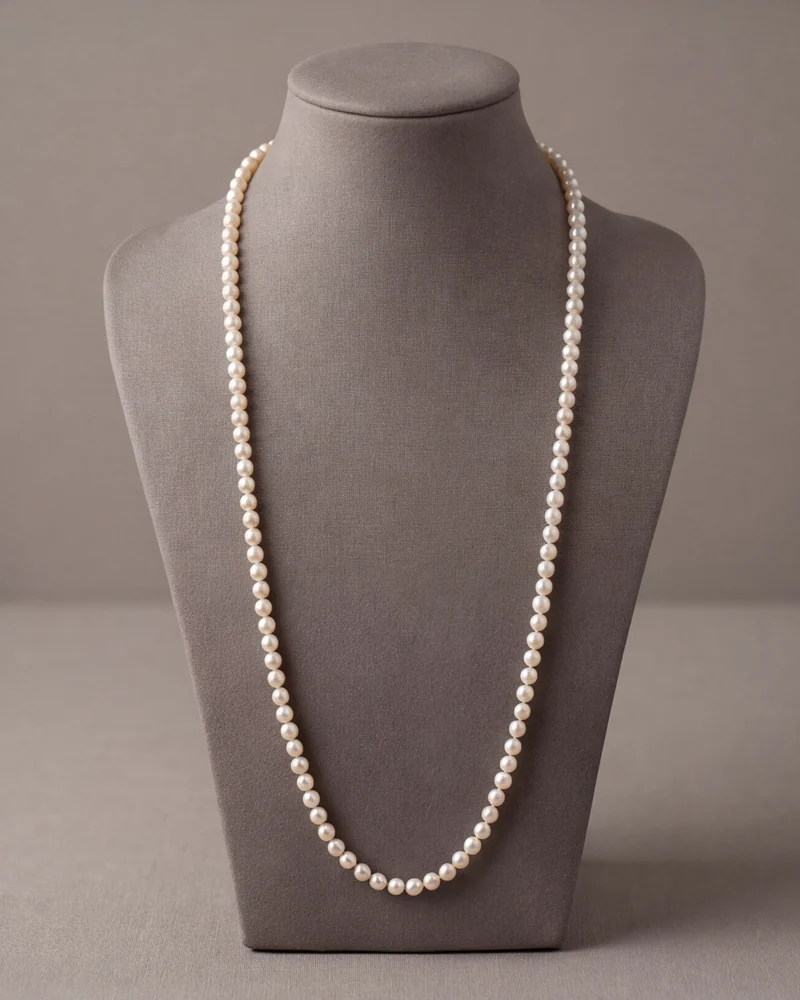
06Rope necklace
In pearl-length terminology, a very long strand. In a chain listing, “rope” can describe twisted links.
- Look for
- The longest single loop in this series.
- Use
- A long drape or a wrapped look when the design permits.
- Check
- Ask whether the listing describes length or link pattern. Check the measured length.
Pendants and drops
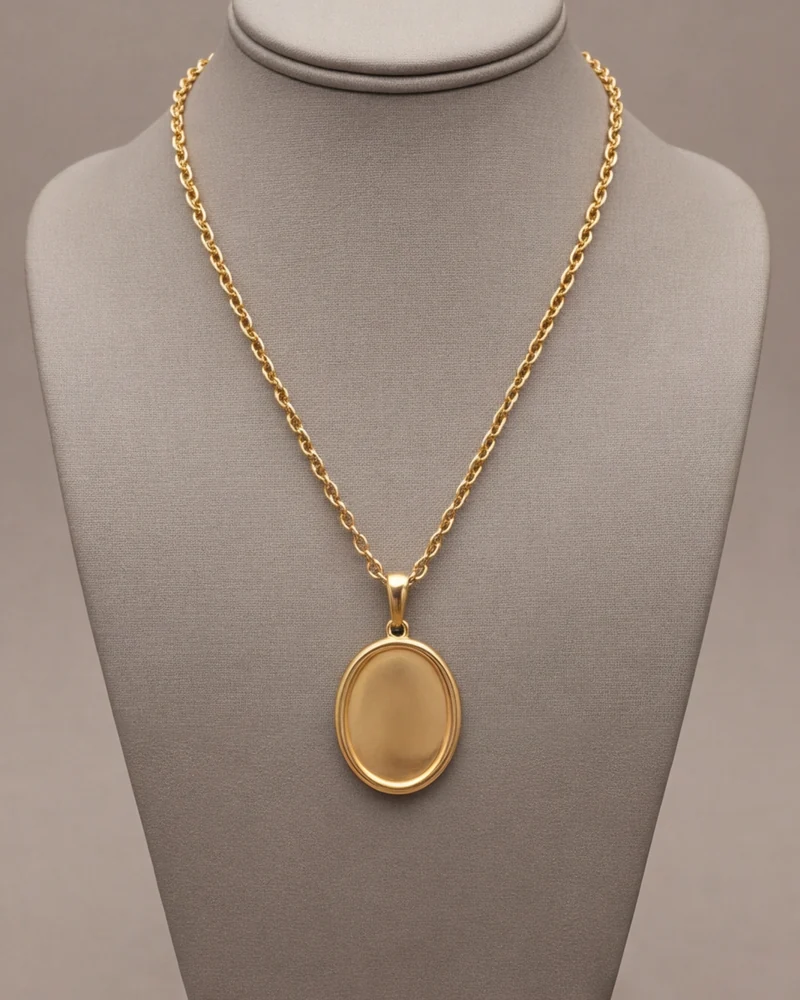
07Pendant necklace
A chain or cord carrying a suspended ornament such as a medallion, locket or gemstone.
- Look for
- One ornament hangs below the line of the chain.
- Use
- A personal focal piece or a lower layer.
- Check
- Check the opening in the pendant’s bail, the end fitting and how the piece hangs.
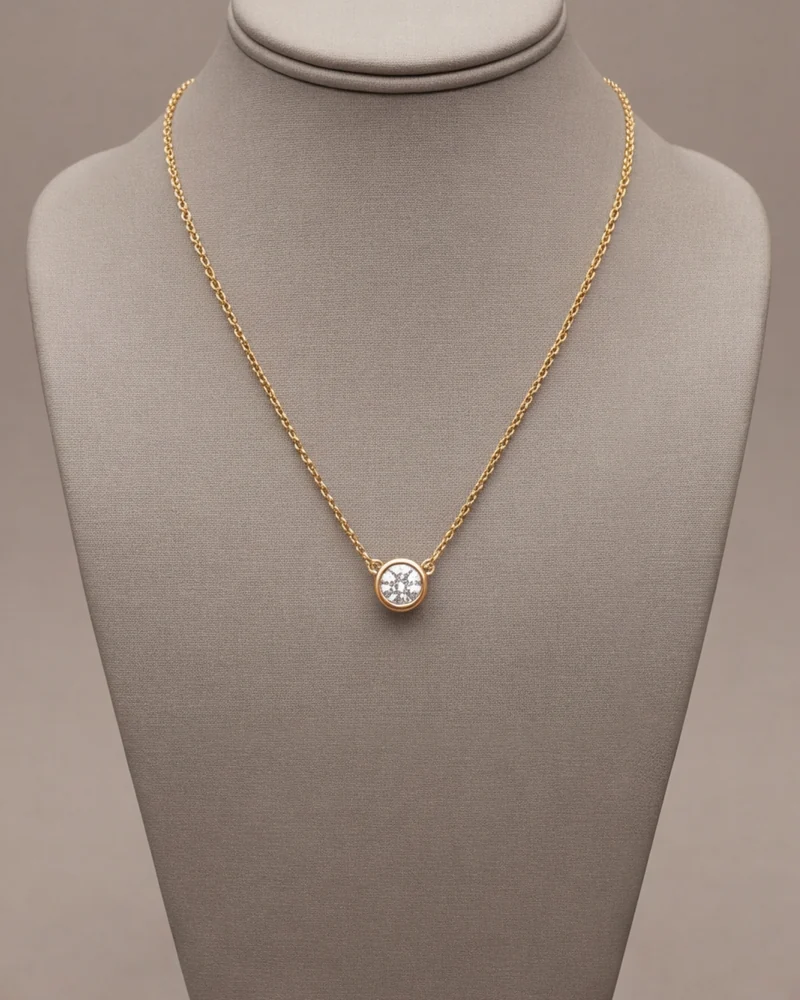
08Solitaire necklace
A design centered on one prominent stone, which may hang as a pendant or sit fixed in the chain.
- Look for
- One stone draws the eye. This one is fixed between the chain ends.
- Use
- A small focal point worn alone or above a longer piece.
- Check
- Look from the side to see how the setting sits and whether it turns over.
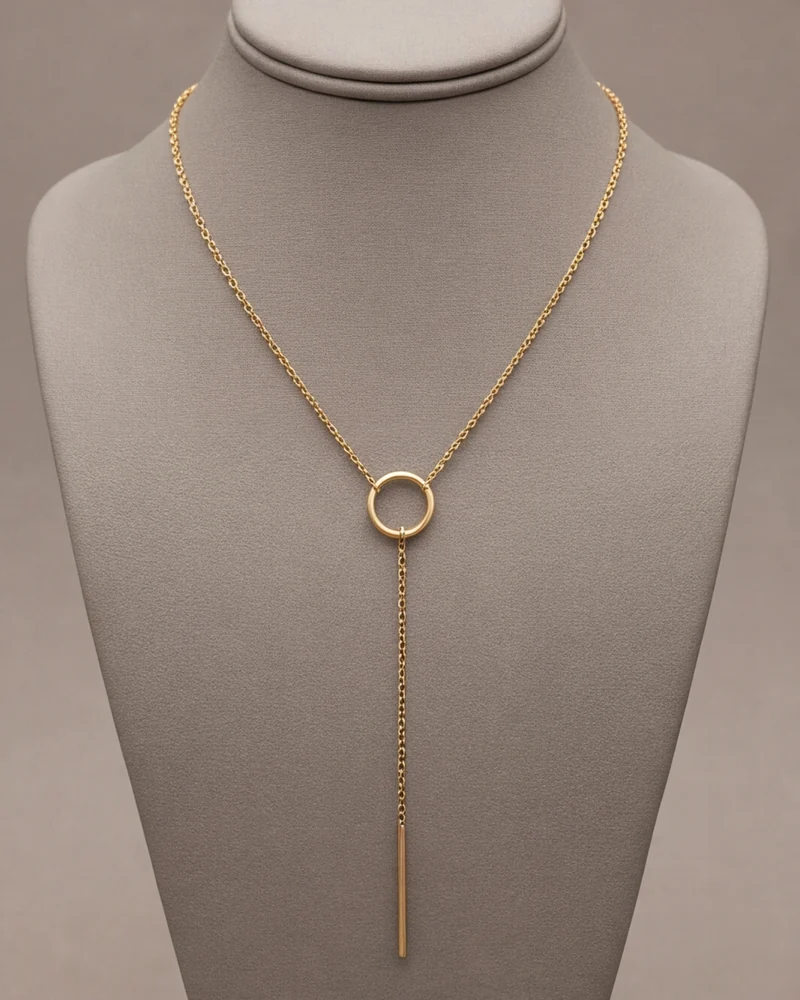
09Lariat necklace
A design named for how its ends loop, tie or pass through a fitting. Retail use varies.
- Look for
- A long free end hangs from a visible loop in this example.
- Use
- A vertical accent with a drop that may be adjustable.
- Check
- Ask whether the loop slides, how it stays in place and whether the piece also has a clasp.
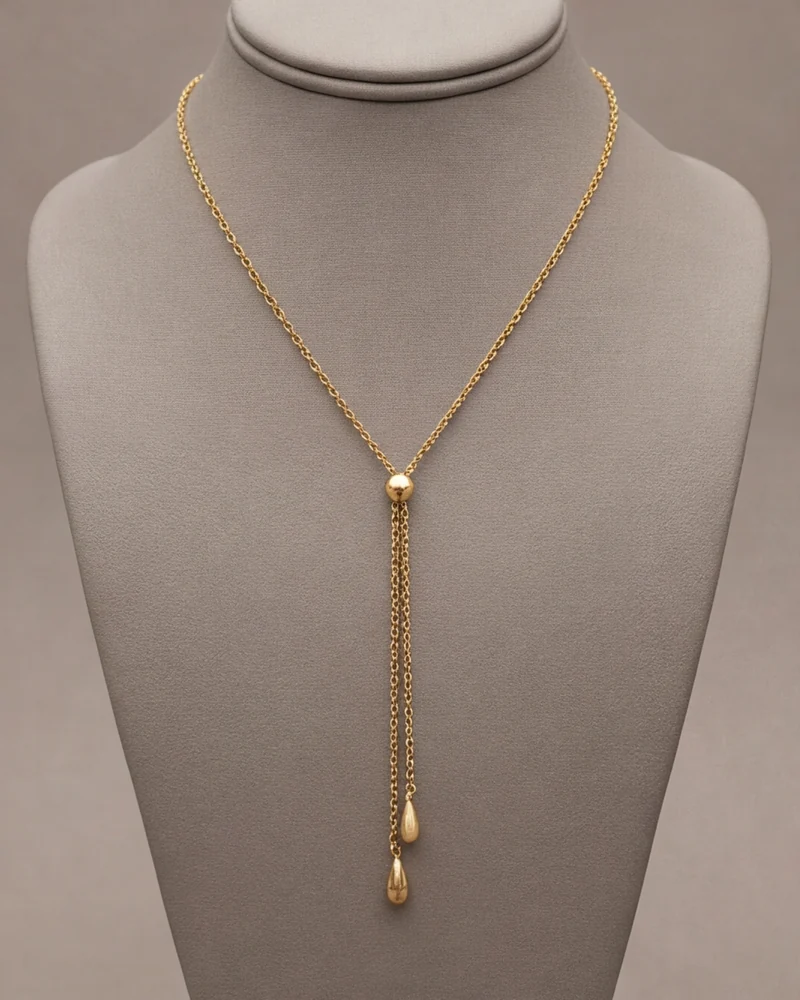
10Y-necklace
A necklace with two sides meeting at a center junction from which a drop descends.
- Look for
- The front forms a Y. This example has a fixed junction.
- Use
- A defined vertical line and a predictable drop relative to the junction.
- Check
- Check the measured drop and whether the neckline adjustment is separate.
Decorative and statement styles
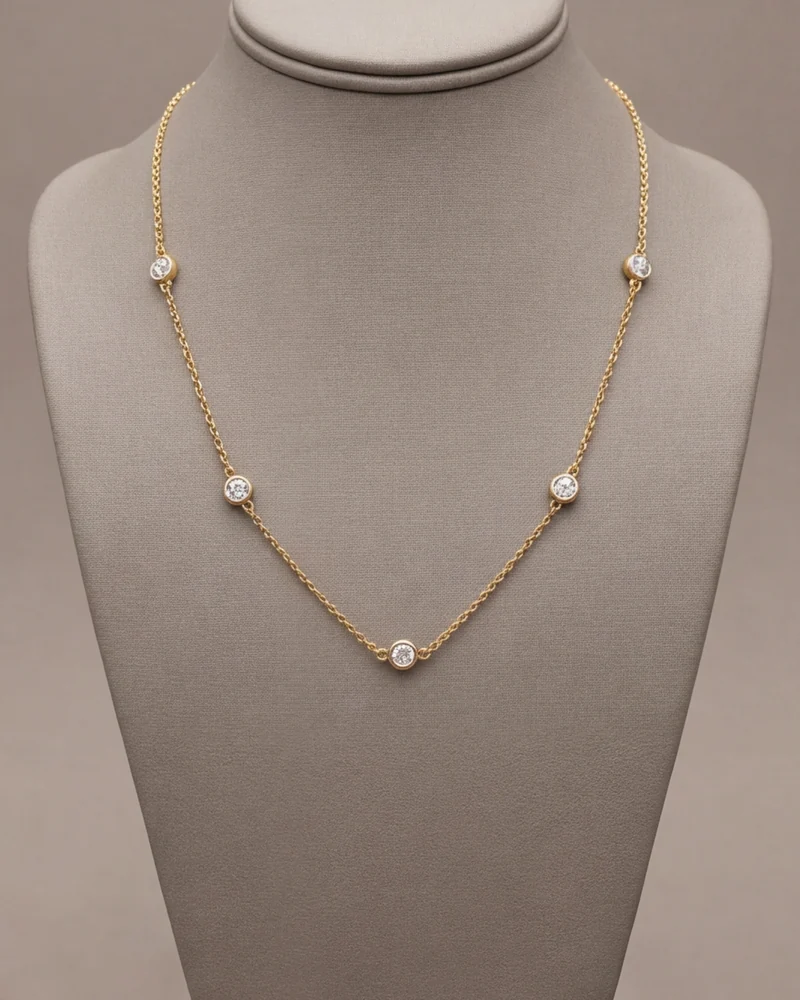
11Station necklace
Small ornaments or stones sit at intervals along a chain, with visible lengths of chain between them.
- Look for
- Repeated points of light with open space between them.
- Use
- Subtle detail in a solo necklace or a layer beside a pendant.
- Check
- Ask which side of the stations is finished. Check if any turn when worn.
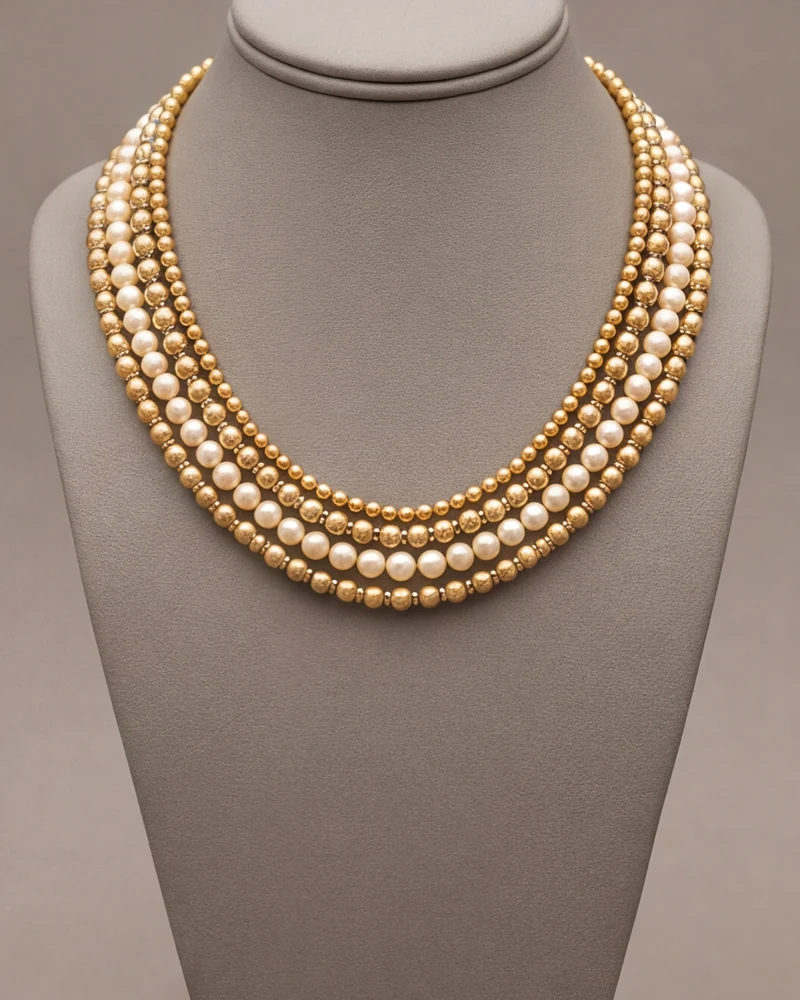
12Bib necklace
A necklace whose components form a broad front panel across the upper chest.
- Look for
- Several rows or linked elements build a wide, downward-curving front.
- Use
- A single piece that fills an open neckline or frames a plain top.
- Check
- Look at weight, movement and whether edges or settings catch fabric.
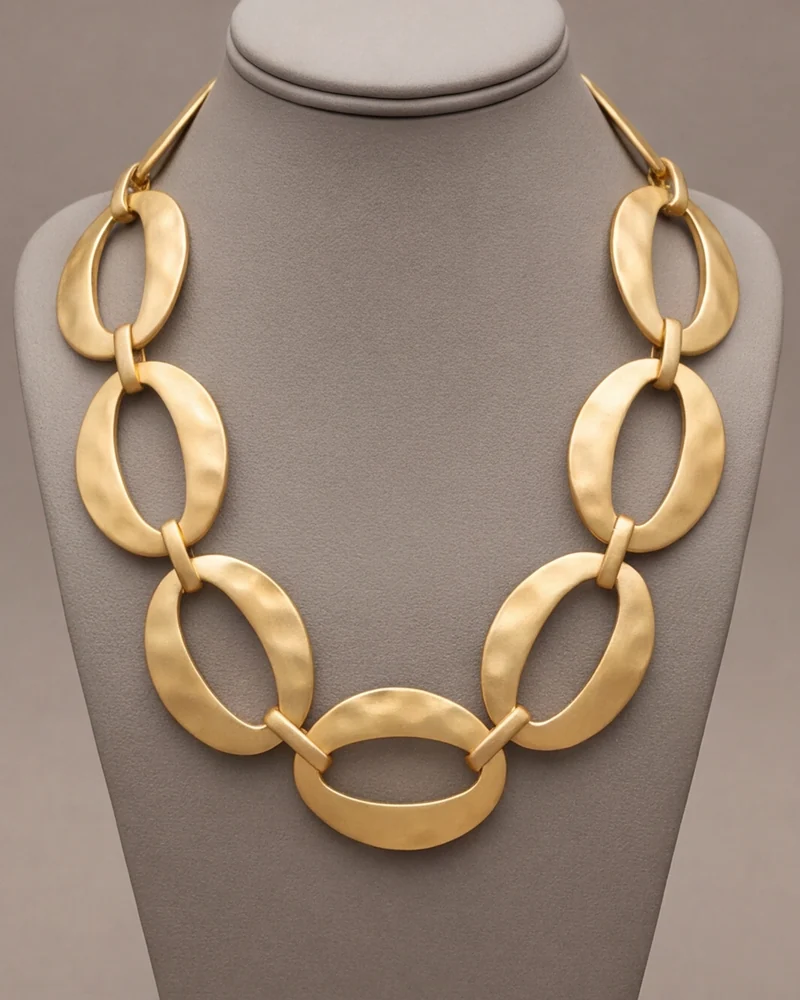
13Statement necklace
A broad style label for designs intended to be a prominent part of the look.
- Look for
- Oversized shapes, bold color or texture. This one uses large gold links.
- Use
- A focal piece for a simple outfit or a dressier occasion.
- Check
- Check real dimensions, weight and whether it needs a wider storage space.
Stone lines and multiple strands
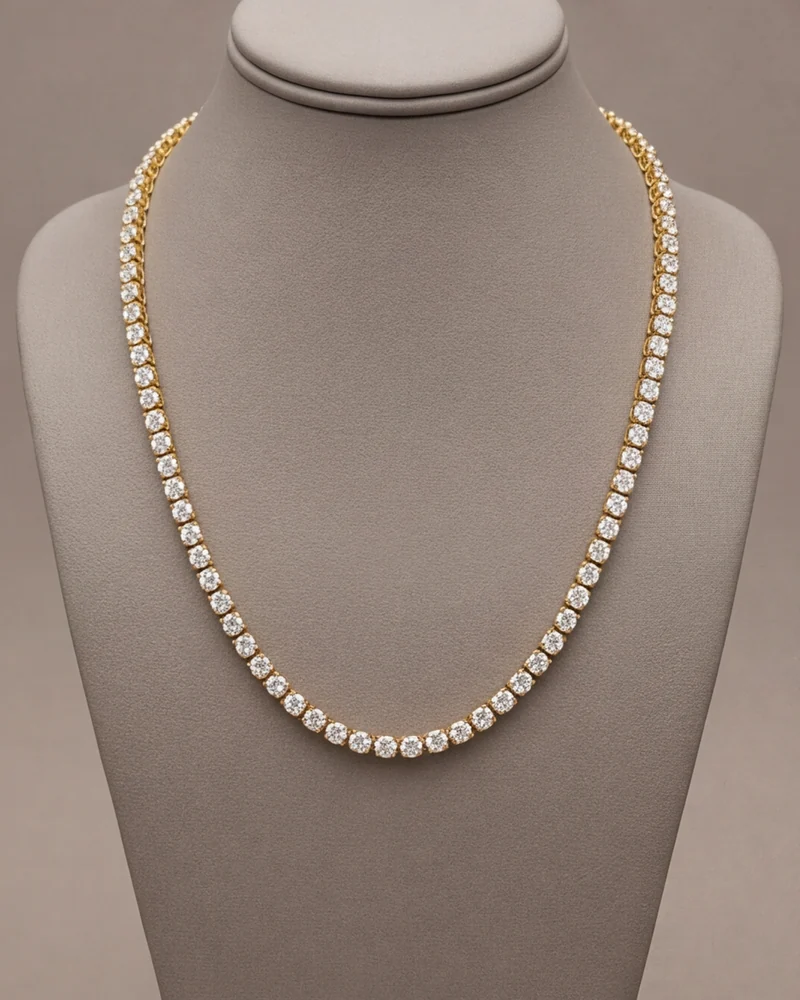
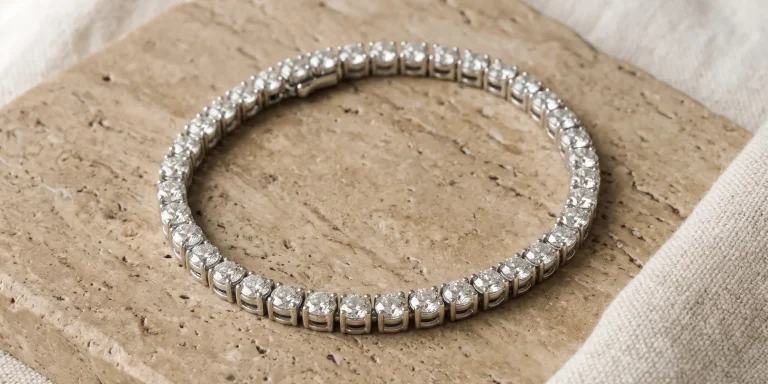
14Tennis necklace
Closely spaced, individually set stones create a continuous line across the visible part of the necklace.
- Look for
- An even line of stones, sometimes graduated toward the center.
- Use
- A continuous sparkle line worn alone or beside a plain chain.
- Check
- Try the clasp and check that the stone line sits in the direction you prefer.
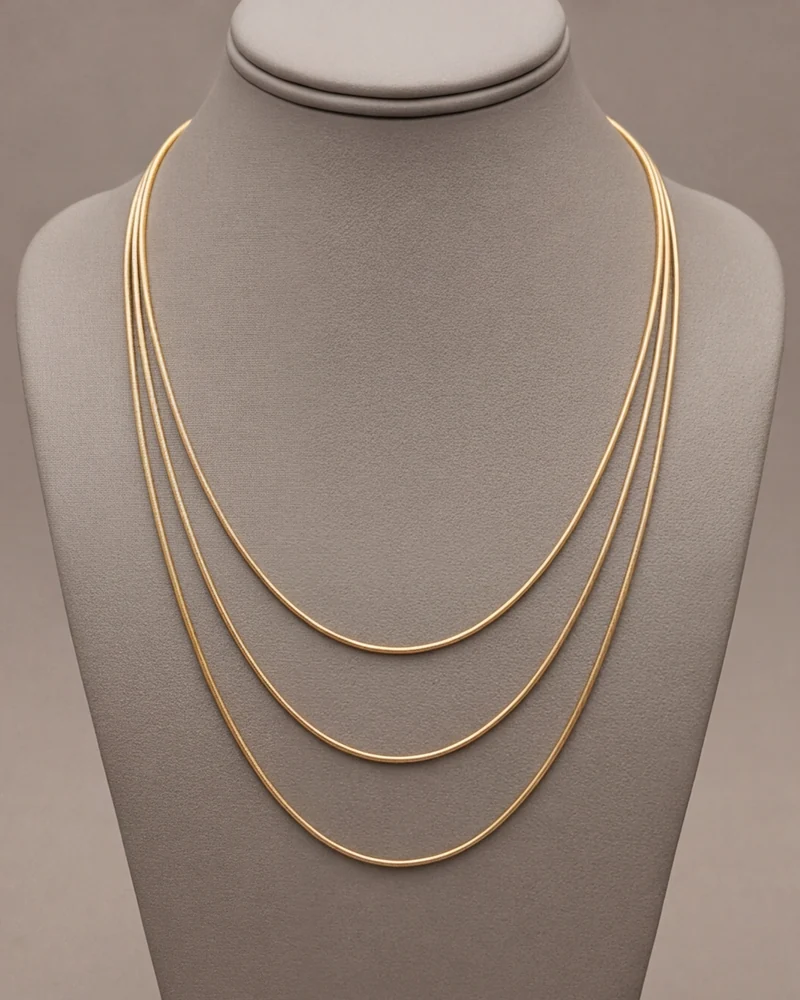
15Multi-strand necklace
Several strands are built into one finished necklace, often with shared end fittings or closure.
- Look for
- Nested arcs remain part of one piece.
- Use
- A put-together layered look with the strand spacing set by the design.
- Check
- Inspect the end fittings and check if the strands can cross as you move.
Choker vs. collar necklaces
Start with fit. A choker hugs the neck and can be a flexible chain, ribbon or band. A collar often frames the base of the neck with a broader or more shaped silhouette. Retailers also use collar as a short-length label, so the names can overlap.
For a flexible choker, check the adjustment positions and try it with the neckline you expect to wear. For a rigid collar, ask for the inside width, opening and closure style. Turn your head and swallow normally while trying it on. Check where the edges rest when you sit or move.
Princess, matinee, opera and rope lengths
These are traditional pearl-strand names that shops also use for other necklaces. The CIBJO Pearl Book gives these reference lengths for strands of pearls, including imitation pearls. Individual retail labels and how a necklace lands on the body can vary.
- Princess, 17–19 in. Often lands near the collarbone on a display bust. A short pendant drops below the chain.
- Matinee, 20–24 in. A longer curve across the upper chest in the illustration. This length can leave room beneath a shorter piece.
- Opera, 28–35 in. A long front loop. Ask whether it can be doubled comfortably and whether its clasp permits it.
- Rope, about 45 in. and longer. A very long pearl strand. Worn as one loop it falls lower, or it may wrap if the design and length allow.
A retailer’s length chart, for example, labels a 24-inch necklace opera. Compare the actual measurement with a necklace you already own, especially when ordering a pendant or matching layers.
Pendant, solitaire and station necklaces
A pendant hangs from the chain
A pendant is a separate ornament suspended by a bail, ring or other fitting. A heavier or deeper pendant can pull the center down or turn as you move. Compare the bail opening with the widest part of the chain end. Ask the jeweler to inspect the bail and any jump ring for gaps or wear, then try the pendant on the chain. A chain supplier’s buying guide explains how to check bail fit.
A solitaire puts one stone in focus
A solitaire can hang as a pendant or sit fixed between the chain ends. The term refers to the featured stone. It can be a diamond or another gemstone, in settings such as a bezel or prongs. Look from the side to see whether the setting sits comfortably.
Stations repeat along the chain
Look for spaces between the set stones, beads or ornaments. That rhythm is different from one hanging focal point and from a continuous stone line. See the station example in the atlas. Fasten and store it separately so the chain and settings stay out of a tangle. Use the maker’s care advice for its materials.
Lariat vs. Y-necklace
Look at the junction. In one common lariat design, a free end threads through a loop, letting you change how far the tail hangs. Other lariats tie or wrap, and some retailers use the term for a drop necklace with a back clasp. Inspect the actual closure before deciding how to put it on.
A Y-necklace is named for its front outline. Two sides meet and a drop continues down. A fixed-junction Y often closes like an ordinary necklace, with a drop built in. The back extender may change where the junction rests without changing the length of the drop itself.
Try the piece while moving. See if the lariat tail shifts and whether you can reset it easily. On a fixed Y, check where the bottom of the drop lands against the neckline.
Bib and statement necklaces
A bib is defined by the broad front it creates across the upper chest. Beads, linked plates or several connected rows may form that panel. Statement describes a bolder visual effect. A bib can be a statement necklace, but so can a chunky single row or a large pendant.
Compare the curved bib and the oversized link design in the atlas. Try the piece with your neckline while sitting and turning. Ask for the total weight if you are buying online. Feel whether edges or raised settings rub fabric, and check whether the necklace lies in its box without folding the decorative front.
Tennis necklaces
A tennis necklace has a close, repeated line of individually set stones. It can have uniform or graduated sizes and may use prongs or bezels. The connected settings let many versions drape. Run the eye along the curve to see whether the settings face the way you want when you move.
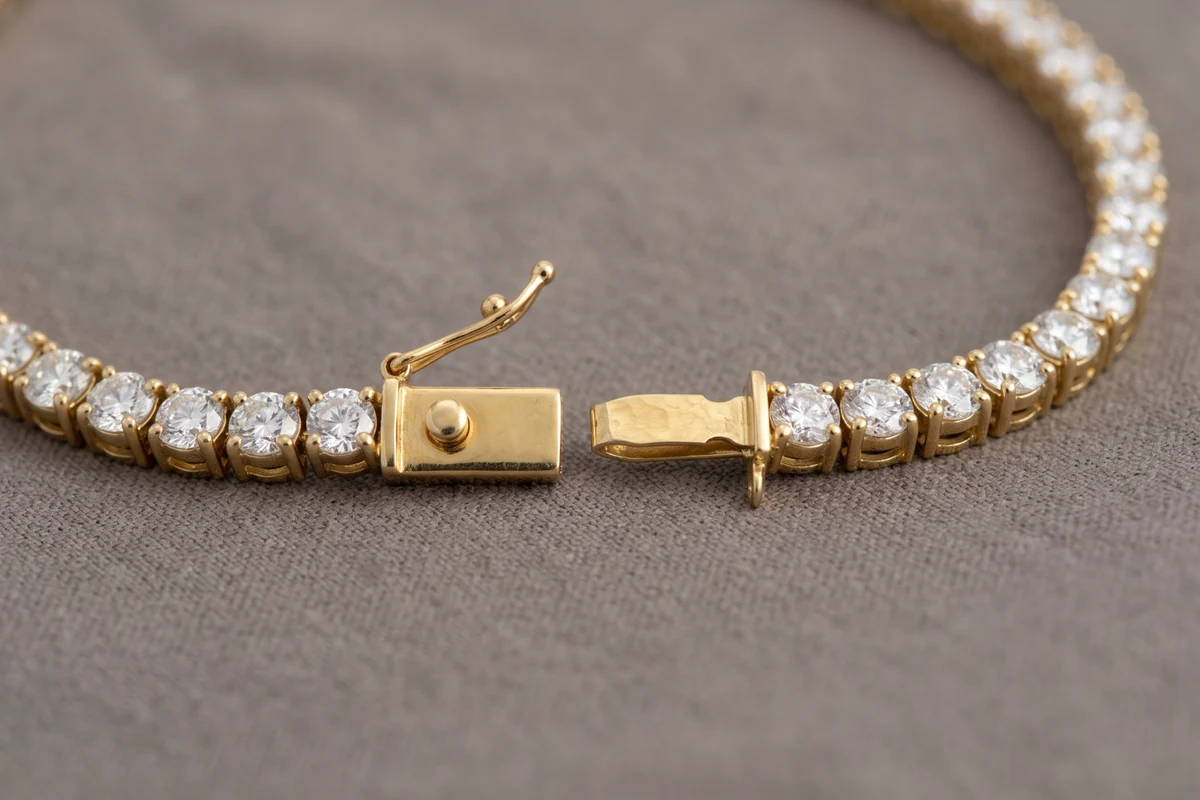
Check how far the stones extend, how the front sits and whether the clasp suits your dexterity. Some designs use a box clasp with an additional safety catch. Ask the seller to show how both parts engage on that specific necklace. A fitted catch is one feature to inspect alongside the clasp’s condition and operation.
Multi-strand vs. layered necklaces
A multi-strand necklace is one finished piece with multiple strands, often joined at the ends. Layering means putting on separate necklaces. A listing for a layered necklace set could mean several independent pieces or one joined piece. Ask how many closures it has and which pieces can be removed separately.
To build a stack, begin with two necklaces and leave enough visible space between their curves for each to read. Try different textures and check that pendants and stations sit away from the other strands. Separate closures are flexible for styling, but they can rotate and cross. A joined piece gives you less control over spacing.
Try fastening the pieces together in the order you intend to wear them. When you put them away, undo any crossings and give each independent chain its own compartment or hook. Follow the maker’s care and storage instructions for its materials.
Necklace styles vs. chain types
Two necklaces can share the same style and use different links. A pendant on a cable chain and the same pendant on a box chain are both pendant necklaces. A statement necklace may use several linked components. In a simple chain necklace, the links themselves are the visible design and there’s no pendant.
Look at the whole piece to choose the style. If you are choosing a chain for the look and movement of its links, see Types of Necklace Chains for matched link close-ups.
Compare the defining feature
| Style | Defining feature | Typical length or fit | Best-known use | Buying consideration |
|---|---|---|---|---|
| Choker | Close, high line | Close to the neck | Short solo piece or top layer | Check adjustment and comfort in motion |
| Collar | Shaped band framing the neck | Close to the base of the neck; varies | Sculptural focal piece | Check the inside shape and opening |
| Princess / matinee / opera / rope | Progressively longer strand labels | Use measured length; see pearl reference above | Strands, drops or distinct layer heights | Ask what the measurement includes |
| Pendant / solitaire | Hanging ornament / one featured stone | Varies by design | A single focal point | Inspect the bail or fixed setting |
| Station | Motifs separated by chain | Varies by design | Spaced points of detail | Check whether the stations turn |
| Lariat / Y-necklace | Looped or threaded ends / Y-shaped front | Check necklace length and drop separately | A vertical line | Inspect the junction and adjustment |
| Bib / statement | Broad front panel / bold visual impact | Fit depends on shape and construction | A focal piece worn on its own | Check weight, edges and storage space |
| Tennis | Continuous line of individually set stones | Varies by design | A line of repeated sparkle | Try the clasp and observe how it drapes |
| Multi-strand | Several strands built into one piece | Several drops within one necklace | Coordinated layers | Look at shared ends and strand spacing |
How to choose the right necklace style
Start with how you’ll wear it and what you want to stand out. Put a budget on the whole piece, including a separate chain or extender if you need one. Compare the actual measurements, materials and care requirements of the designs that meet that budget.
| Buyer goal | Styles to consider | Why they may fit | What to check | Potential trade-offs |
|---|---|---|---|---|
| Wear it most days | Simple chain, small solitaire, station | Less visual bulk with room for detail | Operation of clasp, motion and finish | A very small clasp can be harder to handle |
| Wear a pendant you own | Pendant necklace with a removable chain | You can choose the drop and change the chain | Bail clearance, weight and balance | Some chain ends are wider than the links |
| Create a clean vertical line | Lariat, fixed-junction Y | The drop leads the eye down the center | Drop length, junction and movement | A sliding tail can shift as you move |
| Make the necklace the focal piece | Collar, bib, statement, tennis | Shape or repeated detail stands on its own | Fit against the neckline, total weight | Bulk may require more storage space |
| Layer with pieces you own | Station, simple chain, separate pendant | Each piece can be worn alone | Visible gap in wear and clasp positions | Independent chains can twist together |
| Wear a layered look in one step | Multi-strand | One piece keeps the order of the rows | How the built-in strands sit and move | Limited ability to change individual lengths |
| Stay within a set budget | Compare designs that achieve the same look | Materials and construction vary within each style | Total price, material details and return terms | Changing the material can change care needs |
Buying checklist
- Pick the focal detail. Decide whether you want a pendant, a line of stones, a sculptural collar or a piece that recedes into a stack.
Compare the neckline, the low point of the chain and the bottom of the pendant. They are three different positions. Test the landing. Drape a flexible tape or a necklace you already like while wearing the intended top. Allow space below the chain for a pendant, then check the available adjustments.- Test the closure and movement. Put it on, fasten it and move normally. Check if a rigid edge rubs, a drop shifts or layers cross.
- Verify materials and care. Ask for the metal, finish and stone or pearl description. Check how to store the piece and whether the design fits the storage you have.
- Compare the whole purchase. Include the cost of an appropriate chain, any fitting or adjustments, and the return terms.
Common necklace buying mistakes
- Shopping by the name alone
- Ask for a length in inches and the front drop separately. A style, a length and a chain pattern can appear in the same listing.
- Assuming the photo shows your fit
- Know where the lowest point will sit on you. Verify the shortest and longest wearable lengths and whether an extender is included.
- Matching a pendant by color only
- Confirm the bail clears the end fitting and that the jeweler considers the chain appropriate for the pendant’s weight and shape.
- Leaving hardware and materials until last
- Try the clasp and look closely at connections. Ask for a written metal, finish and stone description instead of guessing from an image.
- Buying more complexity than you want to wear
- Check weight, storage and the time it takes to untwist or fasten a piece before choosing it for daily use.
Necklace style FAQ
What are the different types of necklaces?
Start with the detail you recognize. A hanging charm suggests a pendant, spaced ornaments suggest stations, a continuous line of stones suggests tennis, and a broad front panel suggests a bib. Terms such as princess and opera describe how long the piece is. A necklace can fit more than one description.
What is the difference between a choker and a collar necklace?
Choker describes a close fit. Collar often describes a shaped piece framing the base of the neck, although sellers also use it as a short-length label. If a collar has a fixed shape, compare its inside dimensions and opening with a piece you can already put on comfortably.
What is a princess-length necklace?
Princess is a traditional pearl-strand length name. The CIBJO reference is 17–19 inches. If a metal chain is listed as princess length, use its actual measurement to compare. On a pendant necklace, check where the pendant ends in addition to where the chain curve falls.
What is a lariat necklace?
Look for an end that loops, threads or ties into the front of the design. Some lariats adjust at that point. Ask how the ends stay in place when you move, and whether the clasp at the back, if present, changes the total length.
What is the difference between a lariat and a Y-necklace?
Y describes the outline from the front. Lariat can describe a way of looping or threading the ends. To tell how a specific piece works, look for a free tail that slides through an opening or a fixed center where the chain and drop are attached.
What is a station necklace?
A station is a decorative feature placed at intervals on a chain. On a listing photo, trace the chain and look for visible space between the features. If you plan to layer it, check how far the stations extend along the sides so the piece will still read clearly beside another necklace.
What is a tennis necklace?
It has a continuous line of closely set stones across the visible design. Check whether the stones are uniform or graduated and how far they continue around the neck. Ask whether the specific clasp has an extra catch and try using it before buying.
What is the difference between necklace styles and chain types?
Pendant and station describe finished designs. Cable and box describe link structures. When shopping for a replacement chain, search for the construction and dimensions you need, then check the clasp end against the opening in your pendant.
Which necklace styles work with pendants?
A necklace made for an interchangeable pendant is the easiest starting point if you want to swap pieces. A fixed solitaire is another option if you want one stone and a cleaner front. For a pendant you already own, take it along to check the bail and the balance on the actual chain.
How do I choose the right necklace length?
Start with a necklace whose fit you already like. Open it, lay it flat and measure the wearable length. For a different neckline, drape a flexible tape to the point you want and check where the pendant or drop will end. Ask which lengths the listing measures with the extender in use.
References
- CIBJO, The Pearl Book, pearl-strand length terms.
- GIA, Jewelry selection guide, pearl station necklaces.
- Jewelers Mutual, Necklace styles guide, collar, pendant and bib terminology.