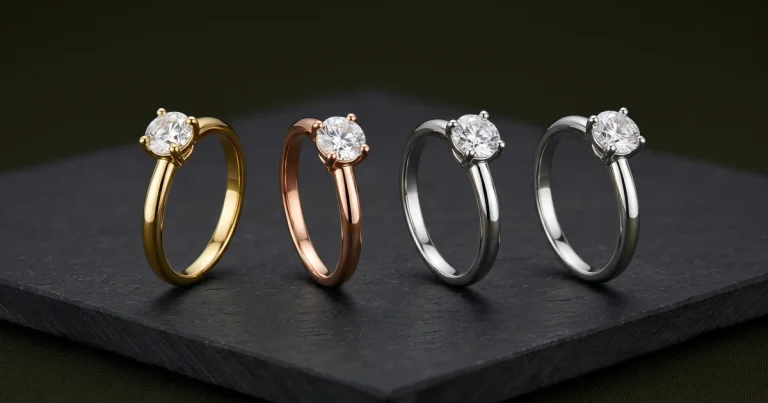
Prong vs Bezel Setting: Which Suits Your Ring?
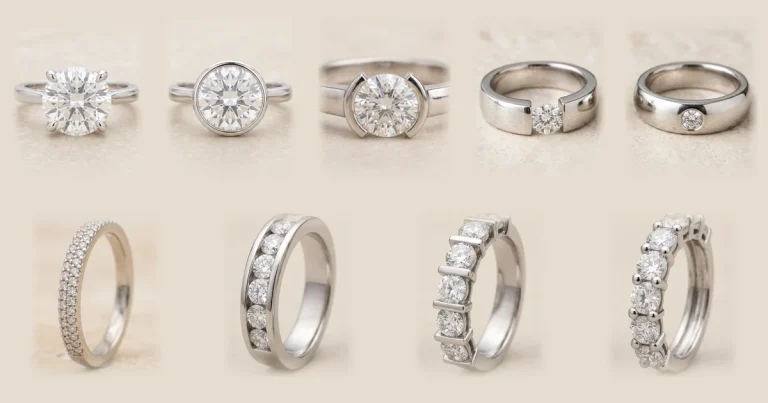
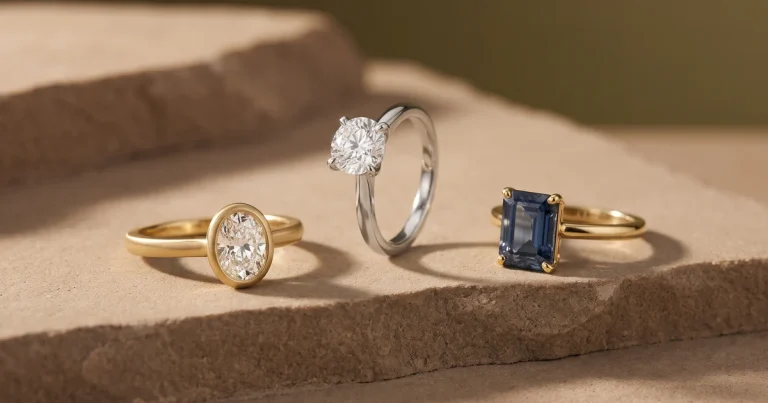
Four small claws reveal more of the diamond’s edge. A slim rim traces it. Compare the two ways of holding the stone, then check what changes when the ring is on your hand.

- Prong Setting
- Separate claws
- Bezel Setting
- Continuous rim
Prong vs. Bezel at a Glance
Start with prongs if you want to see more of the stone’s outline. Try a smooth full bezel if you want metal covering its entire edge and fewer projecting tips. Decide by the shape of your stone, how the finished ring fits, and how easy it will be to service.
See how they hold the stone · Compare service and cost · Choose by priority
| Feature | Prong | Bezel |
|---|---|---|
| What grips the stone | Fitted seats and individual tips that bend over the edge. | A fitted seat and a rim that overlaps the edge. |
| Edge coverage | Open between the tips. A V-prong can cover a pointed end. | A full bezel surrounds the perimeter. A partial bezel leaves selected edges open. |
| What you see | More edge and side facets are visible. | The metal adds a defined border and may hide part of the outermost crown. |
| Snagging | Depends on tip shape, height and finish. Wear can make a tip catch. | A smooth rim usually catches less. High or rough metal can still catch. |
| Under-stone cleaning | Direct access in many open baskets. Check the actual gaps. | Open-back bezels can be accessible. A narrow or closed underside limits access. |
| Wedding band fit | The basket, rail or base can project toward the band. | The head or bezel wall can project toward the band. Check under the rim. |
| Repair | A jeweler may tighten, rebuild or replace a tip or head. Check the remaining metal. | A dented, cracked or worn rim may need local work, rebuilding or replacement. |
| Making and cost | The fit and finish of each prong affect labor. A standard head can be an option. | The rim must fit the stone around its outline. Custom fitting and metal weight affect the quote. |
Where the metal touches the stone
The girdle is the stone’s outer edge. In both settings, the stone rests against a fitted seat near that edge. Prongs overlap the outer crown at individual points. A bezel lip follows the outline around all or part of the stone. The contact must fit the actual gem. A tip or rim that looks substantial can still sit poorly.
Four prongs or six
On a round stone, four evenly placed prongs usually leave longer uninterrupted arcs. Six add contact points and often emphasize a round outline. Ask to see how each tip sits and whether the metal is thick enough to service. If a tip bends or breaks, take the ring off regardless of how many contacts remain. See GIA’s illustrations of platinum prong fit.
Full bezel or partial bezel
A full bezel adds a border around the entire edge. A partial or half bezel uses shorter sections, often on opposite sides, to let parts of the outline show. Look at where those sections end. An attractive open gap can leave exactly the tip or corner you want covered.
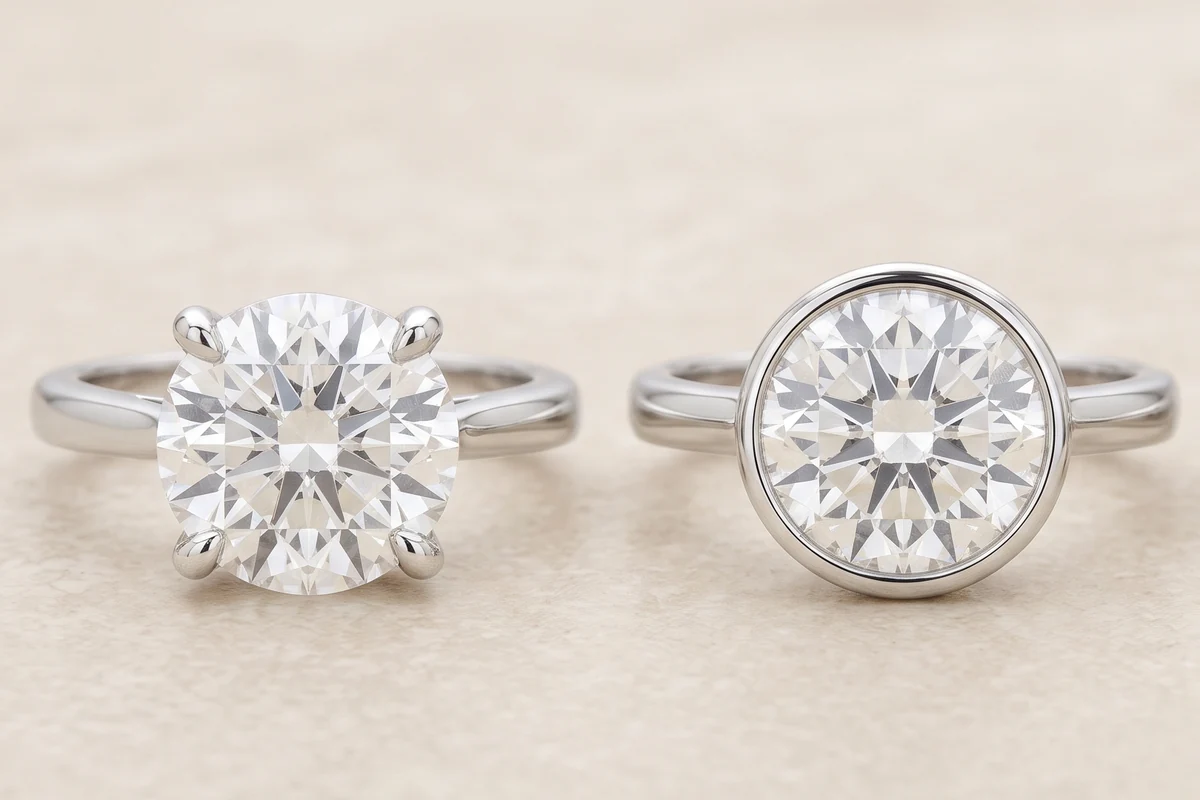
Edge protection, visible size and sparkle
Cover the points you want to protect
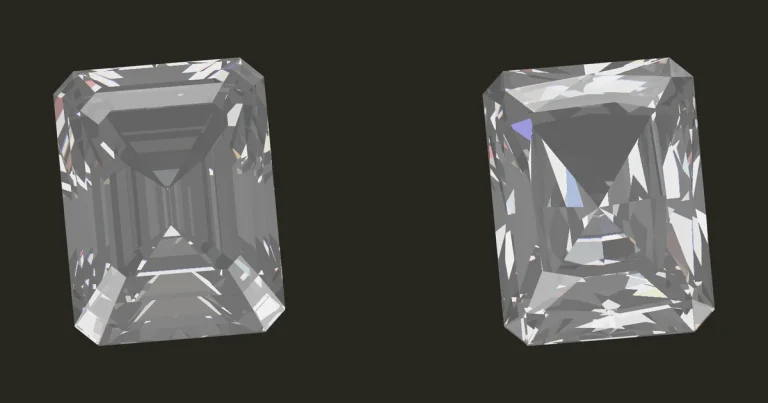
Start with the stone’s actual corners, tips and thin girdle sections. For a pear or marquise, ask whether a fitted V-prong or rim covers each point. For a princess, check every square corner. Emerald and radiant cuts have clipped corners that still need a head fitted to the stone’s dimensions and corner geometry. Round and oval stones have fewer sharp projections, but a thin or damaged edge still matters. Read GIA’s guidance on chipping.
For a colored gem or heirloom stone, ask the setter to inspect existing damage, treatments and the stone’s response to pressure. A rim can protect an exposed edge in wear, but setting and removing a fragile gem also require care.
Compare three things when a ring looks bigger
Start with the measured stone, then look at how much of it you can see, and finally look at the whole footprint on your finger. A bezel may hide a narrow edge while its outer rim makes the entire setting look broader. Slender prongs often keep the exposed outline distinct. Ask to see two stones of the same shape and similar millimeter dimensions before deciding.
More visible side facets can make a ring look more open. Face-up brightness and flashes depend strongly on the stone’s cut, polish and lighting. Compare the rings clean, in the same diffuse light, then rock both under the same small light source. See GIA’s explanation of cut and light.
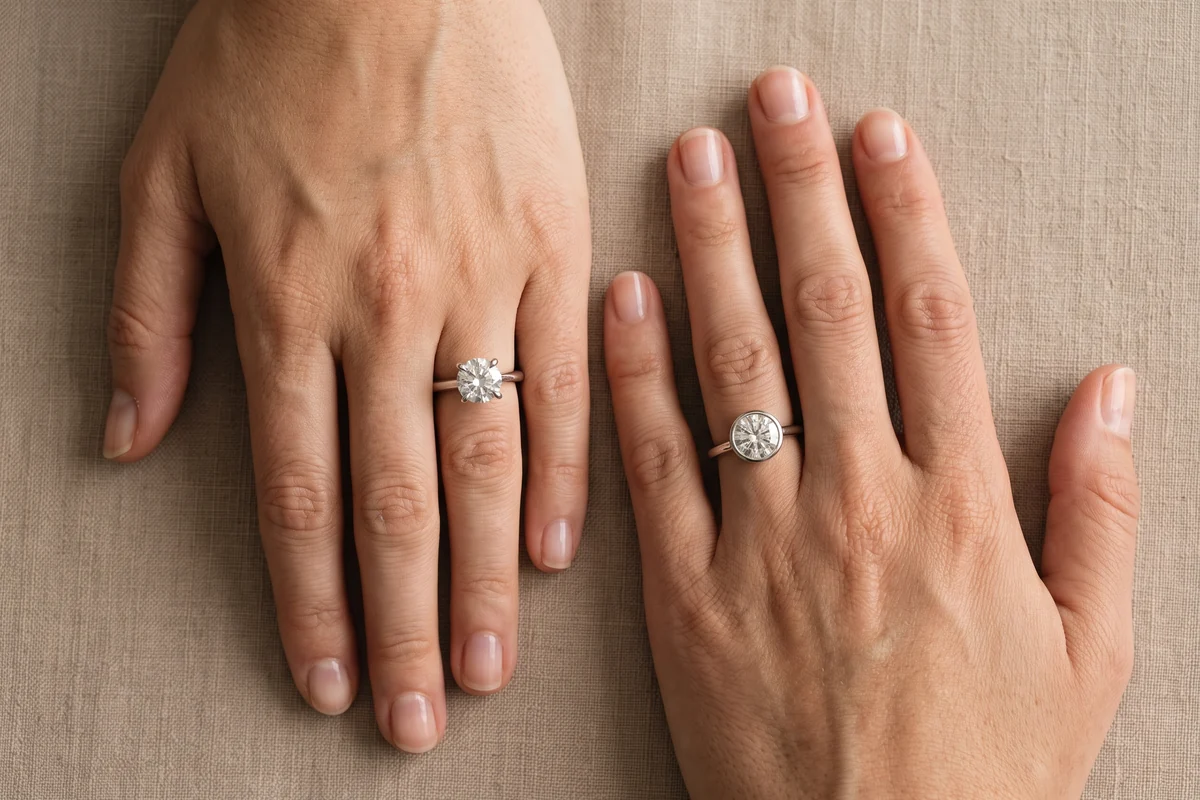
Comfort depends on the finished profile
A low, smoothly finished head usually catches less on sleeves and gloves. Many bezels have a continuous edge without projecting tips, but either setting may be high or low. A prong tip should sit against the stone. A raised tip, rough edge or new snag is a reason to have it inspected. If your work exposes the ring to hard knocks or equipment, taking it off reduces that risk regardless of the setting.
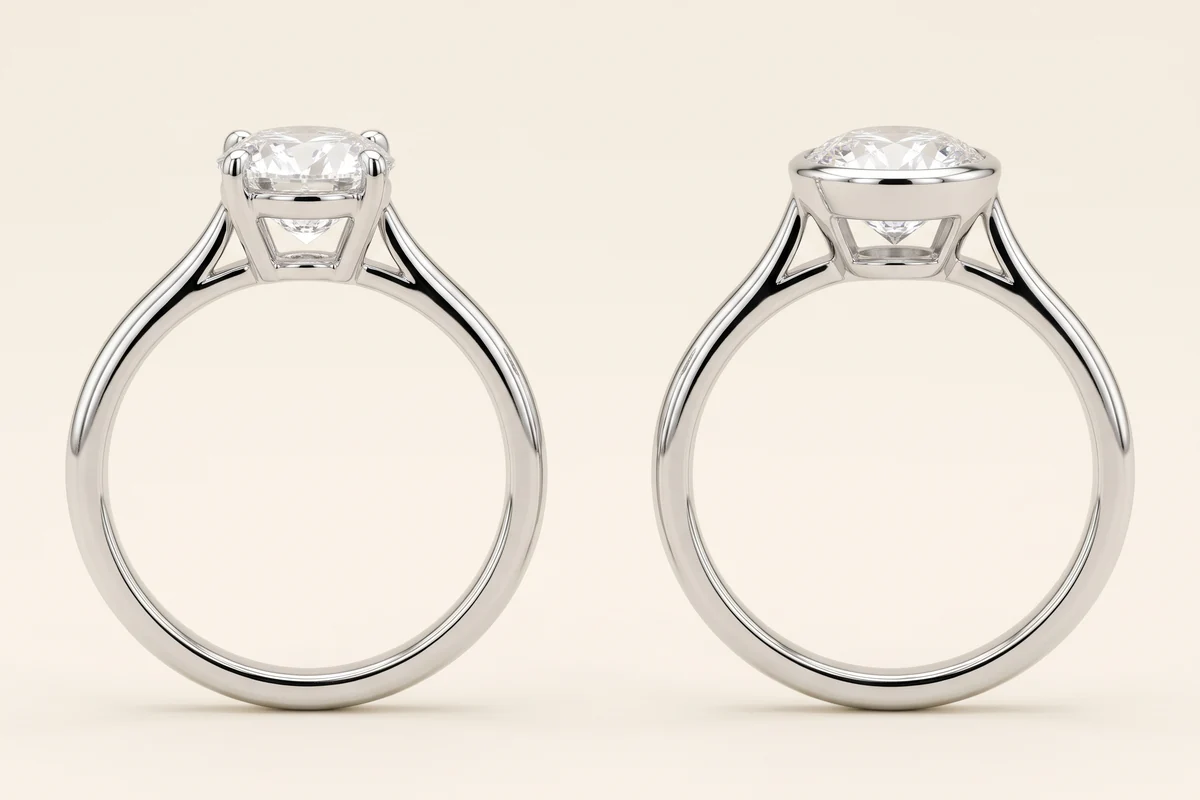
Try the exact wedding band next to the ring
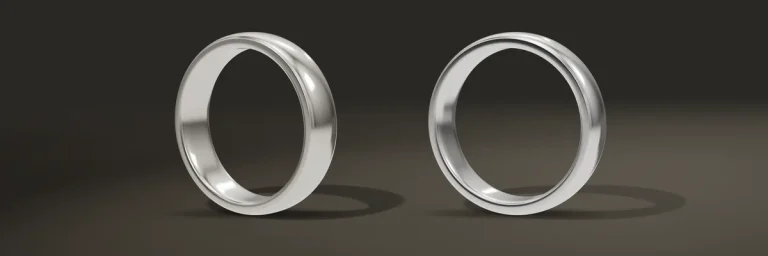
Look at the upper edge of the band from the side. If it hits a basket rail or bezel wall before the shanks meet, you can choose a deliberate gap or try a contour band. A taller setting may leave room underneath, but a projecting part can still sit in the way. Check whether an edge or a diamond on either ring will rub the other setting as you move.
Check cleaning access, repair and the quote
Look under the stone
An open basket or open-back bezel can leave space for a soft brush. Narrow gaps and a closed underside can make the pavilion harder to reach. For an intact diamond ring, ask whether mild soapy water and a soft brush are appropriate. With treated stones, mixed gems or an older mounting, follow the jeweler’s care instructions for the whole ring.
Ask what the jeweler can keep if the stone comes out
Friction and knocks can thin, lift or bend prong tips. A jeweler may be able to add metal to a worn tip, replace a prong or change the head. On a bezel, check for a dent, lifted lip, crack or worn segment. Repair could be local, or removing the stone could require rebuilding part of the rim. Stone type, treatment, alloy, condition and how the head joins the band all affect the work.
If you might upgrade, pass down or remount the center stone, ask whether it can be removed from this exact ring and whether the original head and shank can be reused. For an heirloom, ask the jeweler to document existing chips or repairs before work and explain the risks to the gem. Sometimes either type of mounting needs replacement. See Stuller’s repair intake guidance.
Compare like-for-like estimates
Ask for a finished-ring estimate using the same stone dimensions, alloy, band and finish. Separate the cost of the stone from the mounting and setting labor. Price can change with metal weight, whether a stock head fits, hand fitting around a fancy shape, and how the head is joined to the shank. For an existing ring, ask whether removal, resetting and replacing worn metal are included. Get the inspection and repair terms in writing.
Which setting fits your priorities?
| Priority | What to try | What to check |
|---|---|---|
| I wear gloves or work with my hands | A smooth, low full bezel, or a low prong head with rounded, flush-fitting tips. | Check if your workplace permits rings. Look for projecting metal. Remove the ring for heavy or impact work. |
| I want to protect a pear tip or princess corners | A full bezel or fitted V-prongs. Consider a partial bezel only if it covers the points you care about. | Check the exact corners under magnification and from the side. |
| I want the least metal around the diamond | Try four slim, well-fitted prongs. Compare six if you prefer the outline they create. | Compare the same diameter and similar cut in the same light. Confirm the actual fit of each tip. |
| I like a clean, outlined silhouette | Try a full bezel, then a partial bezel if you also want visible edge sections. | Look past the outer footprint and compare how much of the stone is visible. |
| I want a straight wedding band | Compare a prong basket and a bezel with similar stone heights. | Try the same band against each head. See what touches first and where the rings might rub. |
| I may remount an heirloom stone later | Compare the service plan for both mountings before ordering. | Ask whether removing this stone would leave the head reusable and what the jeweler would need to replace. |
Buying checklist
- Compare two rings with the same stone shape, similar millimeter dimensions and the same lighting.
- Identify the actual contact points, covered tips or corners, and exposed edge. Ask for a clear profile.
- Try the exact band you plan to wear. Find where the rings touch and check for rubbing.
- Ask how the jeweler would clean and inspect the underside and how worn metal would be repaired.
- If you may reuse the stone, ask what the jeweler can save if it comes out. Request an itemized quote for the exact ring.
Prong and bezel questions
Do I need six prongs instead of four for a larger diamond?
Ask whether the head supports that specific stone. Six suitably placed tips add contacts on a round stone, while four often reveal more of the outline. The fit, prong and head dimensions, and stone’s girdle matter more than a rule based on carat weight alone.
Can a partial bezel protect the tip of a pear diamond?
Yes, when one rim section actually cups and covers the tip. Some partial bezels grip only the long sides, leaving the point exposed. Ask for a face-up and a side view before ordering.
Can I get a low-profile prong setting?
Yes. A short basket can put the stone close to the finger if the pavilion clears the lower metal and the ring is comfortable. Check the actual stack with the wedding band since a low basket can sit in its path.
Can a jeweler change my prong ring to a bezel?
Sometimes the jeweler can fit a new head to the existing shank. In other rings the head and shank are integrated, or the stone needs a different seat, so remaking more of the ring may be appropriate. Have the stone and shank examined before approving a quote.
What should I do if my ring starts snagging after months of wear?
Take it off and have it checked, particularly after an impact. A new snag can come from a lifted tip or a sharp spot on a rim. Avoid testing for movement by pressing or bending the metal yourself.
Is an open-back bezel as easy to clean as prongs?
Compare the openings on the actual two rings. A large bezel window may be easier to reach than a very tight basket. Ask which cleaning method suits the stone, especially if it is treated or accompanied by other gems.
Will a bezel make a diamond look smaller?
A rim can reduce the visible stone outline while making the whole mounting look wider. Compare the actual gemstone diameter, visible stone and outside footprint separately. The metal border may be part of the look you want.