Moissanite vs Diamond: How to Choose
When comparing moissanite vs diamond, try stones of similar width in the setting you want. Then weigh the sparkle you prefer, the stone’s origin, and the price of the finished ring.

- Moissanite
- More pronounced color flashes
- Diamond
- White and colored flashes
Moissanite vs Diamond: Which Should You Buy?
Consider moissanite if you enjoy colorful flashes and want more room in your ring budget. If you want diamond as the material, compare natural and lab-grown options at the same visible size.
Try moissanite if
- You like noticeable rainbow flashes.
- You want more of the budget for the setting.
- You’re happy to wear lab-created silicon carbide.
Try diamond if
- Diamond itself matters to the wearer.
- You want to compare report-backed stone characteristics.
- You want the option of a natural or lab-grown origin.
Moissanite and diamond at a glance
Compare the finished rings at a similar face-up size. The name of the stone tells you the material. The cut and setting tell you much of what you’ll actually see and wear.
| Factor | Moissanite | Diamond |
|---|---|---|
| Appearance | Bright, near-colorless options. Some angles may show doubled facet edges. | Similar overall silhouette. Facet pattern and color vary with each stone. |
| Brilliance and fire | Can show stronger rainbow flashes under spot lighting. | Shows both white-light return and colored flashes. Cut and lighting shape the balance. |
| Durability and everyday wear | About 9¼ on Mohs. A well-set ring can suit regular wear. | 10 on Mohs for both origins. A hard blow can still chip a stone. |
| Price considerations | Often a lower quote when size and setting are comparable. | Request separate lab-grown and natural quotes in the same setting. |
| Origin | Silicon carbide. Moissanite sold for jewelry is generally lab-created. | Carbon crystal. Ask whether the diamond is natural or lab-grown. |
| Availability | Often sold by millimeter size and offered in standard shapes. | Both origins are sold loose and set. Exact cut, size and grade narrow the selection. |
| Documentation | Ask for material, measurements and terms in writing. | Ask for origin and a verifiable laboratory report when offered. |
| Resale considerations | Ask whether a buyer or trade-in program accepts it. | Get offers for the exact stone. Origin and documentation can affect eligibility. |
| Best fit | You value visible size, colorful flashes or room in the setting budget. | You want diamond as the material. Choose the origin that matters to you. |
Choose by what matters to you
You have a firm ring budget
Quote moissanite and lab-grown diamondHold the setting and millimeter size steady. Compare the total, including sizing and return terms.
You want more visible size
Compare width on the handTry two widths in your ring size. A wider stone may also need a taller setting.
You’re buying a proposal ring
Ask what matters to the wearerFind out whether they want a particular gemstone, a natural origin, or a certain look.
You prefer an earth-grown stone
Compare natural diamondsCheck that the origin is documented. Compare face-up size before paying for extra carat weight.
You’re particular about the sparkle
View the exact stone in two lightsUse indirect daylight and a small spotlight. Watch it move and compare what you actually see.
You’ll wear the ring most days
Try the setting onCheck how high the stone sits, whether prongs catch, and whether a band can sit beside it.
Natural diamonds, lab-grown diamonds, and moissanite
What is moissanite?
Moissanite is silicon carbide. Natural moissanite is rare, and the material sold as moissanite in jewelry is generally grown in a lab. Its near-colorless appearance can resemble diamond in a ring, although the material has its own optical properties. GIA’s research on synthetic moissanite documents its composition, double refraction, and response to a thermal probe.
What is diamond?
Diamond is crystalline carbon. A natural diamond formed in the Earth. A lab-grown diamond formed under controlled conditions and has the same basic crystal structure and essentially the same optical and physical properties. Laboratories use specialized instruments to establish whether a diamond is natural or lab-grown.
When ordering, look for the precise material and origin on the listing and invoice. The FTC’s jewelry advertising guidance explains the disclosure distinction between lab-grown diamonds and simulants.
How they look different
Brilliance and fire
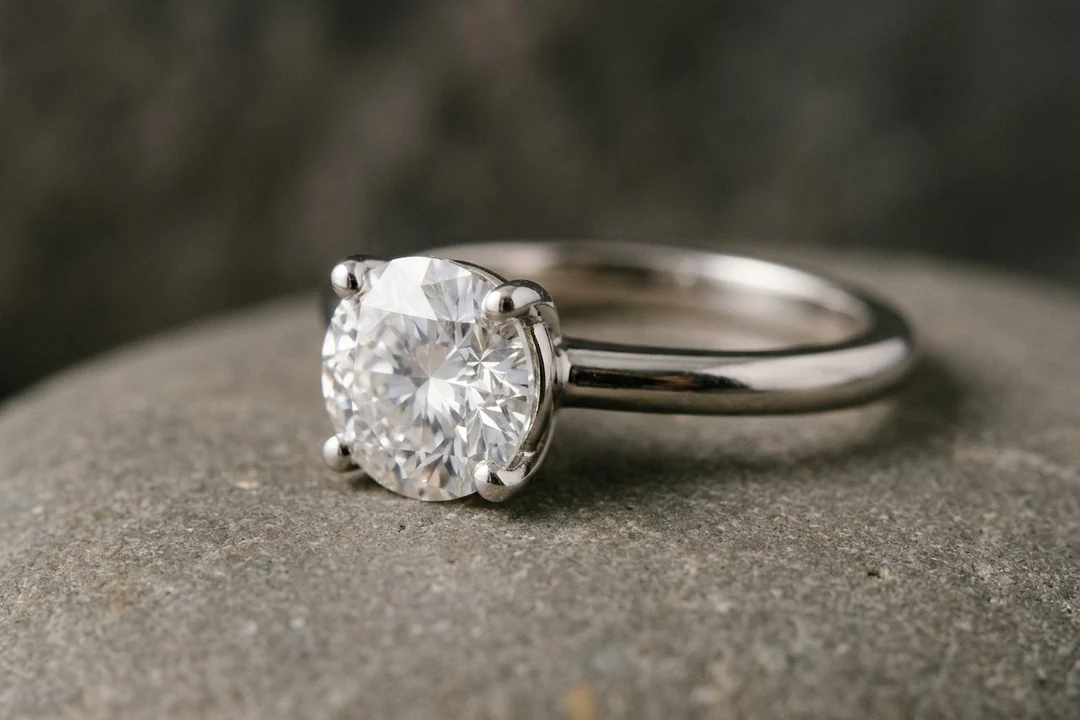
Brilliance refers to the white light a stone returns. Fire is the colored flashes you see when light separates into spectral colors. Moissanite has higher dispersion than diamond and can show more noticeable rainbow flashes. The size, cut, tilt, and light source can change how obvious that difference is.
In some views, synthetic moissanite’s double refraction can make the back facet edges look doubled under magnification. That effect can depend on the viewing direction. Diamond can also show colored flashes, so color in a photo cannot establish what the stone is.
In a store, ask to see each ring away from the spotlights, then tilt it under a small light. Online, request a short unedited video of the actual piece in both conditions. Compare the look that you enjoy at normal distance.
Compare visible size in millimeters
Ask for the diameter of a round stone and the length and width of an oval or other elongated shape. Carat measures weight. Since diamond and moissanite have different densities, similar face-up dimensions can come with different carat weights.
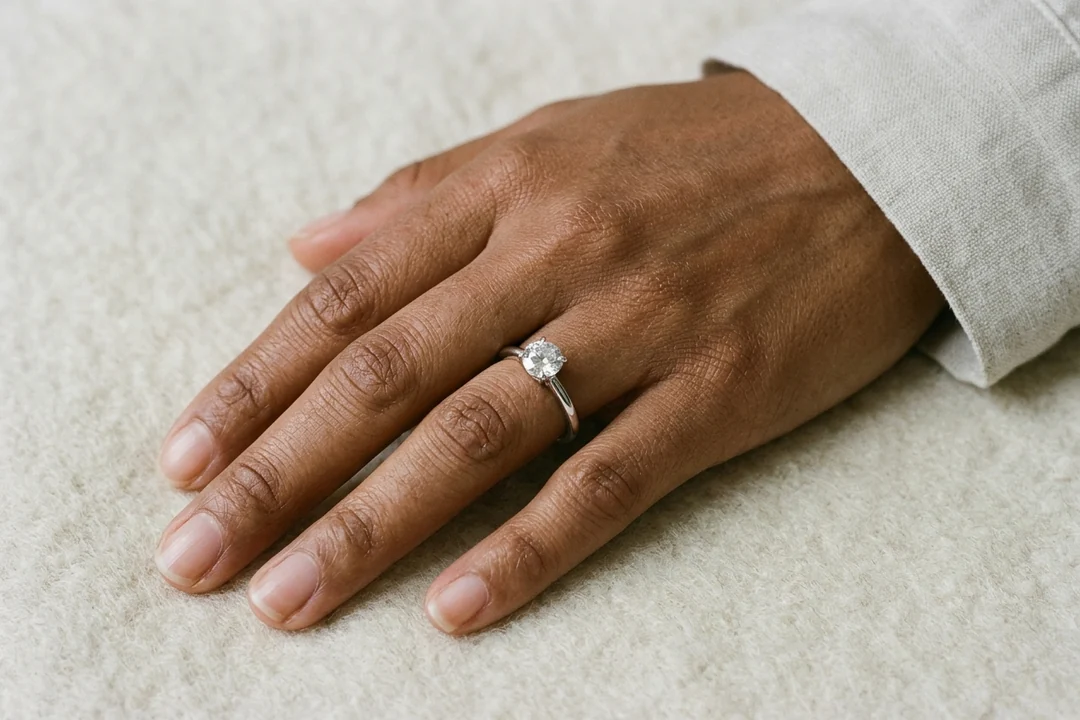
Keep the shape and setting similar when comparing photos. For example, two round stones that each measure 6.5 mm across have the same stated diameter. A wider bezel, taller head, or different band width can still change how the ring looks on your hand.
If a listing says “diamond equivalent,” ask for the actual measurements. Check the ring’s finger size separately with a ring size conversion chart when ordering from a seller using another sizing system.
Durability and everyday wear
Diamond is 10 on the Mohs scale. GIA reported about 9¼ for synthetic moissanite. Both are hard, and Mohs ranks scratch resistance. Chip risk varies with the stone, the setting, and where an impact lands.
GIA’s study of diamond chipping and vulnerable edges explains why exposed points, girdles, and impacts matter even for diamond. In a daily ring, check how the setting protects the edge and whether the prongs catch on a sleeve. Ask how the jeweler handles inspections and loose stones.
A low head can be more practical if the ring has to fit under gloves or alongside a wedding band. If the ring starts rattling or a prong looks bent, take it off and have the setting inspected.
Moissanite vs diamond prices
Moissanite often leaves more room in the purchase budget at a similar face-up size. Ask for three quotes if origin is flexible. The prices of individual lab-grown and natural diamonds can vary substantially with the stone and seller.
- Moissanite
- Compare size, cut style, color appearance, brand terms, and the finished setting.
- Lab-grown or natural diamond
- Hold shape and visible dimensions steady. Compare cut, color, clarity, carat weight, origin, and the documentation supplied.
- Finished-ring cost
- Ask for the center stone and mounting on separate lines. Add sizing, shipping, applicable tax, and any service you plan to buy.
Use quotes you can compare
Choose one setting and a target width. Ask each seller what the ring costs with the same metal, ring size, and any side stones. Check the refund terms for a customized setting and whether resizing is included. Comparing one loose stone with a finished ring hides the actual trade-off.
Which should you choose for an engagement ring?
Start with what the wearer wants. If seeing and wearing a diamond matters, choose the diamond origin and compare individual stones within that group. If the look, shape, and total budget come first, try moissanite and a lab-grown diamond in similar settings.
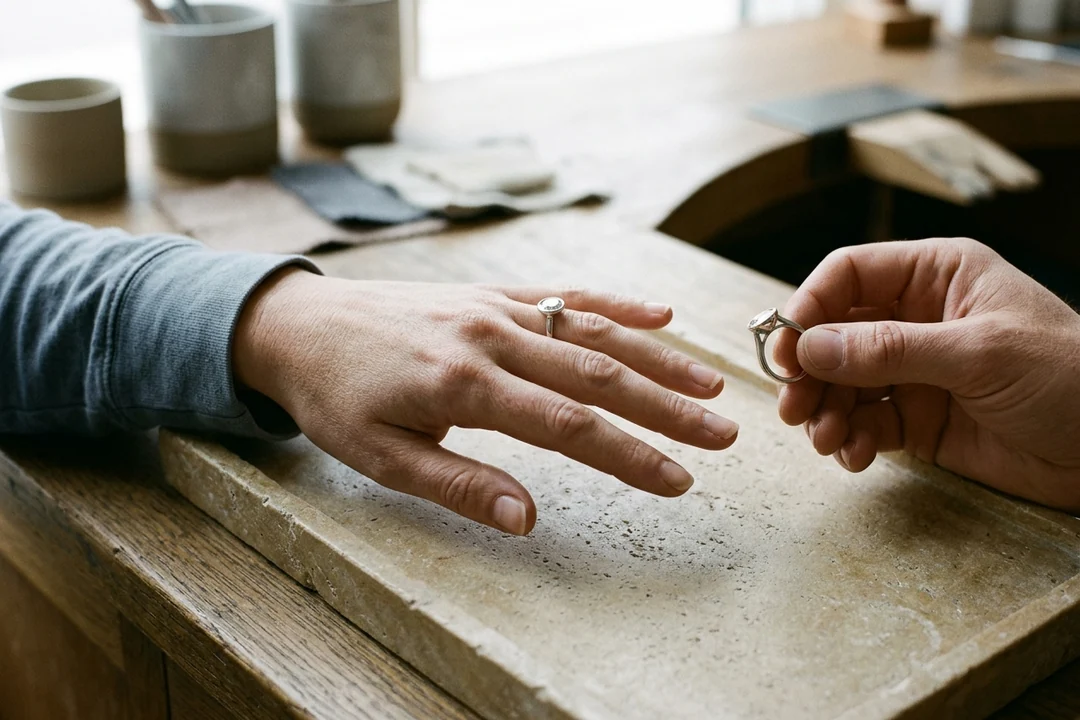
At the fitting, bend your fingers and try the ring with a plain band. A low head can be comfortable, while a basket that sits too low may leave a gap beside a straight band. Ask what the seller will change, whether the alteration affects returns, and how they service the prongs.
Keep the mounting material consistent when weighing prices. If you’re still choosing the metal, compare platinum and white gold for daily wear before requesting final quotes.
Documentation and what to check before buying
For moissanite, ask for the material name, the listed dimensions, and any seller or manufacturer warranty in writing. Check what the document covers. A brand card can identify the item being sold and describe the warranty terms.
For a diamond, confirm the origin, measurements, and report number if a report is offered. Verify it with the issuing lab and ask the seller to show how the report matches the stone. If there’s an inscription, ask whether it can be seen before or after setting.
Report formats vary. GIA’s current quality assessment for eligible colorless to near-colorless lab-grown diamonds uses Premium and Standard categories. Other labs may issue a report with individual grades. Read the actual report so you know what was evaluated.
Resale and ownership
Ask whether a store’s trade-in policy accepts natural diamonds, lab-grown diamonds, or moissanite. Read minimum-spend requirements and ask whether the offer is store credit or cash. A grading report can help document the stone. An appraisal or insured replacement value does not tell you what a buyer will pay.
Keep invoices and report numbers together. If you decide to sell, ask for offers for the exact ring in its current condition. Include the mounting and stone separately when comparing offers where the buyer provides that breakdown.
Before you order
- Confirm the material and whether diamond origin matters to the wearer.
- Match the face-up dimensions, shape, and setting when comparing quotes.
- Watch the stone in diffuse light and under a small spotlight.
- Check the setting height, prong coverage, and how a band sits next to it.
- Match any lab report to the exact diamond and keep the invoice.
- Read the return, resizing, repair, and any trade-in terms.
Moissanite and diamond FAQ
Can a basic diamond tester mistake moissanite for diamond?
Yes. A thermal-only tester can respond to moissanite like it does to diamond. Ask a jeweler or gemological laboratory to identify a stone when paperwork or origin is uncertain.
Is moissanite the same as cubic zirconia?
They are different materials. Moissanite is silicon carbide. Cubic zirconia is zirconium oxide. A jeweler may offer both as clear stones with different appearances and handling characteristics.
Does a 1-carat-equivalent moissanite weigh one carat?
The label usually describes an approximate face-up size relative to a diamond. Ask for the stone’s actual dimensions and, if weight matters to you, its own carat weight.
Can a seller’s moissanite card verify the stone independently?
Check who issued it and what it states. A brand warranty or specification card documents the seller’s offer. An independent identification relies on a laboratory examining the stone.
Can I replace the center stone later?
Ask a jeweler to inspect the setting first. Width, depth, girdle shape and prong placement matter, so a stone with the same advertised size may still need a different head.
Will a grading report tell me what the ring will resell for?
A report describes the stone and its characteristics. A resale quote depends on the finished piece and the buyer. If resale matters, get actual bids or read the trade-in terms before you order.
References
- Synthetic Moissanite: A New Diamond Substitute. Nassau, McClure, Elen, and Shigley, Gems & Gemology.
- Laboratory Grown Diamond Report. International Gemological Institute.
- How to Sell Your Gemstones and Jewelry. Gemological Institute of America.