What Is Gold-Filled Jewelry? What the layer and the mark tell you
Gold-filled jewelry has a layer of real gold alloy mechanically bonded to a metal core. The gold is at the surface. Check the full material description to see what the label covers.
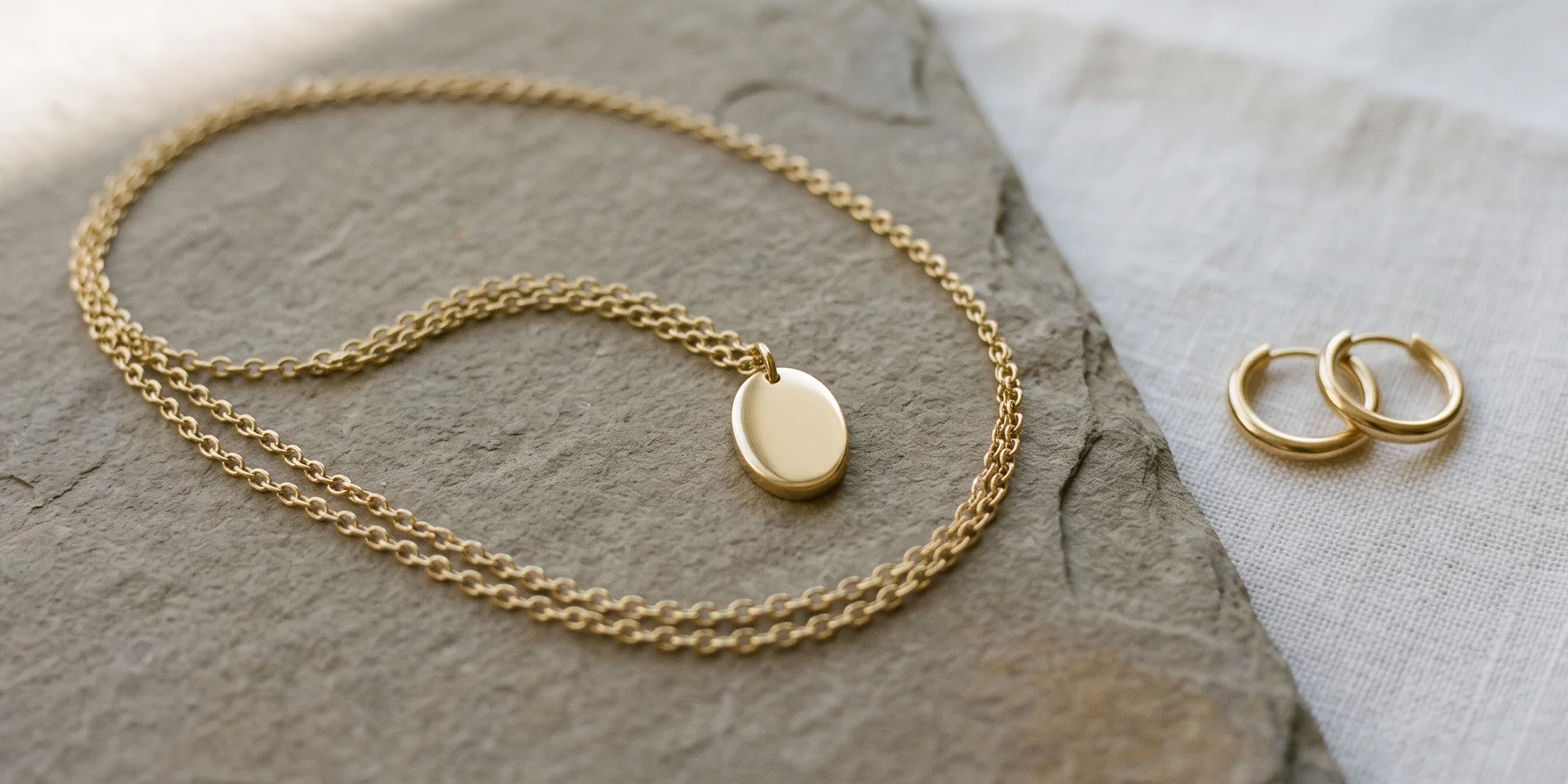
How the gold layer is built
A manufacturer bonds karat gold alloy to a core, commonly brass, to make stock for jewelry parts. The result is a layered material. A jeweler can form that stock into components such as links, ear wires, pendant blanks, and clasps.
Sheet can be clad on one face or on both. Round wire can have a gold alloy layer around the core. These stock shapes describe where the layer sits before fabrication. A cut edge or end can expose the core, so ask how the maker finishes visible surfaces. The diagrams show construction, with layer thickness exaggerated for clarity.
Single-clad sheet
- Gold alloy on one face
- Metal core underneath
Double-clad sheet
- Gold alloy on both faces
- Metal core between the layers
The alloy in a solid 14K gold piece continues through the metal. In gold-filled stock it is concentrated at the surface over a different core. Electroplating deposits metal onto a surface using an electric current. For differences in wear and value across those two surface constructions, see our comparison of gold-filled and gold-plated jewelry.
What 1/20 14K GF means
Each part tells you something different. The fraction describes the share of metal weight represented by the outer alloy. The karat number tells you how much gold is in that alloy.
- 1/20 · Share by weight
- Five percent of the stated article’s metal weight is 14K gold alloy. Stones are outside that metal-weight calculation.
- 14K · Karat of the layer
- The outer alloy contains nominally 14 parts gold out of 24. That purity applies to the layer.
- GF · Construction
- Gold filled. Check which parts the maker includes in the material description.
For example, if the mark applies to 20 grams of metal, 1 gram is nominally 14K alloy. That gram contains about 0.58 grams of pure gold. Neither number is a thickness measurement. Learn how to read gold karats and check how a gold hallmark fits into the full description.
The U.S. FTC Jewelry Guides give an example for using “Gold Filled” when a reasonably durable gold alloy layer of at least 10K is mechanically applied to all significant surfaces and accounts for at least 1/20 of the metal weight. In that example the karat designation comes immediately before the term and is equally conspicuous. The Guides cover all or part of a product and refer to applicable assay tolerances. These are U.S. labeling principles. Rules elsewhere can differ. FTC Jewelry Guides, 16 CFR § 23.3
14K Gold Filled and 12K Gold Filled identify a difference in the outer alloy’s fineness. Suppliers may write a 1/20 14K material specification as 14/20 gold-filled. An abbreviated listing or stamp by itself leaves you to verify what it applies to. Ask the seller for the full description, particularly if a listing mixes terms such as “gold layered,” “14K gold,” and “gold filled.”
Where wear tends to show first
Look at the part that rubs, bends, or bears the load. A pendant face and the ring that connects it to a chain see different wear. Construction and how you use the jewelry matter more than a lifespan quoted for the category.
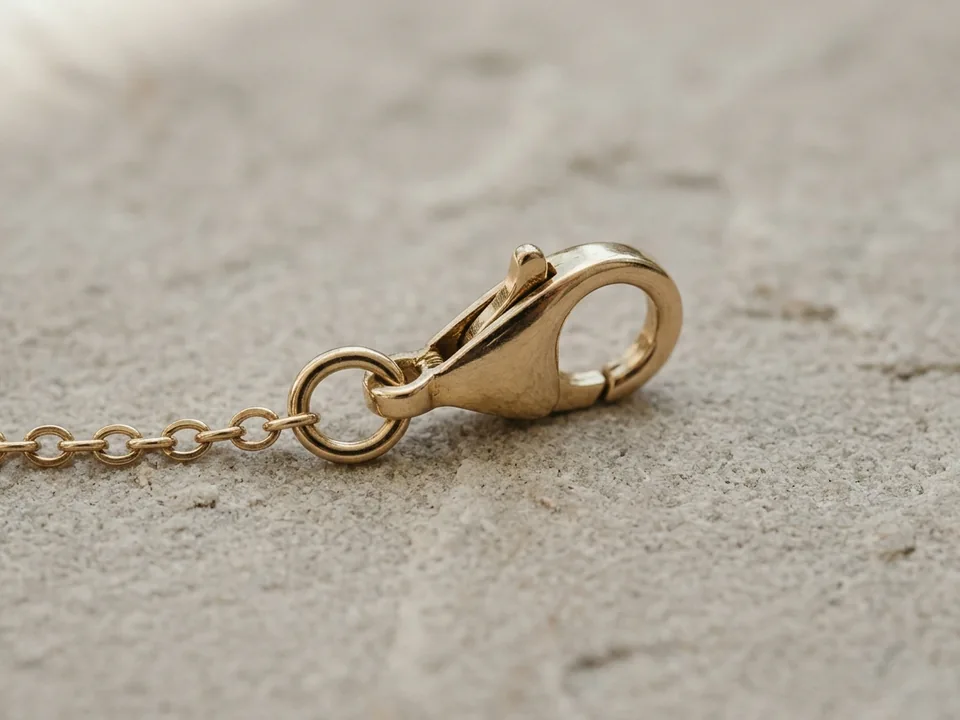
Inspect the parts you handle
On a chain or bracelet, check links that rub together and the clasp you open every day. On earrings, ask separately about the post or ear wire and the backing. On a pendant, look at the bail, the back, and any cut edge.
Repeated rubbing can wear the outer alloy, especially at contact points. Cut or heavily worked surfaces can expose the core. Dullness or a color change can have several causes. Cleaning may remove buildup. A worn surface may need a jeweler’s assessment.
Use a soft cloth and follow the maker’s instructions for that piece. Store it separately to limit rubbing. Before swimming or working with detergents, take it off unless the maker gives specific care guidance for that exposure.
| Property | What to expect | What to check |
|---|---|---|
| Appearance | A karat gold surface can look like gold alloy throughout. | Use the written specification and marks on each part. |
| Wear | Friction and edge exposure vary with design and use. | Inspect links, clasp joints, sharp edges, and contact points. |
| Care | Aggressive polishing can remove surface metal. | Read the maker’s instructions for the finish and any stones. |
| Repair | A replaceable clasp and a worn surface need different work. | Ask which parts can be replaced and what the service covers. |
| Price | The gold layer uses less gold than comparable gold alloy throughout. | Compare workmanship, component quality, and after-sales support. |
If a repair involves soldering, filing, or polishing close to the layer, ask a jeweler whether it will change the surface or show the base metal. A maker may replace a finding more readily than restore the original bonded layer locally.
When gold-filled jewelry makes sense
Price can reflect labor, design, and hardware as well as the gold. Compare pieces you would wear in the same way.
An everyday pendant
Consider gold filledLook for a smooth bail and a documented chain and clasp. A gold surface can fit the look and budget.
A bracelet or ring you rarely remove
Compare gold alloy throughoutFrequent rubbing makes surface wear and repair more important. Ask how each specific piece can be serviced.
A gold finish over sterling silver
Consider vermeilCompare vermeil and gold plating if the base metal matters to you.
A piece bought for gold content
Ask for alloy and weightFor gold alloy throughout, compare 14K and 18K gold and ask what the quoted weight includes.
What to check before you buy
- Get the full description. Ask what the maker means by “gold filled” and which parts it describes.
- Read the mark or specification. Ask for a photo if there is a stamp. Confirm the karat of the layer and the stated metal-weight fraction when available.
- Check the core and findings. Ask about the chain, clasp, post, or backing separately. They can use different metals.
- Match care to your routine. Ask about water, cosmetics, abrasive cloths, and storage before you commit.
- Read the warranty and return terms. Check exclusions for finish wear, repairs, and made-to-order items.
- Ask for plain wording. If the ad says “real gold” or “gold layered,” ask the seller to state the construction, karat, and base metal in writing.
Common questions about gold-filled jewelry
Is gold-filled jewelry real gold?
Its surface contains real gold in an alloy. A different metal makes up the core. Ask whether the description covers every part or only the main component.
Is 14K gold filled the same as 14K gold?
On a gold-filled piece, 14K describes the surface alloy. On a piece made throughout of 14K alloy, it describes the metal throughout that part. Read the complete wording around the number.
Does gold-filled jewelry tarnish?
It can discolor. Surface residue, changes in the alloy, or exposure of the core can affect the finish. If wiping gently leaves a change, ask the maker before using a polishing product.
How long does gold-filled jewelry last?
There is no single lifespan. The shape, frequency of wear, contact with other surfaces, and the care a piece receives all matter. A clasp or link can show wear while the pendant still looks sound.
Is gold-filled jewelry worth buying?
It can be a reasonable choice when you want a gold-alloy surface at a lower cost than a comparable piece made throughout of gold alloy. Factor in the amount of wear you expect and whether a repair or replacement is practical.
Can I tell whether a piece is gold filled by looking at it?
A similar color can come from several constructions. A stamp, itemized material description, or assessment by a jeweler is more informative than shine or a photo.
Does a gold-filled earring have a gold-filled post?
Only if the maker specifies it. The decorative front, post, and backing can use different materials. Ask about the metal that actually touches your ear if you have a known sensitivity.
References
- FTC Jewelry Guides, 16 CFR Part 23. U.S. marking, coverage, and gold-content examples.
- Stuller’s fabricated metals guide. Bonded gold alloy and sheet specifications.
- The Plumb Club’s gold-filled jewelry FAQs. Component construction, bench work, and wear.