- Jewelry types
- Earrings
- Types of earrings
Types of Earrings Styles, backs and fit — shown at true relative scale
Ten common types, laid out from the smallest to the longest. Tap a name to see how it sits on the ear, how it fastens and who it suits.

Three questions sort almost any earring
Where does it sit?
On the lobe, just below it, or along the outer edge of the ear.
Stud · huggie · climber · cuff — jacket · drop — hoop · dangle
Does it move?
Studs and huggies stay put. Drops sway a little. Hoops, dangles, threaders and chandeliers swing.
Movement adds light — and catches on hair and scarves.
How does it fasten?
A post with a back, a hinged hoop, a hook, a chain pulled through — or a clip or cuff with no piercing at all.
See backs and closures.
Close to the ear
Small pieces that sit on the lobe or along the ear and barely move. The everyday core of most collections.
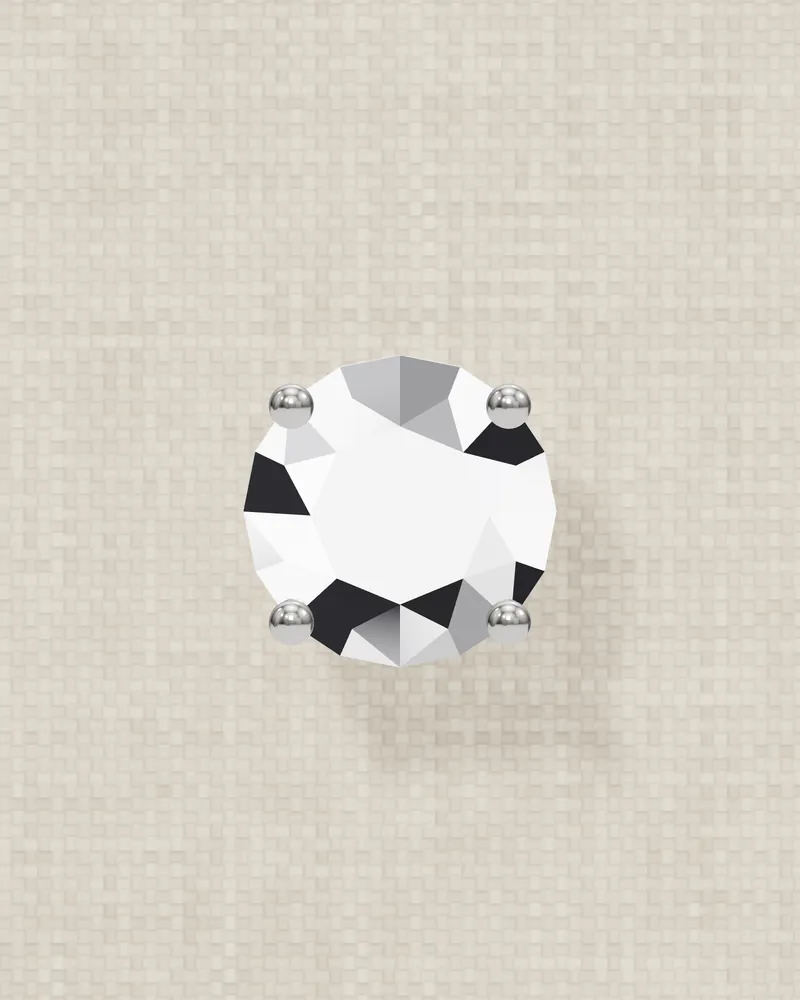
01Stud
A single stone or shape that sits on the front of the lobe, held by a post and a back. The quiet everyday default.
On the lobe, flat against it
- Fastens
- Post with a push or screw back
- Moves
- No
- Best for
- Every day, work, sleeping-in pieces, first earrings
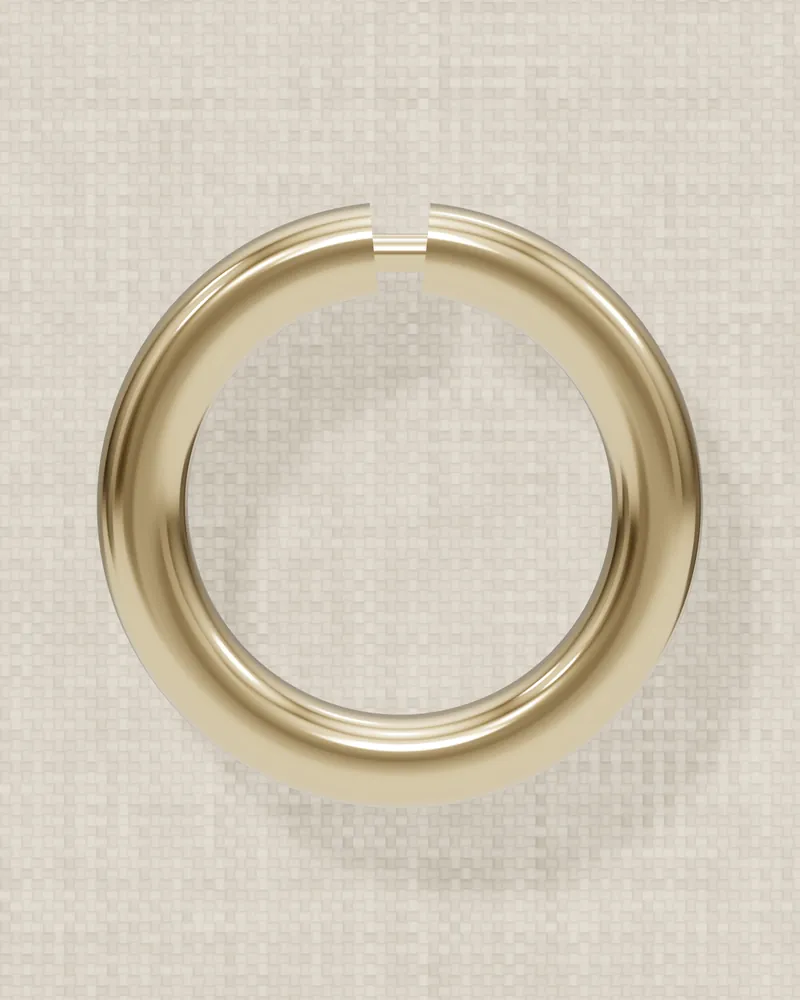
02Huggie
A small, thick hoop that wraps closely around the lobe, with almost no gap. Usually closes with a hinge.
Hugs the lobe edge
- Fastens
- Hinged post that clicks shut
- Moves
- Barely
- Best for
- All-day wear, stacking in several piercings
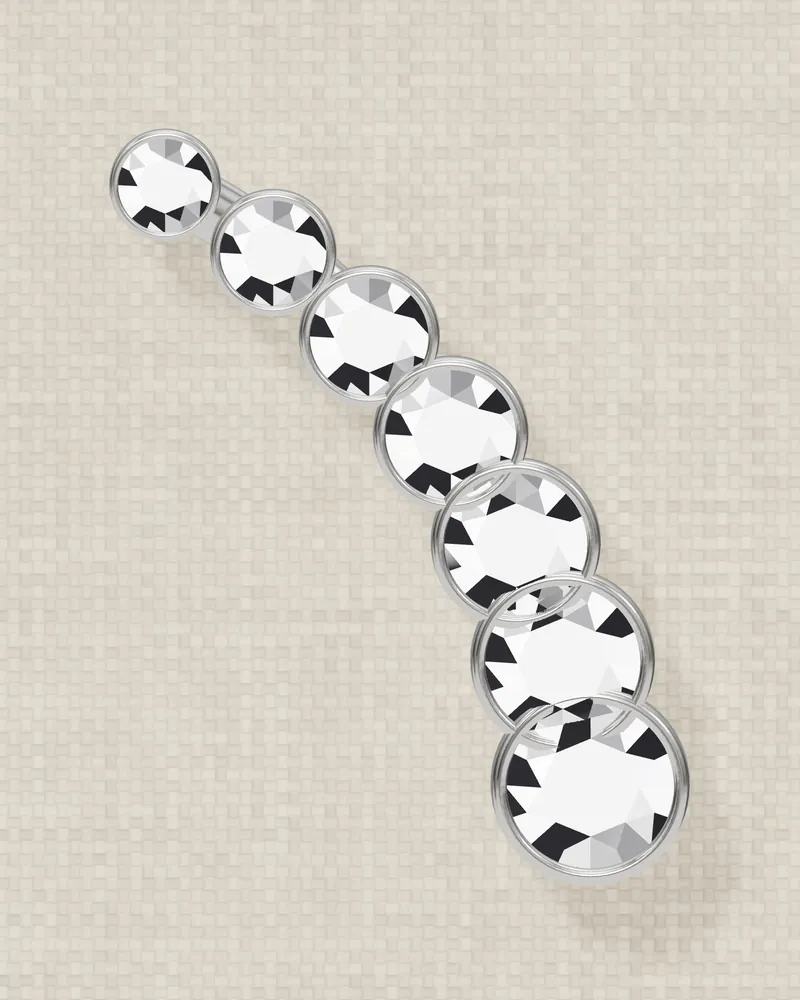
03Ear climber
A curved line of stones or beads that starts at the piercing and runs up the outer edge of the ear, like a short constellation.
Up the edge of the lobe
- Fastens
- Post and back at the lowest stone
- Moves
- No
- Best for
- One-piercing ears that want the look of several
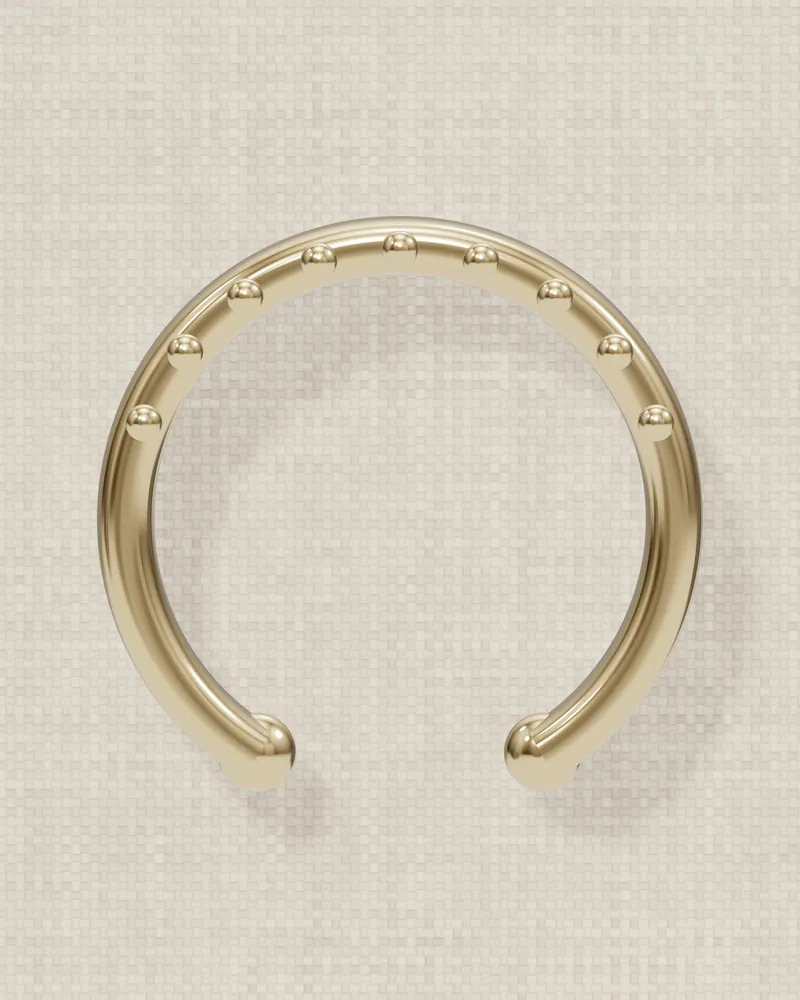
04Ear cuff
An open band that slides onto the cartilage rim and is squeezed gently to stay. No piercing needed.
On the outer rim, no piercing
- Fastens
- Grips by light pressure
- Moves
- Can rotate a little
- Best for
- Unpierced ears, trying a look before a piercing
Just below the lobe
A little length without real movement: a stone or pearl that hangs close, or a second piece tucked behind.
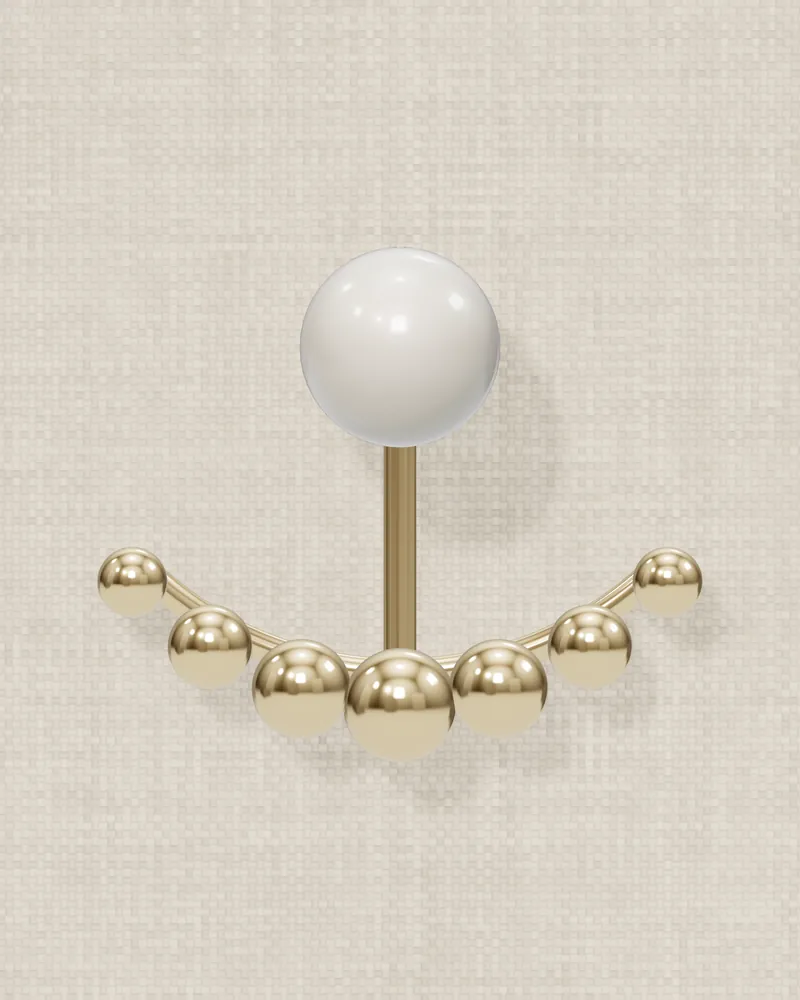
05Ear jacket
Two pieces: a stud at the front and a “jacket” that the post passes through behind the lobe, so it shows underneath.
Front of the lobe, plus a piece below it
- Fastens
- The jacket itself acts as the back
- Moves
- Little
- Best for
- Turning one stud into two looks
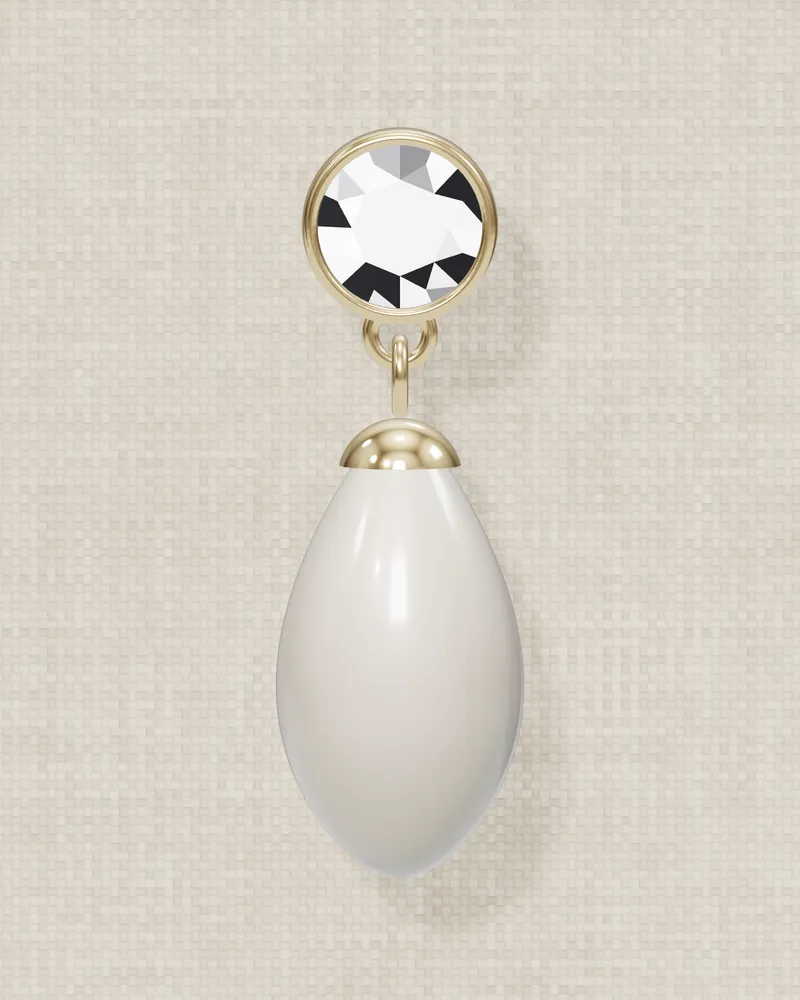
06Drop
A short element — often a pearl or stone — that hangs directly beneath the lobe and stays close to it.
Hangs just below the lobe
- Fastens
- Post and back, sometimes a lever-back
- Moves
- A little
- Best for
- Work to evening, the first step up from studs
Longer and moving
Pieces that hang, swing and catch the light. They frame the face, and they are the ones to check for weight.
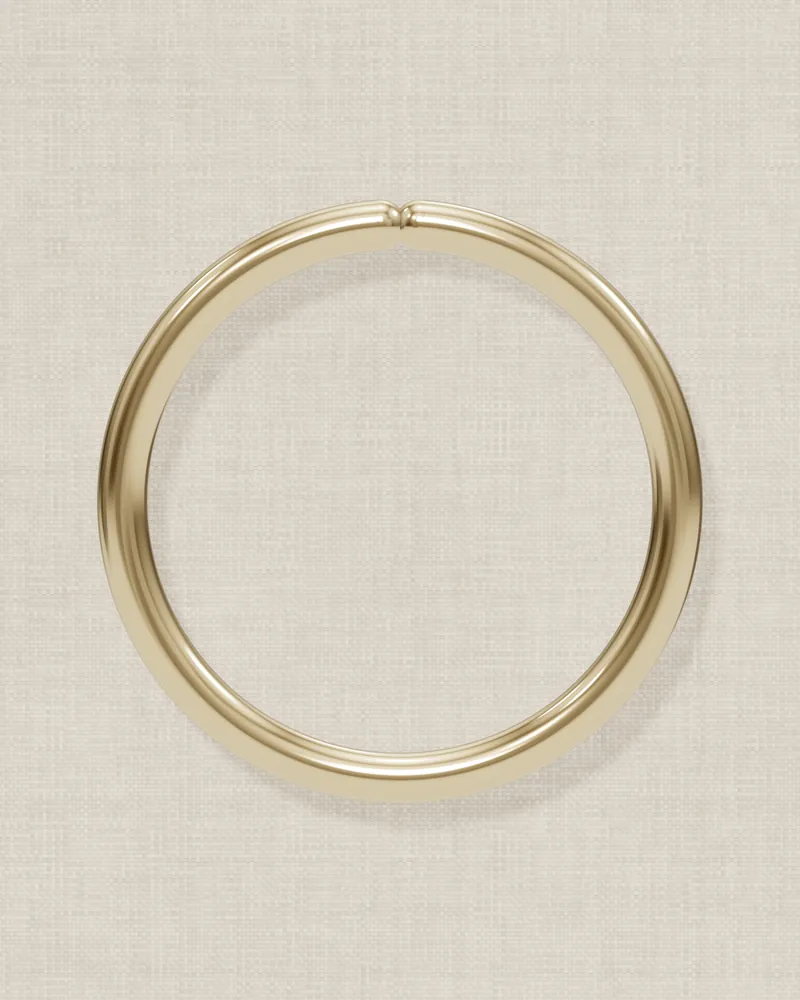
07Hoop
A ring or open circle that passes through the piercing. Sizes run from small sleepers to large statement hoops.
Through the lobe, hanging below it
Hoops are usually measured across the outside, in millimetres. Below about 15 mm they sit close, almost like a huggie; 20–30 mm is the everyday middle; 40 mm and up reads as a statement. Tube thickness changes the look as much as the diameter.
- Fastens
- Hinged latch, or a thin post into the tube
- Moves
- Swings slightly
- Best for
- Every day in small sizes, statement in large
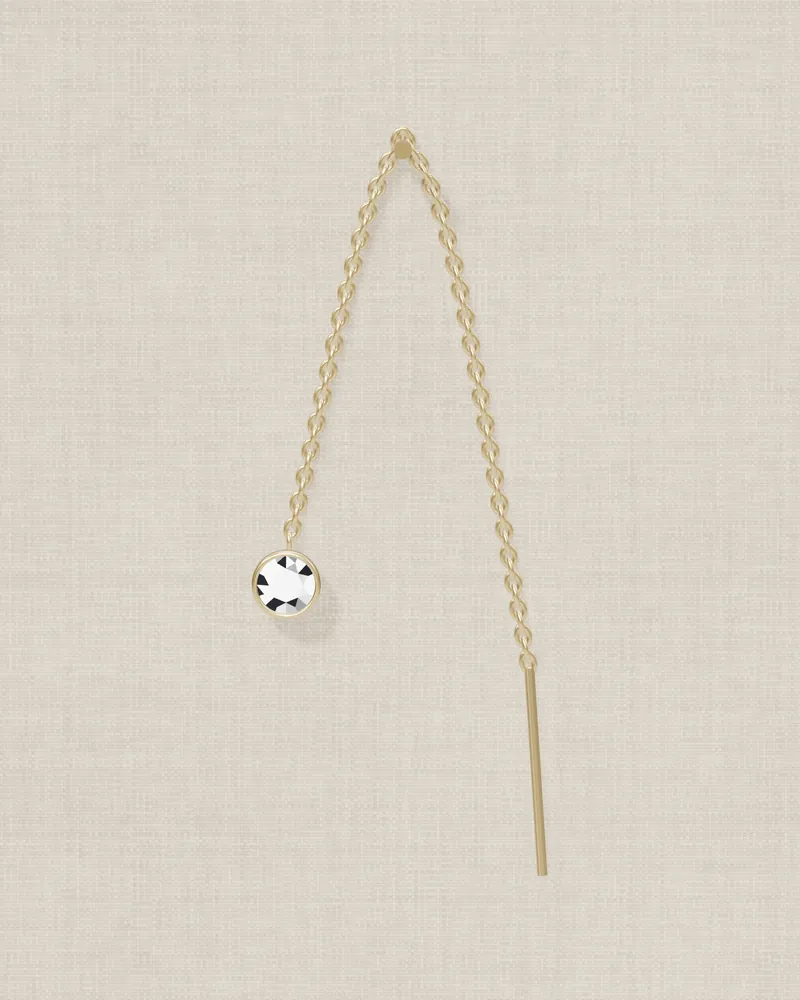
08Threader
A fine chain pulled through the piercing like thread, with a bar or needle on one end and a small stone or shape on the other.
Through the lobe, front and back
- Fastens
- No back — the chain’s length and weight hold it
- Moves
- Yes
- Best for
- Light, fluid, adjustable length
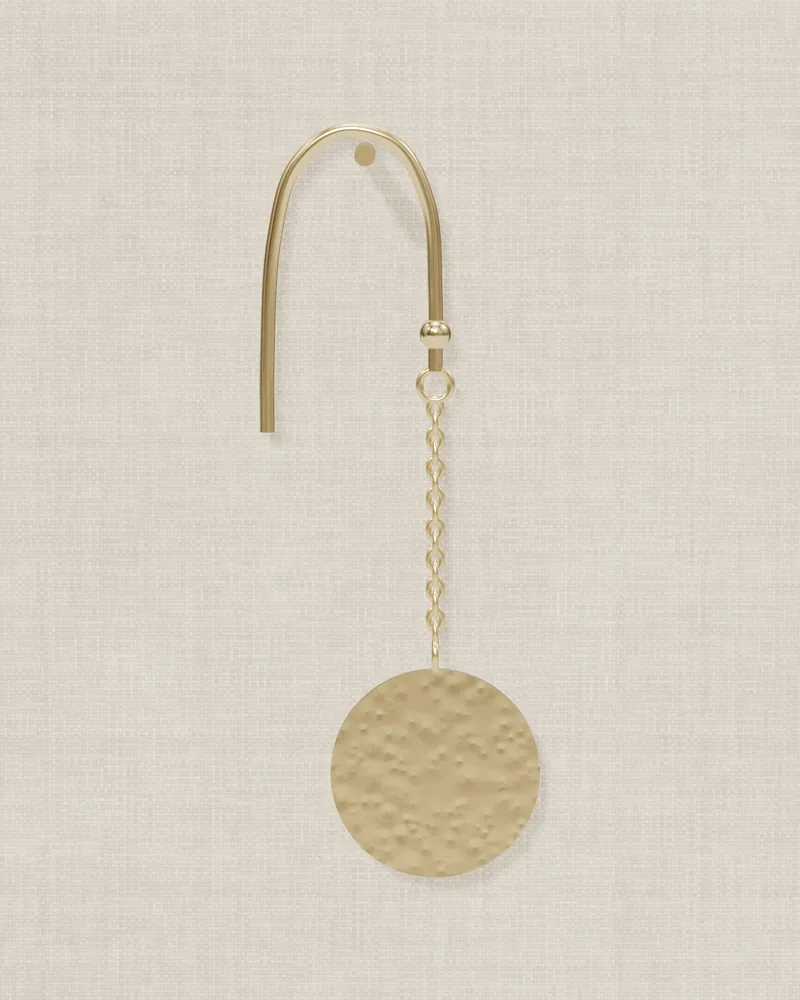
09Dangle
Anything that hangs on a link, chain or hook and moves freely as you do. Longer than a drop.
Hangs and swings below the lobe
- Fastens
- French hook, lever-back or post
- Moves
- Yes, freely
- Best for
- Movement and length without much width
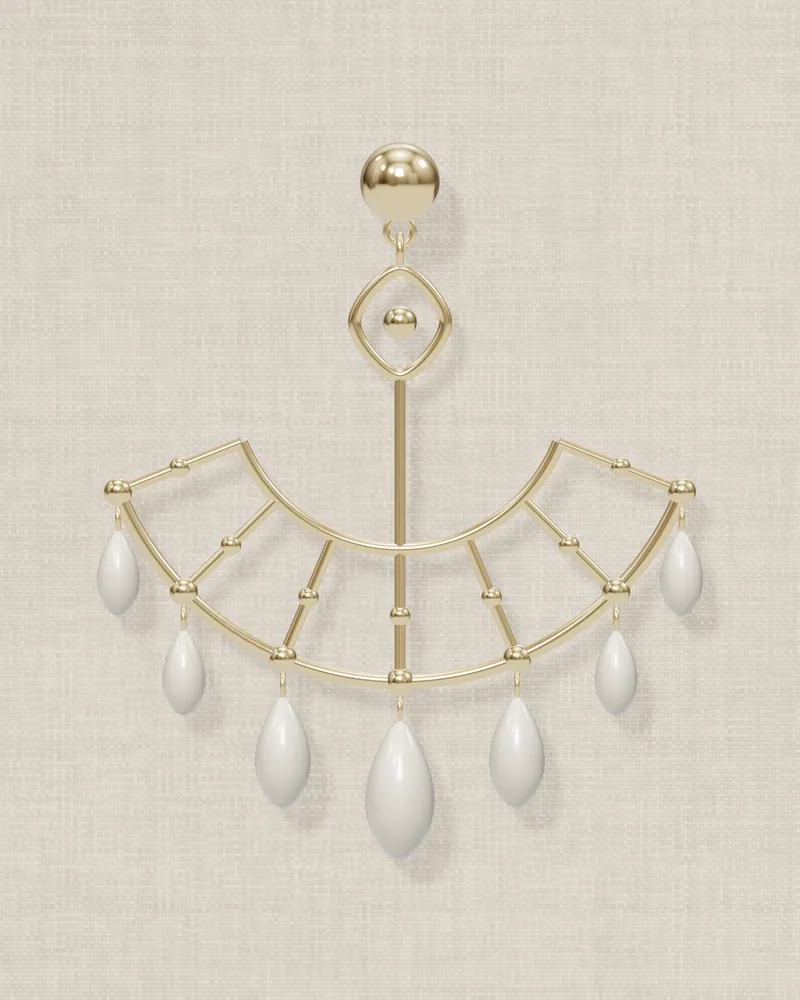
10Chandelier
A dangle built in tiers or branches that widen towards the bottom, often with several moving drops.
Hangs below the lobe, wide at the bottom
- Fastens
- Post with a large back, or a lever-back
- Moves
- Yes
- Best for
- Weddings and evenings; try them for weight
Also worth knowing
Clip-on and magnetic earrings are any of these styles made for unpierced ears. Bar and cluster earrings are variations of the stud; tassel earrings are dangles made of many fine chains or threads. Retailers use these names loosely; the definitions on this page are our editorial convention, not an industry standard.
Six pairs people mix up
| Pair | The difference | Quick test |
|---|---|---|
| Hoop vs huggie | A huggie is a small, thick hoop that sits tight against the lobe. | A visible gap between hoop and lobe means hoop. |
| Drop vs dangle | A drop hangs close and still; a dangle is longer and moves freely. | Turn your head: if it swings, it’s a dangle. |
| Dangle vs chandelier | A chandelier is a dangle built in tiers that widen towards the bottom. | More than one spreading tier means chandelier. |
| Climber vs cuff | A climber goes through a piercing; a cuff grips the rim without one. | Look for a post. |
| Jacket vs stud | A jacket adds a second piece behind the lobe that shows below it. | Look under the lobe. |
| Threader vs dangle | A threader is pulled through the piercing and has no hook or back. | Look for a bar or needle end. |
Backs and closures
The back decides how secure an earring is and how it feels to wear. Drawings show each one from the side, with the lobe dashed and the locking part in colour.
| Closure | How it holds | Security | Usually on |
|---|---|---|---|
| Push-back (butterfly) | Friction: the back slides onto a plain post and grips it. | Moderate; loosens as backs wear | Studs, everyday pieces |
| Screw-back | A threaded post; the back screws on. | High | Diamond studs, children’s earrings |
| Hinged latch | A hinged post swings through the piercing and clicks into the hoop. | High | Huggies, hoops |
| Lever-back | A hinged lever closes onto the end of the wire. | High | Drops, dangles |
| French hook | An open hook hangs over the piercing; a small rubber stopper helps. | Lower; add a stopper | Dangles, light drops |
| Clip-on | A sprung clip presses a pad against the back of the lobe. No piercing. | Moderate; can pinch | Unpierced ears, heavy statement pieces |
Size, weight and everyday wear
- Size Hoops and huggies
- Hoops are usually sold by diameter in millimetres. A huggie needs room for your lobe: measure from the piercing to the lobe edge before you buy
- Weight Drops, dangles, chandeliers
- Long pieces pull on the piercing. If the hole starts to stretch, switch to lighter earrings or clip-ons and ask a dermatologist
- Comfort Backs and calls
- Screw backs and hinged huggies sit flatter than large butterfly backs, which matters with a phone, headset or pillow.
- Everyday wear Hair, scarves, knitwear
- Studs, huggies and climbers catch least. Threaders, dangles and chandeliers catch most.
From the bench
Test the back, not just the front
A push-back should need a firm push to move. If it slides freely, replace the back; they wear out long before the earring.
Backs aren’t universal
Screw backs only fit threaded posts, and post thickness varies. Take the earring with you when buying spare backs.
Clean the post and back
Skin oil collects where the back grips. Warm water, mild soap and a soft brush are enough.
What the post is made of matters most
The post sits inside the piercing for hours. Nickel is one of the most common causes of skin allergy 3; in the EU, posts for pierced ears must meet a strict limit on nickel release 2.
| Metal | Nickel | Wear & care | Ask or check |
|---|---|---|---|
| Platinum | Common jewelry alloys contain none | Doesn’t tarnish; takes a satin patina | Stamped PT950 or similar 1 |
| Yellow & rose gold | Usually alloyed with silver and copper | Higher karat is softer and richer in colour | Karat stamp: 14K / 585, 18K / 750 1 |
| White gold | Some alloys contain it; palladium white gold doesn’t | Rhodium plating wears; re-plate | What is it alloyed with? |
| Sterling silver | 92.5% silver, usually with copper | Tarnishes; store sealed, polish gently | Is it plated, and with what? |
| Titanium, niobium | Used by professional piercers for fresh piercings 4 | Light; doesn’t tarnish | Implant-grade, e.g. ASTM F136 titanium 4 |
| Stainless steel | Contains nickel within the alloy | Tough, low upkeep | “Surgical steel” alone doesn’t name a grade |
| Plated & vermeil | Depends on the metal underneath | The coating wears through | Vermeil: sterling silver with at least 2.5 µm of 10K+ gold 1 |
Treat “hypoallergenic” as a claim to question, not a guarantee: ask which metal the post is made of. If you react to an earring, stop wearing it and see a dermatologist.
Earrings for real days
Every day, all day
StudHuggieSmall, secure and comfortable under a hat or headset. Screw or hinged backs hold best.
Office and video calls
StudDropSomething that reads on camera without knocking against a headset.
Gym and sport
Small studTake off hoops and dangles. Some sports and gyms ask for no earrings at all.
Wedding or evening
ChandelierDropWear them for an hour at home first to check the weight and the backs.
Several piercings
HuggieClimberCuffMix sizes from the lobe upwards and keep the metal consistent.
Sensitive skin or a new piercing
StudChoose the post metal first. For a fresh piercing, follow your piercer’s advice on material and timing 4.
Keep reading
- U.S. Federal Trade Commission, Guides for the Jewelry, Precious Metals, and Pewter Industries, 16 CFR Part 23 (incl. § 23.5 on vermeil).
- Regulation (EC) No 1907/2006 (REACH), Annex XVII, entry 27 — nickel in post assemblies for pierced ears.
- American Academy of Dermatology Association — patient information on nickel allergy.
- Association of Professional Piercers — minimum standards for initial piercing jewelry.