Screw Back vs. Push Back Earrings
A screw back twists onto a threaded post. A push back slides onto a post and grips it. Choose a well-fitted push back for quick changes or a matched screw back if you prefer a threaded closure and don’t mind taking longer to put it on.
How they work · Compare the two · What to choose · Replace a back

- Screw back
- Threaded post + screw-on nut
- Push back
- Notched post + butterfly clutch
Turn to thread. Slide to grip.
Jewelers of America’s guide to earring backs describes two different movements. Each depends on pairing the right back with its post.
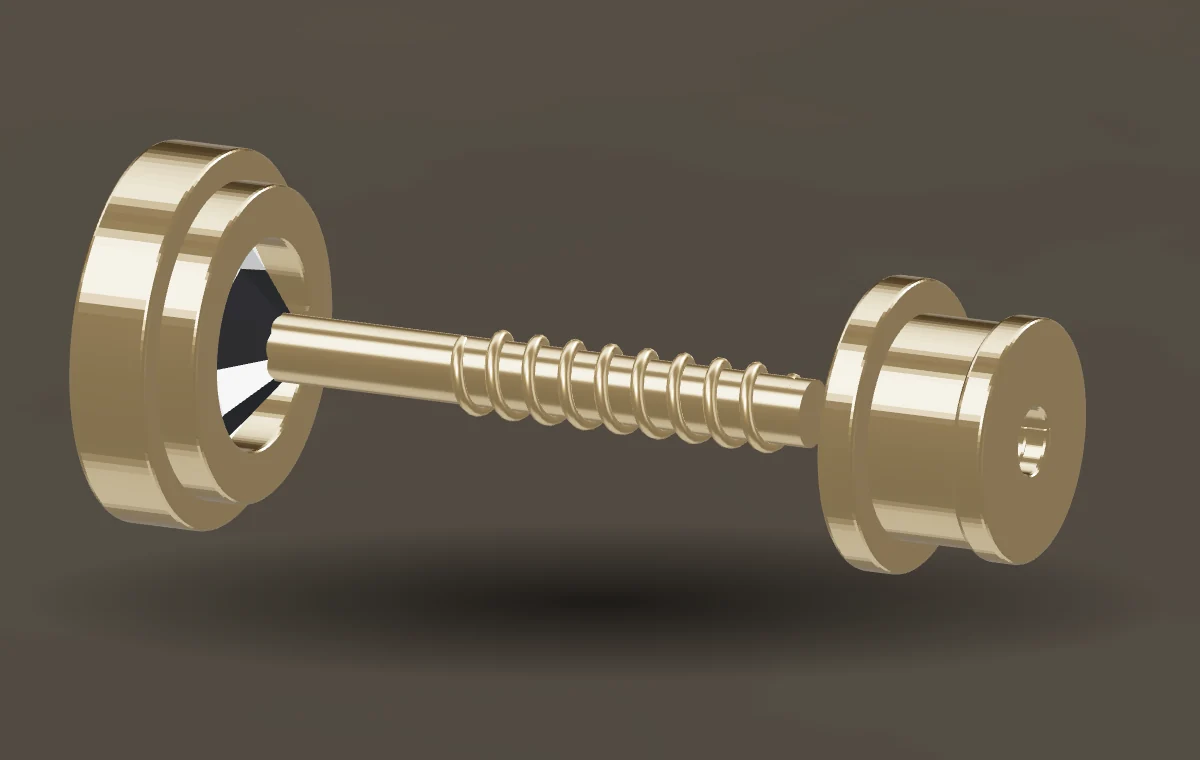
How screw back earrings work
The post has an external spiral thread. The backing has a corresponding internal thread. As you turn a correctly matched back, it travels along the post.
To put it on: Hold the front still, start the back square to the tip, and turn gently until it sits comfortably. If it catches or starts at an angle, back it off and realign it. For removal, hold the front and unscrew the back until it comes free.
How push back earrings work
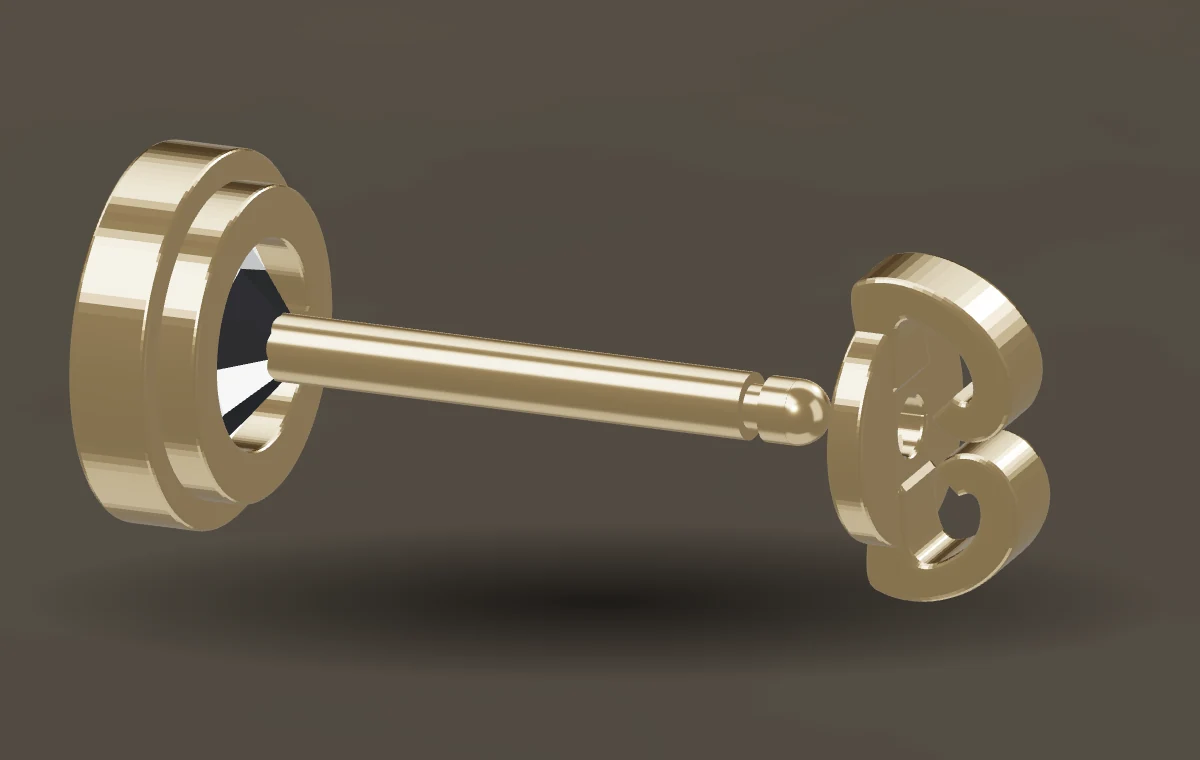
A conventional friction back slides onto a smooth or notched post. In the butterfly design, the curled spring wings apply pressure. On a compatible grooved post they can settle into the notch. Other push-back shapes use different gripping elements.
To put it on: Hold the front still and push the back straight onto its matching post. Stop when it sits comfortably without squeezing the lobe. To remove a conventional friction back, hold the front and pull the back straight off. Follow the maker’s instructions for a back with a separate release.
Screw backs and push backs side by side
Compare the matched parts on the actual earrings you plan to buy.
| Consideration | Screw back | Push back |
|---|---|---|
| Mechanism | Matching external and internal threads. | Friction holds the post. Some backs also engage a compatible groove. |
| Retention | Depends on matched, intact threads and proper engagement. | Depends on spring tension, post fit, and seating. |
| Putting it on | Align the parts and turn the back onto the post. | Push the back straight onto the post. |
| Taking it off | Hold the stud while unscrewing the back. | Hold the stud while pulling off a conventional friction back. |
| Comfort | Check post diameter, usable length and backing profile. | Check the same dimensions and whether the back presses against the lobe. |
| Maintenance | Inspect for rough or crushed threads and a back that no longer turns cleanly. | Check for distorted wings, weak grip or a bent post. |
| Loosening | Poor engagement, worn threads or a backing that turns too freely merit a check. | A back that slides with little resistance merits a check. |
| Replacement | Match the maker’s part or have both diameter and thread pitch checked. | Match the post diameter, grip and any groove the back is designed to engage. |
| Common uses | Diamond, gemstone and metal studs where a threaded closure is preferred. | Studs of many sizes. A broader matched back can support a larger front. |
| Cost | Ask for a matched spare quote and whether a damaged post needs separate work. | Ask for the fitted replacement price. The back’s size, metal and design affect the quote. |
Which earring back is more secure?
A sound, fully engaged screw-on back resists a straight pull because the threads have to disengage. That advantage depends on the fit and condition of both parts. A damaged thread or a mismatch can leave the back only partly engaged.
A well-matched butterfly holds by spring pressure. Worn or distorted wings can offer less grip. GIA’s bench guide to adjusting earring backs explains how spring tension and the post’s groove affect a friction back. Have a jeweler check a loose one before wearing the pair again.
Inspect the back periodically, especially if it snags on clothing or hair. A thicker post by itself does not establish better retention. Check the maker’s fit, the state of the contact surfaces, and whether you can seat the back properly every time.

Can you interchange screw backs and push backs?
Use the matching system. Don’t test a friction back on a threaded post or force a screw back onto a smooth post. Even two screw backs can have different thread spacing. Maker-specific push-on, screw-off hybrids also exist, so match those to the specified post.
- Start with the stud. Bring both earrings, any surviving back and the maker or model if known.
- Match the dimensions. Ask for the post diameter and, for a screw back, the thread pitch. For a butterfly, check how its spring wings grip the post.
- Test the fit on the bench. A jeweler should check engagement, smooth operation and visible damage before you wear the pair. Ask whether the post also needs repair.
See Rio Grande’s fitting guidance and Stuller’s examples of manufacturer-matched systems.
Which earring back should you choose?
Try the matched parts with the stud you’ll wear. Check the backing profile and post length, especially if the earrings will be on for hours at a time. The back should support the front without pressing hard into the lobe.
Everyday studs and frequent changes
Fitted push backA fitted push back is quick to handle. Check that you can remove it without tugging at the stud or pinching the lobe.
Diamond studs and valuable earrings
Try a screw backTry a screw back if you prefer threaded engagement. For a larger stud, compare the support each back provides. GIA’s diamond stud guide also discusses separate locking designs and how back size affects support.
Travel and active days
Familiar fitted backUse a familiar matched back you can seat consistently. Check it after a snag and pack a matched spare in a closed case if you expect to change earrings away from home.
Replacing a lost back
Match the originalTake the stud for fitting or order a maker-confirmed spare. A back that merely goes onto the post may still fail to grip or engage correctly.
A gift
Ask the recipientFind out which closure the recipient already likes and whether they prefer a larger backing that’s easier to hold. Ask about exchanges and matched spares.
Questions about screw backs and push backs
Is a butterfly back the same as a push back?
A butterfly is a common push back with two curled wings. Other designs also slide onto the post, but may use a different gripping element.
Do screw back earrings ever come loose?
Yes. A partly engaged back, damaged thread or mismatched pair can work loose. If the back starts crooked, spins without advancing or turns unusually freely, have both pieces checked.
Can I buy any replacement of the same diameter?
Diameter is a starting point. A threaded replacement also needs the right pitch and engagement. A friction replacement must grip the actual post and, if designed that way, work with its groove.
Can a jeweler convert screw back studs to push backs?
Ask a jeweler to inspect the setting, metal and stones. A conversion can require replacing the posts and matching new backs. Get a quote for the work before choosing a replacement.
Why do my studs tilt forward?
A heavy front may need a bigger support surface or a better fit. Ask a jeweler to inspect the angle of the post and try a matched back with a broader face.
How do I tell which back I already have?
Look at a removed stud under good light. A spiral on the post and a nut that turns along it indicate a screw back. A smooth shaft or a single notch with a back that slides onto it points to a friction design. Check the maker’s instructions if the back has a release.
Should I squeeze a loose butterfly back at home?
Have it checked first. Weak grip can come from the wing shape, a damaged or mismatched post, or the wrong back. A jeweler can fit or replace the component and check how it holds.