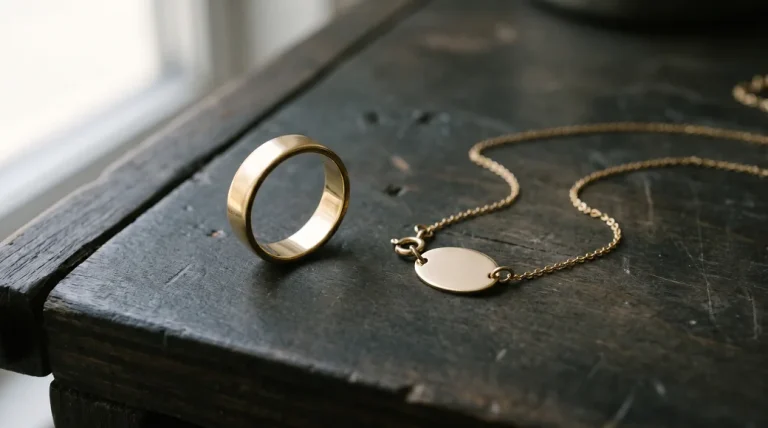
How to Clean Gold Plated Jewelry
Start with a clean, soft, dry cloth. To clean gold-plated jewelry, wipe gently and check the maker’s instructions before using water or a cleaner. Stop if the finish is lifting or a stone or clasp is loose.

Before you clean gold-plated jewelry
The gold you see is a surface layer over another metal. Repeated rubbing at edges, clasps, and contact points can wear it through. A film from lotion may lift with a gentle wipe. A dark patch or a change in color can also come from the finish or the underlying metal.
Check the receipt, product page, or maker’s directions for the finish and for stones, glue, inlay, or hollow parts. A jewelry stamp or a karat number alone cannot tell you what the whole piece can tolerate. For layered construction, see gold filled vs. gold plated and gold vermeil vs. gold plated.
- Ordinary surface film
- On a sound finish, try one gentle pass with a soft, dry cloth.
- Unknown materials or finish
- Keep it dry. Look up the item or ask the maker about the materials and allowed care.
- Stones, inlay, or glue
- Check guidance for every component. Keep moisture away from joins until the method is confirmed.
- Color changes
- Check under neutral light, try a gentle dry wipe if the finish is sound, and pause if the patch stays.
- Wear, peeling, or exposed-looking metal
- Avoid polishing. Ask a jeweler whether the finish needs attention.
- Loose stone, failed clasp, or damaged joint
- Stop handling the jewelry and arrange an inspection before cleaning or wearing it again.
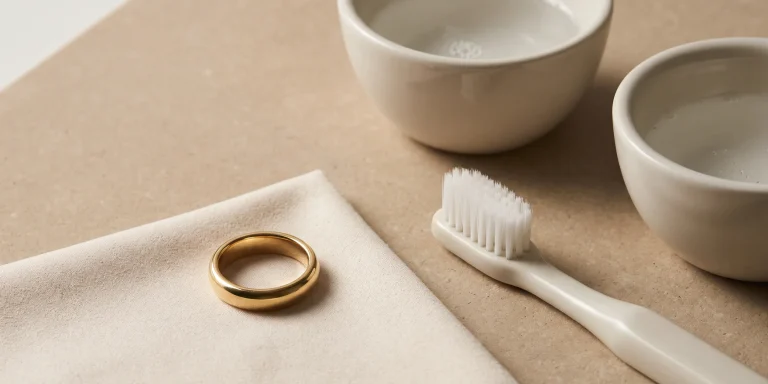
What you need
- Start dry. Use clean, plain, soft, lint-free cloths. Set one aside for drying.
- Add plain water only if permitted. A small dish lets you barely dampen a cloth corner without getting the jewelry wet in a bowl.
- Check before adding a cleaner. Use mild soap or a specialized cleaner only if the maker’s directions approve it for the exact finish and every component. Skip treated cloths unless the directions identify a suitable side or product.
A padded tray and good light help prevent dropped pieces. Stella & Dot’s plated jewelry guide gives an example of a maker that starts with a soft, dry cloth.
How to clean gold-plated jewelry in six steps
Use a dry wipe as your default. Steps involving water or cleaner apply only when the piece’s care instructions allow them.
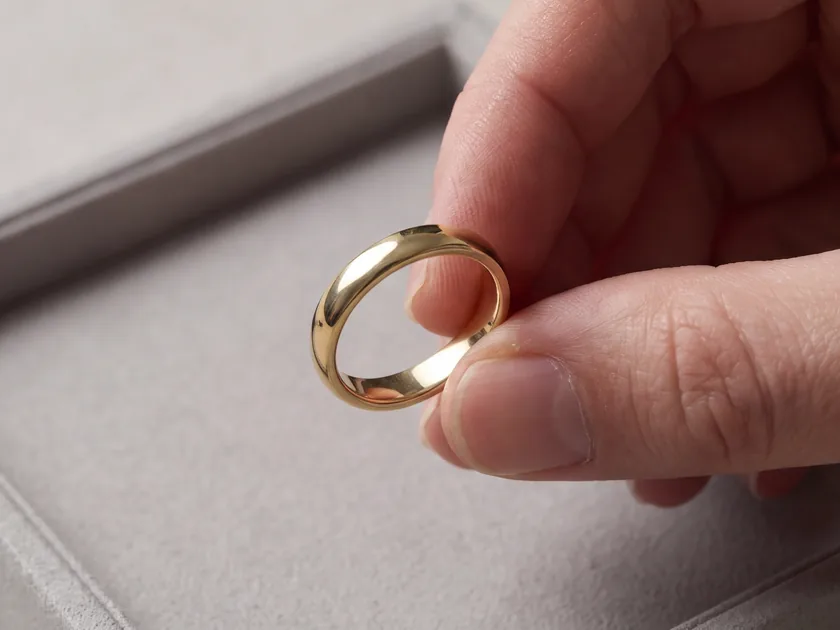
Tilt a ring to see the inside of the band and the lower edges. Inspect the finish and fittingsLay the piece on a padded tray or hold it over one. Turn it under indirect light and check edges, seams, clasps, settings, and the underside. If a finish is lifting or a part moves, set it aside.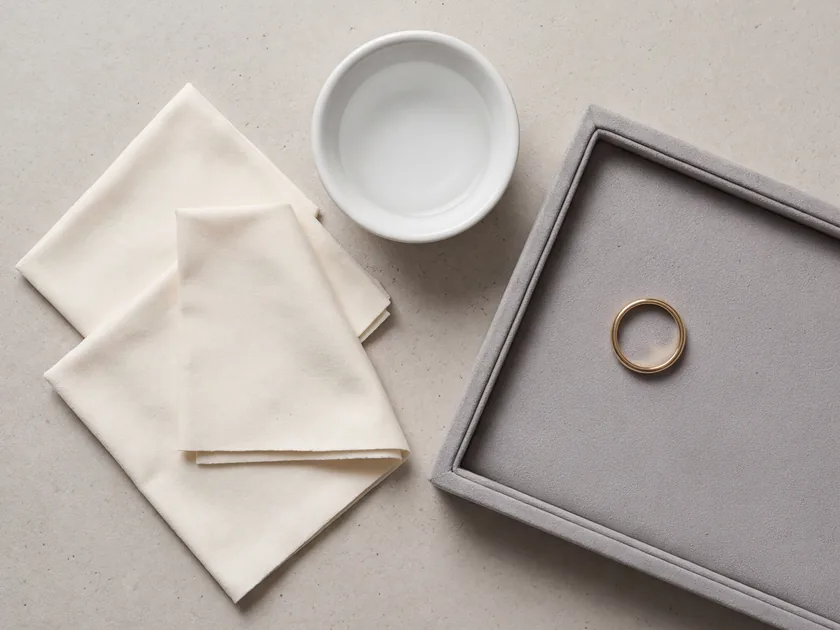
Keep the dry cloth separate. The dish is only for moistening a cloth. Set out the clothsStart with one clean, soft, dry cloth and keep a fresh one for drying. Set out a small dish of plain water only if the maker permits a damp wipe. Work away from an open drain.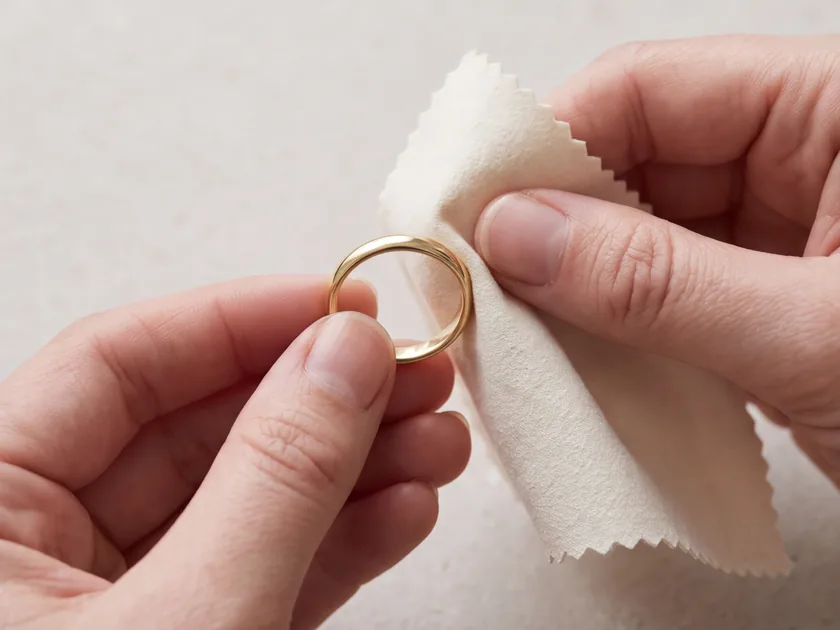
Use a clean area of the cloth as you move around the piece. Wipe gently while drySupport the jewelry and make light passes with a clean, untreated cloth. Turn to a fresh patch of fabric as you pick up fingerprints or light cosmetic film. Skip scrubbing and stop if the cloth catches.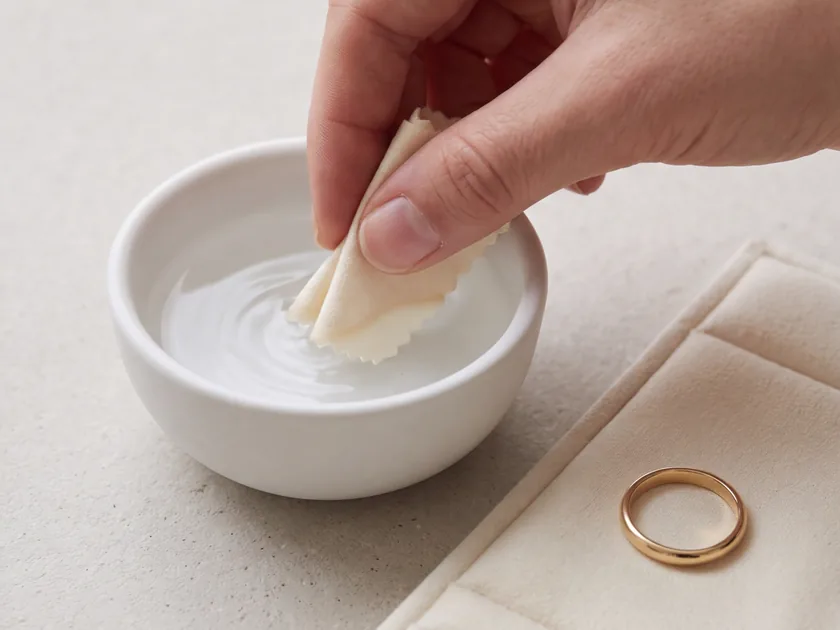
Dampen the cloth. Keep the jewelry out of the dish. Dampen the cloth only if allowedFor a sound piece whose care directions allow a damp wipe, moisten a cloth corner with clean water and squeeze it out so it cannot drip. Wipe accessible plated metal lightly, keeping moisture out of joints and settings. Bali Jewelry House’s care guide gives a workshop example of a well-wrung cloth for its own plated pieces.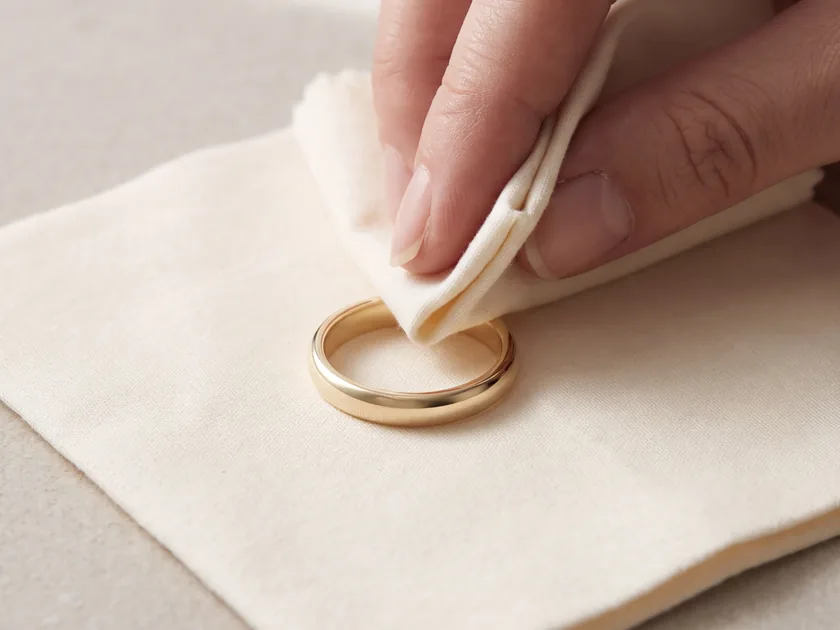
Blot with a fresh dry cloth, including along the inner band you can reach. Lift residue and blot dryIf the maker specifically approves a mild cleaner and you used it, follow its residue-removal directions. Where it allows a clean damp wipe, use a fresh cloth for that pass. Blot moisture with a dry cloth, including near accessible seams, without tugging or rubbing.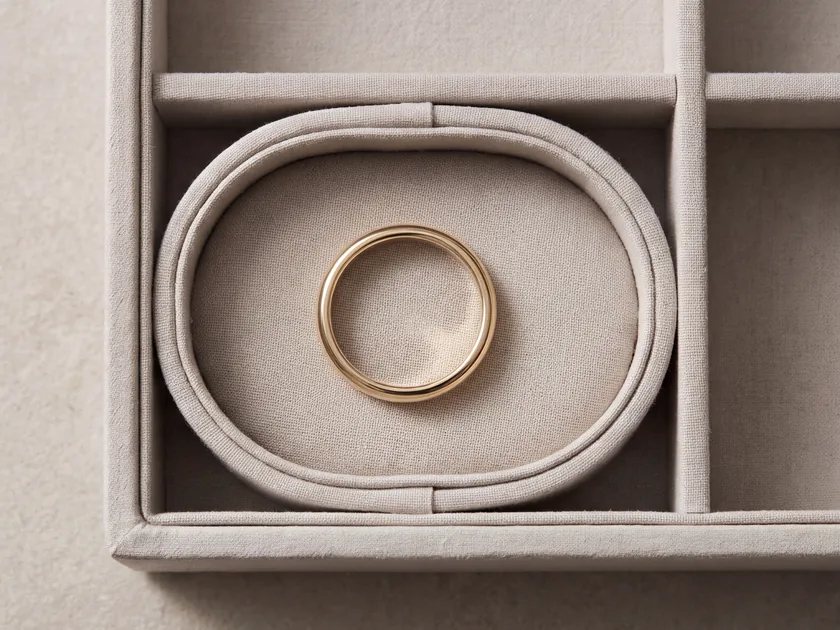
Store the piece only after it is fully dry, away from other jewelry. Let it finish drying, then store itLeave the piece at room temperature until dry, including accessible clasp and link areas. Set it in its own lined compartment or soft pouch. If a patch remains after a gentle wipe, check the finish before doing anything more.
Cleaning different types of gold-plated jewelry
Support the piece and work on the areas you can reach without pressure. Construction matters as much as the type of jewelry.
- Rings
- Check the underside and inner band for lotion and contact wear. Support the ring on a cloth. Pause before wetting a ring with inlay, a repair, or a visible seam.
- Necklaces and chains
- Lay the chain flat, support small sections, and wipe the outside of links and clasp. Skip pulling the chain through a pinched cloth. Leave trapped buildup in hollow links or a sticky clasp for a jeweler.
- Earrings
- Support each earring and wipe accessible metal around backs, posts, or hinge surfaces. Keep moisture away from glued pads, pearls, and unknown materials. Use the maker’s directions for any separate hygiene requirements.
- Bracelets
- Inspect the clasp, underside, and where links rub together. Wipe sections while supported. Treat cord, elastic, and leather components according to their own care instructions.
- Pendants
- Look at the bail, back, and edges, where lotion can collect. Support the pendant while wiping around the bail. Avoid catching the cloth on a setting or forcing it through a small loop.
- Stones or glue
- Consult guidance for the stone, its treatment, mounting, and adhesive. Keep unknown, loose, glued, porous, or delicate parts out of home wet cleaning unless the maker specifically confirms the method. Ask a jeweler about debris under a setting.
What to avoid on gold-plated jewelry
A cleaner labeled for gold or silver may have been designed for a different surface. Use the advice for your finish, gemstones, and construction together.
| Cleaning method | Suitable conditions | Potential damage | When to avoid | Safer alternative |
|---|---|---|---|---|
| Soft, untreated dry cloth | Sound finish, loose dust or light film | Trapped grit can scratch if rubbed | Lifting finish, fabric that catches or a visibly loose part | Stop and get the piece checked. |
| Barely damp cloth / mild cleaner | Damp wipe only with confirmed compatibility; cleaner only with explicit approval | Moisture or residue can collect in seams, glue or stone settings | Unknown materials, dry-only instructions, fragile parts or loose settings | Use a gentle dry wipe on a sound surface. |
| Baking soda or toothpaste | Skip on gold-plated jewelry | Particulate cleaners can scratch or dull the finish | Especially at raised edges and on soft stones | Use a plain soft cloth. |
| Vinegar or lemon juice | Skip home acid recipes | Acidity may affect exposed base metal and sensitive components | Material is unknown, coating is worn, or the item has delicate stones | Wipe dry and ask about persistent discoloration. |
| Polishing compounds or treated polishing cloths | Use only a product the maker expressly specifies for the exact finish; skip generic polish | Abrasives or treatments can change or remove a surface finish | Plating is thin, worn or unknown, or the cloth is meant for solid silver | Choose an untreated cloth, or the side the maker identifies as untreated. |
| Silver-cleaning solutions | Skip silver dips on ordinary gold plating unless the maker explicitly approves the exact product | A dip can act on more than the supposed tarnish and may affect the finish or other materials | Especially vermeil with a gold surface, glued pieces and unknown stones | Follow the instructions for the gold finish itself. |
| Alcohol-based jewelry cleaners | Use only with explicit approval for the entire piece, including finishes and adhesives | Solvent compatibility varies with sealants, gems and adhesive | Unknown finish or treated, organic, or glued materials | Stick to an untreated dry cloth. |
| Ammonia or bleach | Skip household chemicals for home plated care | Strong cleaners can harm some metals or sensitive stones and finishes | Especially with exposed metal, delicate stones or an unknown coating | Ask a jeweler about stubborn buildup. |
| Ultrasonic cleaner | Ask the maker or a jeweler to assess the exact piece | Vibration can loosen a stone or harm some gems, fillings and vulnerable parts | Loose mounts, glued components, susceptible stones, or unknown construction | Use a supported dry wipe or arrange professional care. |
| Steam cleaner | Leave compatibility and technique to a professional | Heat and pressure can harm sensitive gems and assemblies | Unknown materials, heat-sensitive stones, adhesives, or damage | Blot after an approved damp wipe, or ask a jeweler. |
| Stiff brushes | Skip on gold-plated surfaces | Stiff bristles and trapped grit can mark the finish or snag parts | Thin or worn finishes, soft stones, or fragile settings | Use a soft cloth on reachable surfaces and leave packed debris to a jeweler. |
Jewelers Mutual’s gold-plated care guidance warns against common DIY cleaners. GIA’s care guide explains why some gems and settings are poor candidates for ultrasonic cleaning.
Tarnish, dirt, or worn plating?
A soft wipe may lift loose dirt, fingerprints, or cosmetic residue. Darkening may persist if the surface or underlying metal has changed. A scratch can mark the plating without necessarily exposing the metal underneath.
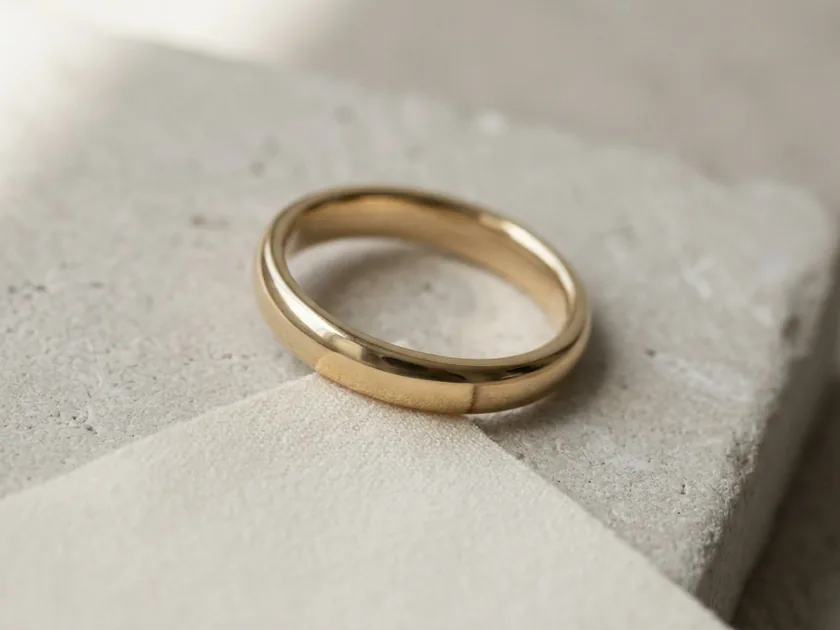
Where to look before wiping again
Compare a high-contact edge with a sheltered area under the same light. Look around clasps, link junctions, and the inside and underside of rings. A sharp change in color at a rubbed edge can suggest wear. Lighting, coatings, residue, and underlying metal can look similar in a photo. Avoid trying to polish a persistent patch into a match.
What to do if gold plating has worn off
Cleaning can remove surface material such as loose residue. It cannot put back a lost layer of gold.
When to stop
Put the piece aside if you see flaking, a persistent patch on a contact point, a damaged fitting, or possible exposed metal. For sentimental or valuable pieces, get an assessment before trying another product.
When to ask about replating
A jeweler can assess the base metal, surface condition, old repairs, and whether stones or glued parts can tolerate preparation. Ask about the expected color and finish, whether the whole piece needs work, and how the quote compares with replacement or its sentimental value. Artisan Plating’s repair and plating FAQ explains why new plating may still show pits or scratches unless the surface can be prepared.
How to keep gold-plated jewelry looking good
Reduce friction and contact with products between wears. The best routine depends on the piece, its finish, and how you wear it.
- Apply cosmetics first. Let lotion, fragrance, hairspray, and sunscreen dry before putting jewelry on.
- Take it off before heavy contact. Remove plated jewelry before workouts, swimming, showering, or using household cleaners, unless your maker gives specific guidance for the activity.
- Wipe when you put it away. On a sound piece, use a quick, gentle dry wipe to lift loose dirt and residue. Dry a piece that got wet before storing it.
- Store pieces separately. Use a soft pouch or lined compartment. Lay a chain so links and pendants won’t rub against other items.
Questions about cleaning gold-plated jewelry
Can you wash gold-plated jewelry with water?
Start dry. If the maker confirms a damp wipe is suitable for the whole piece, use a barely damp cloth and blot dry. Leave it out of a bath unless the maker gives that specific instruction.
How do you clean a tarnished gold-plated chain?
Support the chain flat and make a light pass with a clean, plain cloth, including around the clasp. If the dark patch stays or links catch the fabric, stop. A jeweler can assess whether it’s a deposit, surface change, or finish wear.
How do you clean gold-plated earrings with glued stones?
Use a dry cloth on reachable, sound metal only. Keep liquid away from the stones and joins unless the maker confirms the exact method. Have loose parts and trapped buildup checked.
Can you use jewelry cleaner on gold-plated jewelry?
Only if the maker and product directions cover the specific finish, stones, adhesive, and any other materials. A general jewelry cleaner or one labeled for gold gives too little information for an unknown piece.
Can baking soda, vinegar, or toothpaste clean gold plating?
Skip these recipes. The abrasive ingredients or acids can affect the coating, exposed metal, or other materials. A soft, untreated cloth is the first choice for a sound finish.
Can cleaning bring the gold color back where plating rubbed off?
Cleaning may lift surface film. A worn-through spot needs an assessment for refinishing or replating to add a new layer. Ask whether the base metal, condition, and design are suitable.
How do you clean the inside of a gold-plated ring?
Turn the ring over to inspect the inner band. Support it gently and wipe with part of a clean, soft cloth. If the color has changed where the ring rubs or the cloth catches, pause before using a cleaner.
How often should you clean gold-plated jewelry?
Wipe a sound piece gently after wearing when it has fingerprints, sweat, or cosmetic residue, and let it dry before storage. Follow the maker’s care instructions for anything beyond a light wipe. Frequency depends on how and where you wear it.
Does the same method work for gold vermeil?
Vermeil has a gold surface over sterling silver. Start with the maker’s instructions for that finish and a plain, soft cloth when appropriate. Avoid assuming a silver dip is suitable because the base metal is silver.