White Gold vs Yellow Gold How color and upkeep affect your choice
Choose yellow gold for a warm color that runs through the metal. For a cooler look, compare white gold in both plated and unplated finishes. At the same karat, both have the same nominal gold content.

- White gold
- Rhodium-plated finish
- Yellow gold
- Color in the alloy
Compare white and yellow gold at the same karat
Keep the design and karat constant while you compare. The color comes from the alloy and surface finish. The way a piece wears also depends on how the jeweler makes it and how you use it.
| What to compare | White gold | Yellow gold |
|---|---|---|
| Appearance | Neutral to warmer white, depending on the alloy and coating. | Warm yellow in the alloy itself. The shade varies with composition. |
| Gold content | At a given karat, the same nominal gold fraction as yellow gold. | At a given karat, the same nominal gold fraction as white gold. |
| Alloy composition | Some grades use nickel, others palladium. The full formula varies. | Often uses copper and silver. Ask about the specific piece. |
| Surface finish | Polished or matte. Rhodium can make the finish look brighter and cooler. | Polished or matte. Finish changes reflection and perceived depth of color. |
| Rhodium plating | Common on bright white gold. Ask whether your piece is plated. | Generally unnecessary to show the alloy’s yellow color. |
| What to compare | White gold | Yellow gold |
|---|---|---|
| Wear | The alloy can scratch. Worn plating may reveal a different tone underneath. | The alloy can scratch. The underlying metal stays yellow at worn spots. |
| Maintenance | Cleaning removes buildup. Replating renews the coated look when desired. | Cleaning removes buildup. A jeweler can assess polishing or retexturing. |
| Repair | Resize and repair depend on alloy and build. Plated surfaces may need refinishing. | Resize and repair depend on alloy and build. Ask how the finish will be matched. |
| Skin sensitivity | Ask whether the alloy, solder, or other contact parts contain nickel. | Confirm the metals in contact with skin, including findings and solder. |
| Purchase and ownership cost | Compare the exact design and ask about any future finish service. | Compare the exact design and ask about finish and setting maintenance. |
Where the color comes from
Karat measures gold by weight. At 10K, 14K, and 18K, the nominal gold shares are about 41.7%, 58.3%, and 75%, respectively. A 14K white band and a 14K yellow band both have the 14K nominal share. Their remaining metals can differ.
Yellow gold commonly includes copper and silver. White gold can use nickel or palladium among its alloying metals. Makers use different recipes, so unplated white gold can range from a softer gray to a warmer, faintly yellow white. Some alloys are sold unplated. Ask to see a finished sample before choosing. The Stuller alloy charts show variations within the same karat.
Compare the karat scale first if gold content matters. For a smaller budget, look at the trade-offs between 10K and 14K. A gold hallmark can describe fineness. Ask for the alloy and finish in writing.
What rhodium changes
Many bright white gold pieces have a thin rhodium finish. It changes the visible surface and leaves the underlying gold alloy as it was. On a ring, rubbing can wear the finish unevenly and let the alloy’s own tone show through.
Rhodium still covers the surface
- Rhodium at the surface
- White gold alloy underneath
Wear exposes some of the alloy
- Remaining rhodium at the sides
- Exposed alloy at the contact area
Two examples, with the layer exaggerated for clarity. Wear can take different shapes and show different colors on a real ring.
Try the same stone and setting in both colors
Prongs and bezels put metal close to the stone. A diamond’s facets can reflect the tone of the nearby metal. Try the actual stone in both metal colors and compare it face up in the same light.
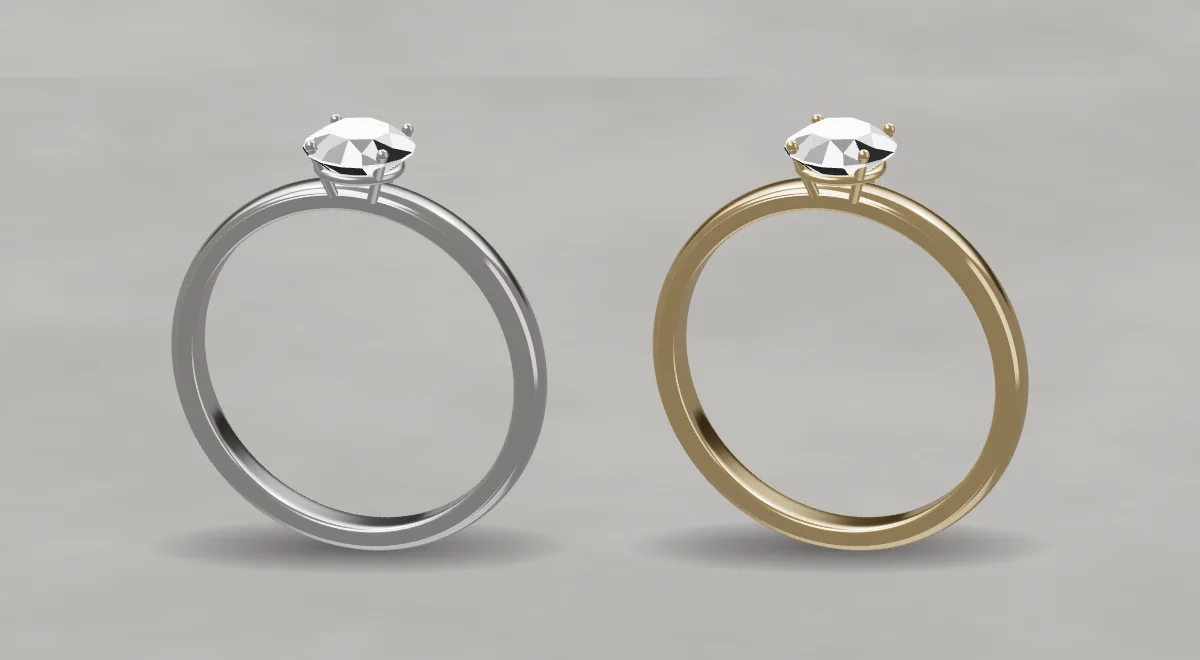
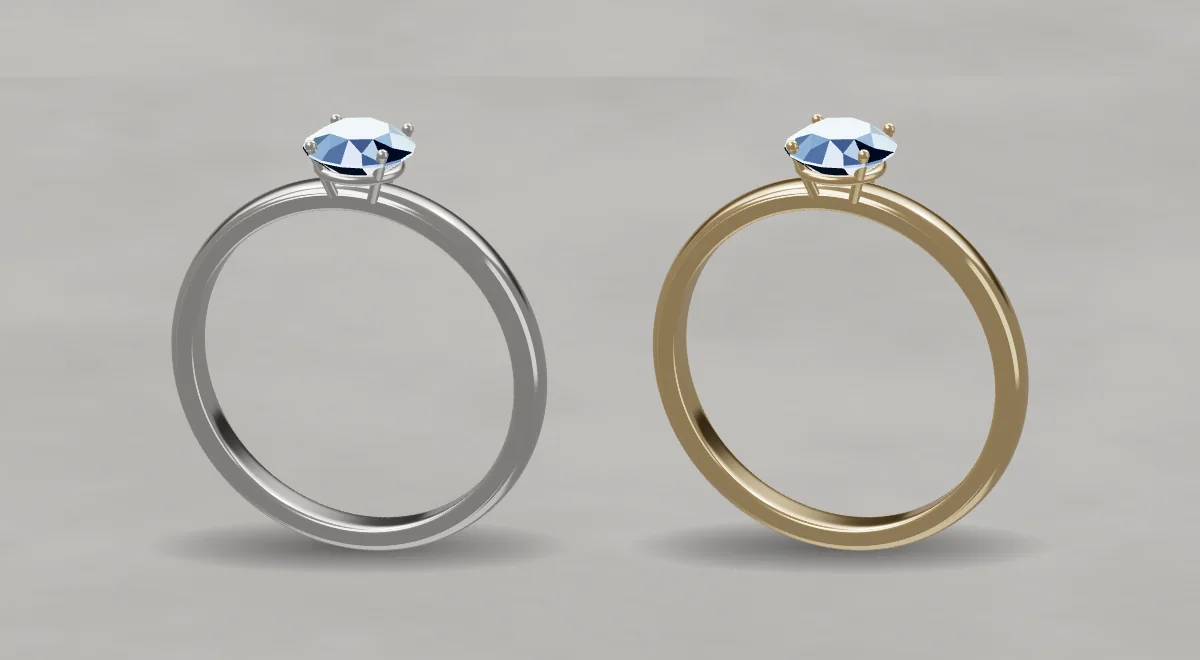
For a diamond, you can also try a yellow band with white prongs if you like a cool setting and a warm band. For a colored gem, look at how the metal changes the contrast around the edge. If you like both, compare in daylight and the indoor light where you usually wear your jewelry.
See both colors with the jewelry you already wear
Try rings beside your own watch, bracelet, or wedding band. Look from arm’s length and up close. Skin, clothing, and light change the contrast, so choose by how the complete combination looks to you.

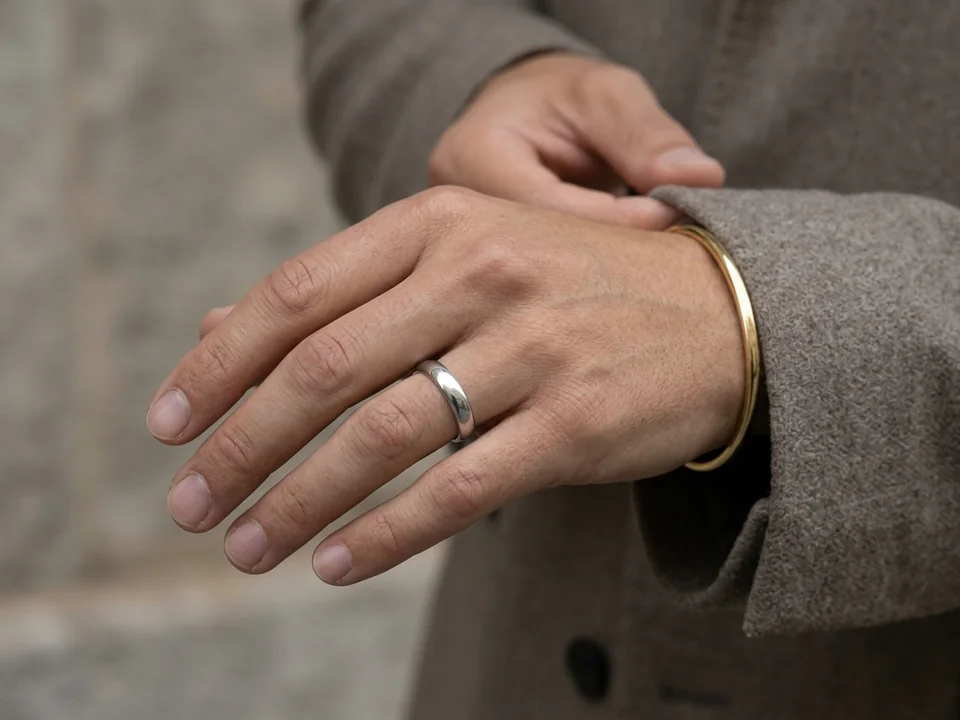
Compare finish as well as hue. Polish gives sharper highlights. A satin or matte finish scatters light and can look softer. Side-by-side samples go further than a rule about which color suits a skin tone.
What you’ll maintain and what you’ll pay for
Both colors can scratch. The particular alloy, its treatment, and the ring’s thickness and shape all matter. The jeweler can tell you which parts will bear the most contact and whether the original finish can be restored.
Cleaning, polishing, and resizing
Follow the care instructions for the setting, finish, and stones. Use gentle routine care, and ask a jeweler to inspect a loose stone or a damaged band before cleaning. Professional cleaning addresses buildup. Polishing or retexturing addresses the finish and may remove some metal. Resizing can involve soldering or welding and may be limited by all-around stones, engraving, or a mixed-metal construction.
If a white gold ring is plated, ask whether the jeweler will restore the rhodium after sizing. The frequency of replating depends on wear and on how much color variation you’re comfortable seeing. A yellow gold band or unplated white gold band typically avoids this particular service. Both can still need setting checks and surface work. If a white finish without rhodium is a priority, see platinum vs white gold.
Compare the purchase and service quotes separately
Price reflects karat, finished metal weight, alloy ingredients, design, workmanship, stones, and any applied finish. At the same karat, equal weights contain the same nominal amount of gold. Equal-size designs can weigh differently. Ask for quotes for the same ring, size, and setting. Compare what cleaning, resizing, refinishing, and replating cost or whether they are included. If you are also comparing gold content, see 14K vs 18K gold.
Ask what touches your skin
Some white gold alloys contain nickel. Ask the seller for the actual metals in the band or post and in any clasp, backing, or solder that can touch skin. Check yellow gold pieces the same way if you have a known sensitivity. Plating can wear, so a bright white finish does not establish what is underneath. For known nickel allergy, choose pieces with documented nickel-free contact parts and consult the American Academy of Dermatology’s guidance.
Choose by what you’re buying
Start with how the piece needs to look and what it will rub against. Ask whether the jeweler can service it in the finish you choose.
Engagement ring
Try both with your stoneCompare the same head and band in both colors. Ask about resizing if the setting has stones along the shank.
Wedding band
Match color and contact fitTry it beside the engagement ring. Check where the rings rub and how the shop would restore a finish.
Everyday jewelry
Check the contact pointsInspect the clasp, post, and edges. Choose a finish you’ll be happy to wear after it picks up marks.
Diamond jewelry
Start with the prongsCompare white prongs for a cooler frame, yellow for visible warmth, or a mix with a yellow band.
Colored gemstone jewelry
Choose contrast deliberatelyCheck the stone under the same light with both metal colors. Confirm its care needs before buying.
Low-maintenance finish
Try an unplated sampleCompare yellow gold and unplated white gold if you want to avoid renewing a rhodium finish.
Matching your existing jewelry
Bring a piece you wearTry it against the new piece. A shared color name can still cover different shades or finishes.
What to check before you buy
- Match the samples. Compare the same size, band width, finish, setting, and stone in the same light.
- Get the material in writing. Confirm karat, alloy or nickel disclosure, and whether the whole piece or only part of it is rhodium plated.
- Look where it will touch. Try rings side by side. Check a band’s underside and ask about the metal in posts, backs, or clasps.
- Ask about resizing and refinishing. Find out whether the specific design can be resized and how its polish, matte texture, or plating would be restored.
- Compare two quotes. Check finished metal weight, workmanship, warranty, and charges for post-purchase service.
Common questions about white and yellow gold
Is white gold real gold?
Yes. It is a gold alloy made to look paler than yellow gold. A 14K white gold piece and a 14K yellow gold piece have the same nominal gold share before any surface finish.
Is white gold more expensive than yellow gold?
It depends on the piece. Ask for the same design and karat, and compare finished metal weight, ingredients, labor, plating, and service terms.
Why does a white gold ring look warmer over time?
If it has a rhodium coating, areas that rub may show the alloy underneath. Buildup, lighting, and the original alloy shade also affect the look. Ask a jeweler to identify the cause before polishing or replating.
Does white gold scratch more easily?
Color alone can’t answer that. Both can scratch. Different alloy recipes and treatment affect hardness, and plated white gold can also show uneven wear of its finish.
Can a white gold ring be resized?
Many can. Ask about the specific alloy, the amount of size change, and details such as stones around the band or engraving. Also ask if any rhodium finish will need to be restored.
Can I wear white and yellow gold together?
Yes. Try a two-tone piece or repeat each color in a stack. If two rings touch, check that their shapes and settings sit comfortably together.
Do all white gold rings need replating?
Unplated white gold has no rhodium layer to renew. A plated piece may be replated if you want its previous white finish back. Ask about the specific ring and watch where its color changes.
References
- GIA’s Quality Assurance Benchmarks. Bench standards for sizing joints, settings, and finish.
- Stuller’s metals comparison. Composition, density, and hardness of specific alloys.
- Stuller’s rhodium finishing guide. Rhodium as a separate surface finish.
- American Academy of Dermatology on nickel allergy. How to check and avoid exposure.