What Is Rhodium Plating?
Rhodium plating is a thin metal finish that gives jewelry a bright white surface. It can wear where a piece rubs. When comparing two pieces, ask what metal is underneath and what it would take to renew the finish.

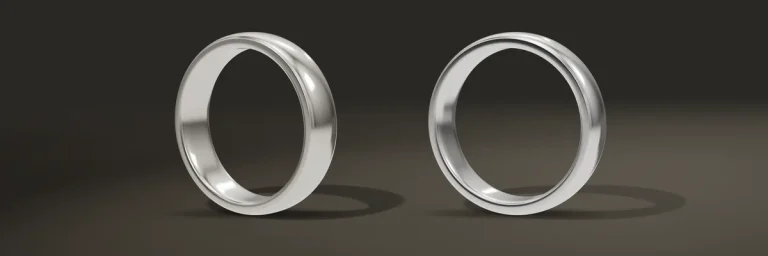
- Rhodium-Plated White Gold
- Bright white surface
- Unplated White Gold
- Alloy visible at the surface
What rhodium does to jewelry
Rhodium is a silvery-white metal in the platinum group. In jewelry, a jeweler can use electroplating to deposit a thin layer of it on a prepared metal surface. The layer changes what you see. The underlying alloy keeps its original composition.
Intact coating
Local wear
Rh plated over a 14K alloy leaves the alloy 14K. The gold karat describes the proportion of gold in the alloy. The words “rhodium plated” describe a finish and do not identify the base metal.
Why jewelers plate white gold and silver
- White gold
- Jewelers use rhodium for a brighter, cooler white. Unplated white gold has a shade of its own, which depends on the alloy and finish. GIA’s ring buying guide describes white gold alloys and how their underlying color can become visible as a coating wears.
- Sterling silver
- The coating can give silver a bright finish and slow tarnish on covered areas. Exposed silver can still tarnish, including at wear points and on areas that were left uncoated.
- Other substrates
- Some gold, palladium, and copper-based pieces can be plated. Suitability and any intermediate layer depend on the material and plating system. Ask for the base metal in writing, especially if the listing gives only the finish.
Rhodium adds a surface barrier. It still picks up wear, and the finish does not prevent every scratch or dent. A finish can look different because of polish or texture even when the base alloy remains the same.
Rhodium-plated vs. unplated white gold
Compare two pieces of the same karat and a similar design. Decide whether you prefer the plated color enough to renew it when it changes.
| What to compare | Rhodium plated | Unplated |
|---|---|---|
| Appearance | A bright, cool white surface in the finish specified by the jeweler. | The alloy’s own shade appears at the surface. It can read neutral, gray, or slightly warm. |
| Base metal | A white gold alloy under the rhodium. Its karat is unchanged. | A white gold alloy. Its karat describes the gold proportion. |
| Surface finish | Rhodium covers a prepared surface. The underlying polish or texture still matters. | The jeweler polishes or textures the alloy itself. |
| Wear | The finish can pick up marks or wear through at contact points, allowing the base to show. | The alloy can pick up marks. There is no rhodium layer to wear through. |
| Maintenance | Use the care instructions for the finish, stones, and setting. Avoid abrasive polishing at home. | Use care suited to the alloy, stones, and setting. Ask how the jeweler would refinish it. |
| Replating | Optional when you want to renew the plated look and the piece can be serviced. | No replating is needed to preserve the original unplated finish. |
| Ownership cost | Ask whether finish service is included and get a separate estimate for other work. | Budget for ordinary cleaning or repair as needed, without a recurring rhodium finish service. |
| Skin sensitivity | Wear or a different metal in a post, back, clasp, or solder joint can affect contact. | Ask for the alloy and contact-part metals, including whether nickel is present. |
How long does rhodium plating last?
There is no universal service interval. Look for repeated contact, then consider how often you wear the piece, how the finish was applied, and how you clean and store it.
- Rings
- The palm-side band meets surfaces you grip. With stacking rings, the touching edges can also rub.
- Earrings
- The post and back meet each time you put them on. Hoop hinges or catches may have their own contact points.
- Bracelets
- The clasp, adjacent links, and the side that rests against a desk or another bracelet can see more contact.
- Pendants
- Check where the chain slides through the bail and where a pendant touches other jewelry or fabric.
Coating coverage and thickness can vary by piece and process. Frequency of wear, repeated rubbing, a tight stack, and abrasive cleaning all affect when a change becomes visible. A manufacturer’s deposit specification does not tell you how long your piece will keep its finish.
When to ask about replating
A warmer spot on a high-contact edge may be the alloy showing through. A cloudy film may instead be residue. Reflections, scratches, and the finish can all look similar in photos.
- Look at the change in even light.
Compare the area that rubs with a sheltered part of the piece. Note whether you see a change in color, loss of gloss, or a surface mark. - Check whether cleaning is suitable.
Use the maker’s instructions for the setting and stones. Removing residue can brighten a finish. Cleaning cannot replace metal that has worn away. - Ask for an in-person inspection.
A jeweler can examine the setting, identify likely causes of the change, and tell you whether the piece needs cleaning, surface preparation, repair, or a new coating.
Rhodium plating cost in the U.S.
Ask for an itemized quote. A price for finish work can include cleaning or polishing, and work on a setting may be billed separately.
| Provider | Listed price | Scope |
|---|---|---|
| Freedman Jewelers | $30–$50 | White gold ring service under the shop’s rhodium plating line. Confirm what finish preparation the specific piece needs. |
| JM Scully Jewelers | $50–$150 | Most rings at the Holden, Massachusetts, shop. Includes cleaning, preparation, and plating. Repairs are quoted separately. |
| Chanel Fine Jewelry | $195 | Brand service that includes inspection and polishing, with replating for eligible 18K white gold pieces. |
These are individual service listings with different scopes. They do not establish a U.S. average. Ask whether cleaning, finish preparation, and polishing are included, whether deep scratches or loose prongs need a separate repair estimate, and whether any stone must be protected, removed, or reset.
Care and skin sensitivity
- Limit avoidable friction
- Store the piece separately from jewelry that can rub against it. Avoid abrasive cleaners and polishing pastes. Remove the jewelry before work that exposes it to household chemicals or repeated knocks.
- Care for the entire piece
- Follow the maker’s advice for the metal, stones, and setting together. For an unknown stone, finish, or mounting, ask before soaking or using steam or an ultrasonic cleaner. See GIA’s jewelry care guidance.
- Ask what touches skin
- Some white gold alloys contain nickel. A coating can wear, and the clasp, back, post, or soldered areas may use different metals. For a nickel allergy, the American Academy of Dermatology advises avoiding nickel exposure. A rhodium finish alone does not establish the nickel content of the whole piece.
Should you choose a rhodium finish?
The finish is worth considering if you prefer the brighter surface and are comfortable renewing it. Compare the color you want with the way you expect to wear the piece.
Buying a white gold ring
Compare two finish samplesAsk to see plated and unplated finishes under one light. Find out which alloy is used and what finish work is included after purchase.
Choosing a silver piece
Confirm the 925 baseAsk whether only the visible surface is plated and which metals the post, back, or clasp uses. Ask how the piece can be cleaned when the finish changes.
Changing an existing ring’s color
Consider the color underneathA suitable yellow or rose gold piece may take a white coating. Decide whether the eventual contrast at high-contact spots would bother you.
Wearing jewelry daily
Check the way pieces touchTry the band beside the ring you already wear. Check where edges touch, or where a bracelet rests against a desk. Ask how that area would be refinished.
Minimizing maintenance
Look at the unplated optionIf you like the natural shade of an unplated white alloy, there is no rhodium finish to renew. The piece still needs care appropriate to its stone and setting.
Restoring a finish
Start with inspectionAsk the jeweler to tell you whether the change is residue, wear, or damage. Approve structural repair and surface work as separate decisions.
Before you buy or authorize replating
- Ask for the underlying metal and finish.
Confirm the karat or silver fineness, what is plated, and which contact parts use a different metal. - See the finish you are choosing.
Compare samples under one light, and ask whether the result will be polished or textured. For a repair, describe the appearance you want restored. - Ask what happens to stones and details.
Discuss delicate or treated stones, glued components, engravings, patina, and whether the jeweler recommends protecting or removing anything first. - Get the service scope in writing.
Ask for the costs of coating, cleaning or polishing, needed repairs, and stone handling. Check any included finish service and its conditions.
Common questions about rhodium plating
Is rhodium-plated white gold still real gold?
Yes. If the underlying piece is 14K white gold, its gold alloy is still 14K after plating. The word rhodium describes the surface finish. The seller should tell you what is underneath.
Is rhodium-plated sterling silver still 925 silver?
Yes, when the underlying metal is sterling silver. The rhodium finish can slow tarnish where it covers the silver. Check the listing for the actual base metal, since different substrates can share a similar-looking finish.
How long does rhodium plating last on a ring?
There is no fixed interval. A daily ring, a ring worn occasionally, and two rings stacked together have different contact patterns. Have the finish assessed when a visible change bothers you or when the ring goes in for repair.
Can yellow gold be rhodium plated to look white?
A jeweler may be able to coat a suitable piece. The result is a white surface over a yellow alloy. At wear points the difference can become more noticeable. Ask whether a finish change suits the item and how it would be maintained.
Can cleaning restore worn rhodium plating?
Cleaning can remove residue and restore some shine. A jeweler must add a new layer where the coating is gone. If you cannot distinguish residue from wear or damage, ask for an inspection before paying for replating.
Is rhodium-plated jewelry safe for someone with a nickel allergy?
The word plated does not tell you whether the whole piece is nickel-free. Ask about the underlying alloy and every part that touches skin, including posts and backs. The finish can wear, and separate parts can be made of different metals.
Do I have to replate white gold if the color changes?
Replating is usually a finish choice. If you like the exposed alloy and the jeweler finds the ring sound, you may leave the color as it is. A loose stone or damaged prong needs separate attention.
References
- Legor’s rhodium deposit data Example finish and substrate compatibility for one commercial system.
- Stuller’s plating FAQ Bench considerations for different base metals and underlayers.
- Jewelers of America’s gold guide Why the underlying alloy can become visible at wear points.