10K vs 14K Gold
When the upgrade is worth it
Pay for 14K if you want more gold by weight and prefer the finish of the piece in front of you. A well-built 10K piece is a good budget choice. For everyday wear, compare the band, links or clasp before paying extra for karat alone.

10K and 14K gold side by side
The difference between 10K and 14K gold starts with four more parts gold out of 24. Everything else depends on what is mixed with the gold and how the piece is made.
| What to compare | 10K gold | 14K gold |
|---|---|---|
| Gold by weight | 10 of 24 parts, about 41.7% | 14 of 24 parts, about 58.3% nominally |
| Marks you may see | 10K or 417 | 14K or 585, among others |
| Yellow-gold color | Can look more subdued, depending on the blend and finish. | Can look warmer, though color varies with the blend and finish. |
| Wear and upkeep | Can scratch or discolor. Check the specific alloy and how the piece is built. | Can also scratch or discolor. Higher gold content does not protect a thin band or weak clasp. |
| Sensitive skin | Ask what other metals touch your skin. | Ask the same question. A 14K mark gives no assurance about nickel. |
| Price | Less gold per gram. Often the lower-cost option for a comparable build. | More gold per gram. Compare the full quote, including the construction and service. |
What 10K, 14K, 417 and 585 mean
See the gold karat chart and gold hallmark guide. For markings on a layered piece, compare gold filled and gold plated jewelry.
Karat counts gold in 24 parts by weight. Fineness uses 1,000. A 417 mark indicates 41.7% gold. A 585 mark indicates 58.5%, a fineness used for 14K jewelry. The nominal calculation of 14 divided by 24 gives about 58.3%, so it is slightly different from the marked 58.5%.
How 10K and 14K gold hold up
Hardness and damage
Hardness depends on the alloy and how it was worked or heat-treated. In Corti’s metallurgy report, one yellow 14K alloy measured 190 HV after annealing and water quenching and 270 HV after aging. Those numbers describe that specific alloy. A karat stamp alone cannot tell you how well a finished ring will resist bending or how long a clasp will last.
What to check on a chain
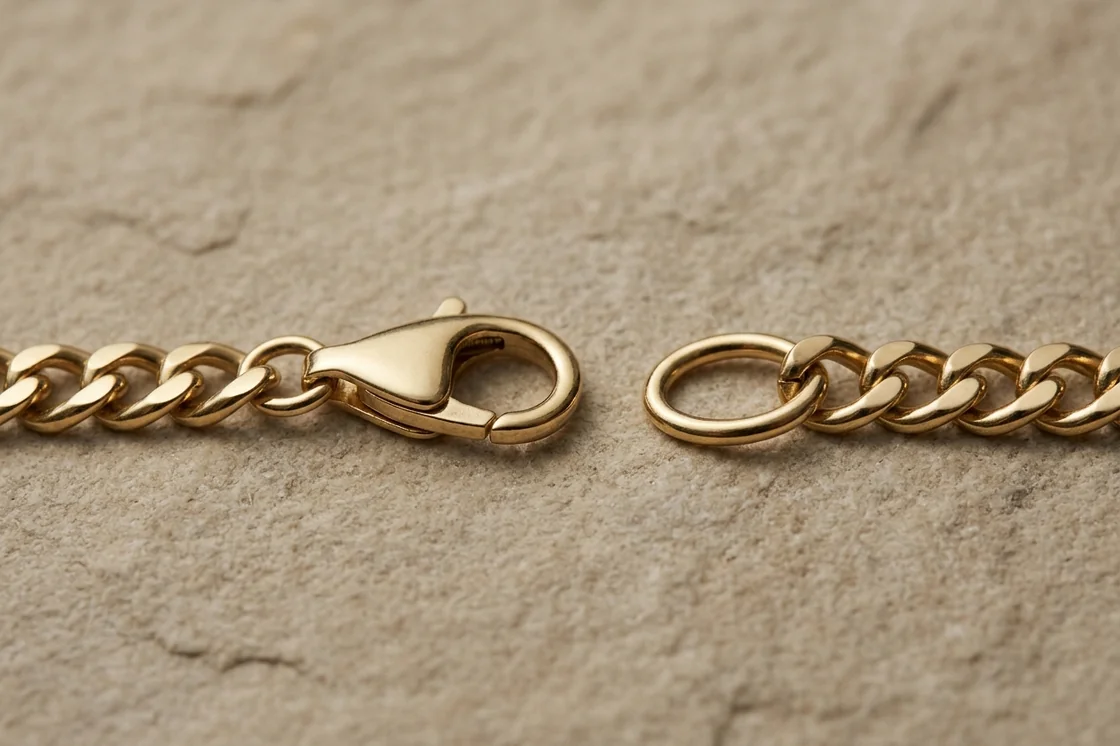
Compare link style, width, length, weight and whether the links are solid or hollow. Work the clasp and check that it closes fully, then look for bent or worn links near the ends. Before ordering a hollow chain, ask whether a jeweler can repair that particular style.
What you get for the 14K price premium
Compare the same weight first
In 12 grams of karat alloy, nominal 10K contains 5 grams of gold and nominal 14K contains 7 grams. That is 40% more gold at equal alloy weight. If the 14K piece weighs less, the difference in gold content can narrow or even reverse. Ask for the weight of the gold alloy, excluding stones and other materials.
The shop price also pays for making and finishing the piece, any stones and the seller’s services. Compare written quotes for the same size and construction before treating the difference in price as a karat premium.
- Confirm the alloy. Ask what is made of karat gold and whether anything is plated.
- Match the build. Compare band dimensions or chain width, length, link construction and actual weight.
- Check service costs. Ask what resizing, clasp replacement or refinishing would cost and what the seller covers.
Color, tarnish and sensitive skin
Compare the finish in the same light
14K yellow gold can look warmer than 10K yellow gold, but different proportions of copper and silver can change the shade. A satin finish also reflects light differently from a polish. Compare the actual pieces under the same light. For white gold, ask if it has a rhodium finish. Two pieces can look similar when new and show different underlying tones as that finish wears.
Clean according to the piece
A dull surface may be a film of lotion, fine scratches or tarnish in the alloy. Start with the seller’s instructions for the finish and any stones. GIA’s care guide notes that chlorine bleach can damage gold alloys. Skip abrasive cleaners and ask a jeweler about persistent discoloration, especially on a plated piece.
Ask about nickel in the parts that touch skin
Either karat can contain different alloying metals. If you know you react to nickel, follow the American Academy of Dermatology’s advice on avoiding nickel exposure. Ask for written confirmation for the band, clasp or earring posts that touch you. White gold can use nickel or another whitening metal, and a surface finish can wear. The karat number tells you about gold content only.
Which karat should you buy?
If you are also considering a higher-karat alloy, compare 14K and 18K gold.
Rings
Budget for a sound band
Compare shank thickness, fit and whether it can be resized. If ordering online, start by measuring a ring that already fits, then confirm size with the seller. Pay extra for 14K if the build suits you and you prefer that specific alloy and finish.
Chains
Compare grams and links
Consider 10K when it gives you the link construction and clasp you want within budget. At equal weight, choose 14K when the added gold matters and both chains meet the same construction and servicing requirements.
Bracelets
Check the closure first
Pick a closure you can fasten securely and have serviced. For a stone-set design, use the tennis bracelet buying guide to check the settings as well. A karat upgrade is worthwhile when you also like the construction and finish.
Questions before you buy
Is 10K gold real gold?
Yes. A 10K gold alloy contains about 41.7% gold by weight. A product described as 10K gold plated uses that alloy on the surface. Read the description for the underlying material and whether the piece is hollow.
Does 10K gold tarnish faster than 14K?
It can, but there is no fixed timetable. 10K has a larger share of other metals, and the specific blend, finish and exposure affect how the surface changes. If a piece goes dull, check for residue or scratches before assuming it has tarnished.
Can I wear 10K and 14K jewelry together?
Yes. If you want two rings or chains to match, compare them side by side in daylight. Pieces that rub against one another can show wear where they touch, even if both have the same karat mark.
What if the clasp stamp and listing disagree?
Ask the seller to identify the alloy of the links as well as the clasp. A replacement clasp can carry a different mark. If a used piece has conflicting descriptions and its value matters, ask a jeweler to assess it before purchase.
Can I wear 10K or 14K gold in the pool?
Take either off before swimming. Chlorine exposure can damage gold alloys, and a loose piece can slip off in the water. Follow the maker’s care instructions if the piece has stones, a finish or mixed materials.
Will 14K gold always sell for more secondhand?
At the same alloy weight, 14K contains more gold. A secondhand buyer may also consider actual weight and verified purity, the setting, condition, maker and whether they are buying it as jewelry or for its metal. Ask which basis they use before comparing offers.