Types of Bracelets
Start with the bracelet’s shape and how it bends. Compare eight common types by their links, openings, or strands. Then check how the piece goes on and sits on the wrist.

Flexible links and strands
Look for what repeats: links, settings, mesh, or beads.
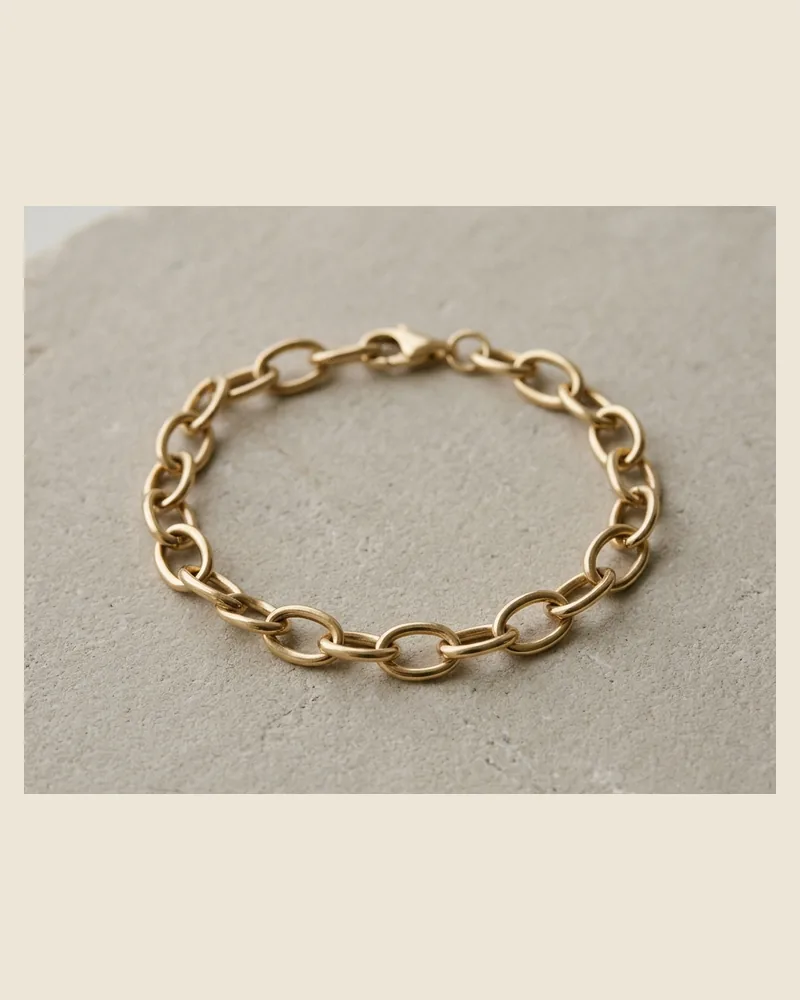
Chain bracelet
Individual links interlock and drape. A cable chain has open oval links. Other link shapes can lie flatter or make a denser band.
- Closure
- Lobster or spring ring
- Movement
- Moves freely at the links
- Useful for
- Low-profile layering
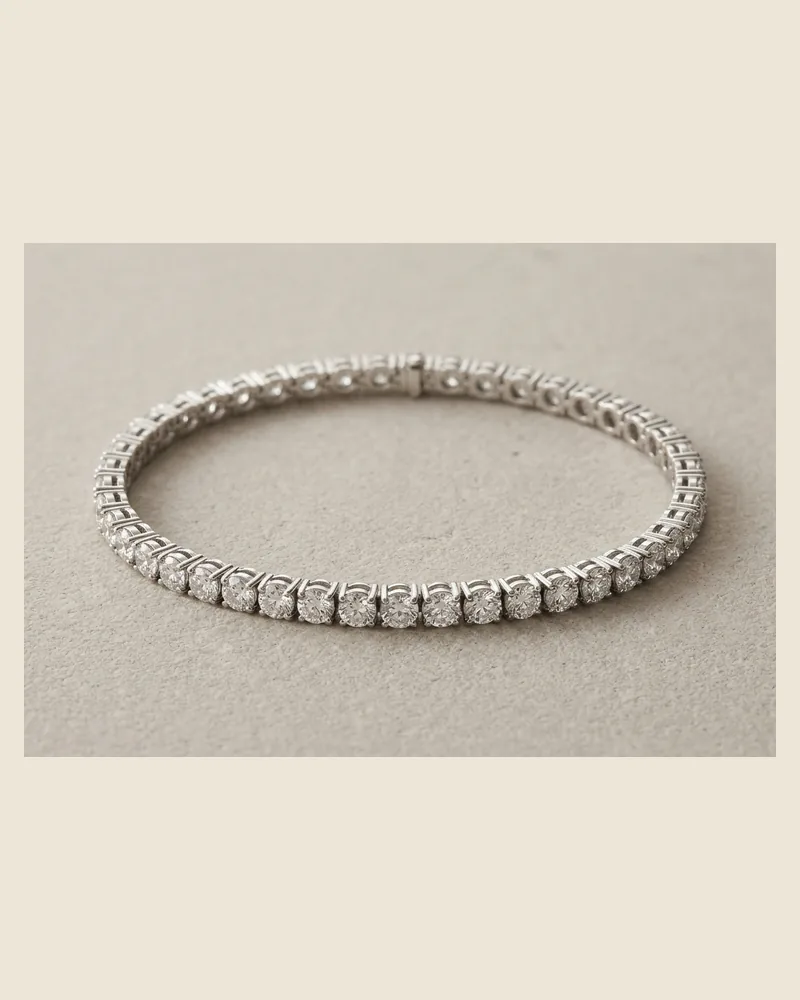
Tennis bracelet
A row of closely spaced gemstones runs along individually linked settings. The line stays visible as the bracelet articulates.
- Closure
- Box clasp, sometimes with a safety catch
- Movement
- Bends between settings
- Useful for
- A continuous line of sparkle
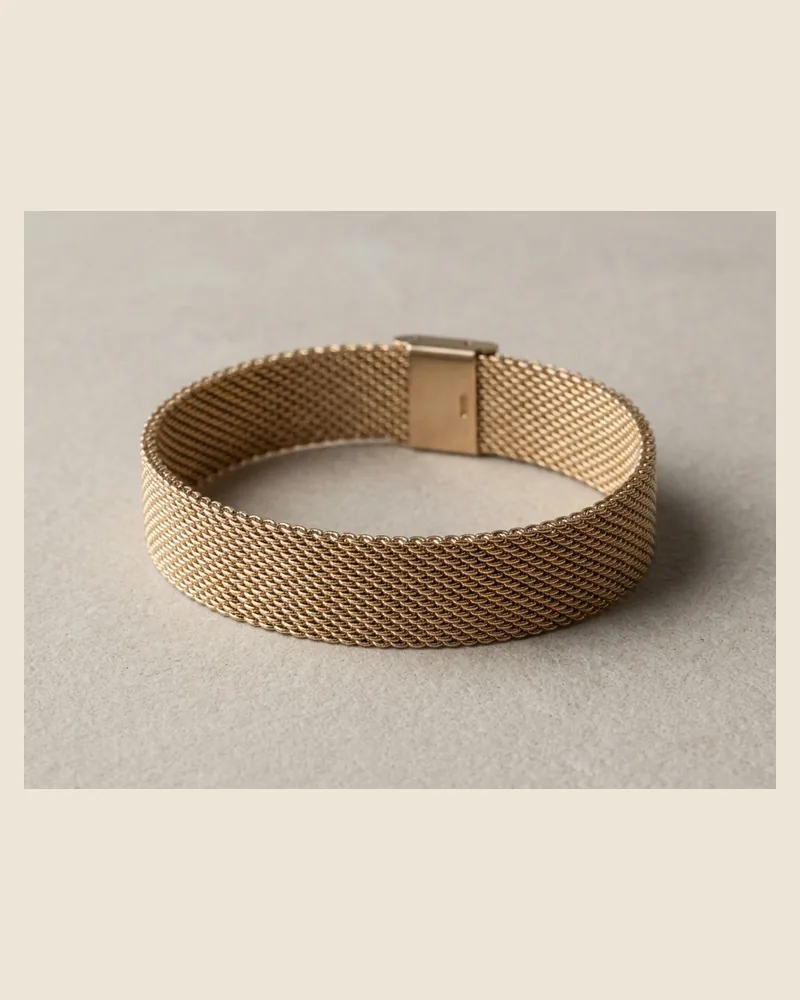
Mesh bracelet
Many fine interlaced metal loops or wires form a close, fabric-like band. It usually bends as a ribbon instead of at large visible joints.
- Closure
- End clasp or model-specific slider
- Movement
- Drapes as a thin ribbon
- Useful for
- An even, broad surface
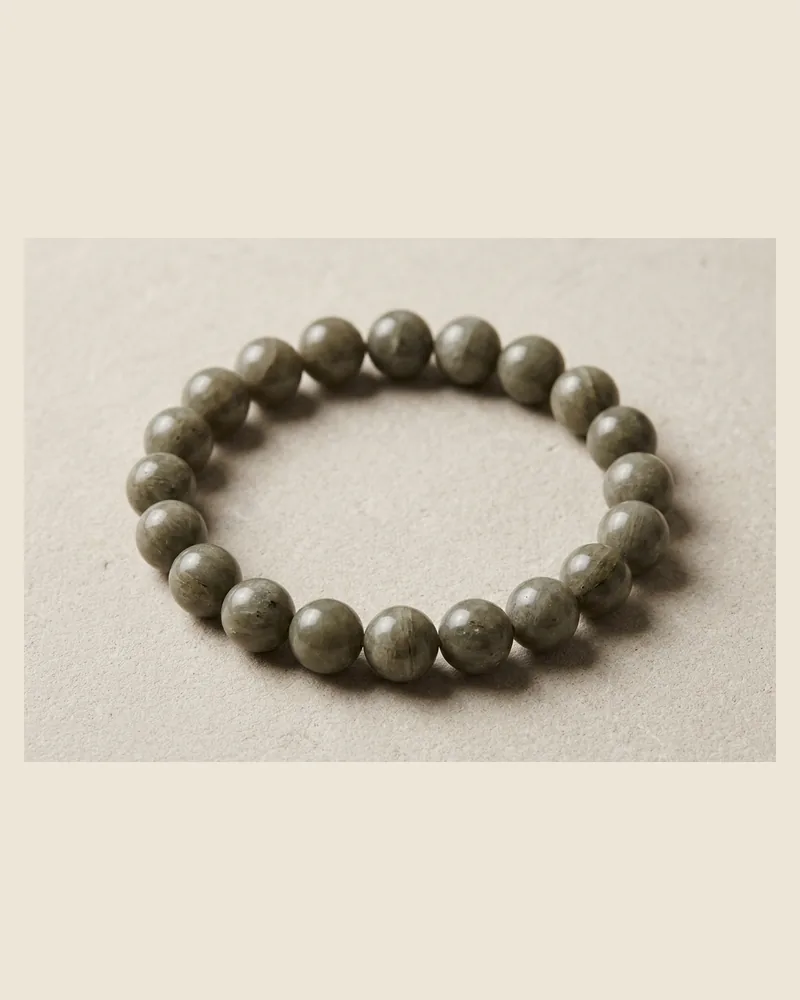
Beaded bracelet
Drilled beads sit on a cord, wire, or elastic. This illustrated loop has no visible clasp. Other versions have a separate closure.
- Closure
- Elastic loop or a clasp
- Movement
- Turns at the gaps between beads
- Useful for
- Color and texture
Rigid shapes
A bangle forms a hoop. An open cuff retains a gap.
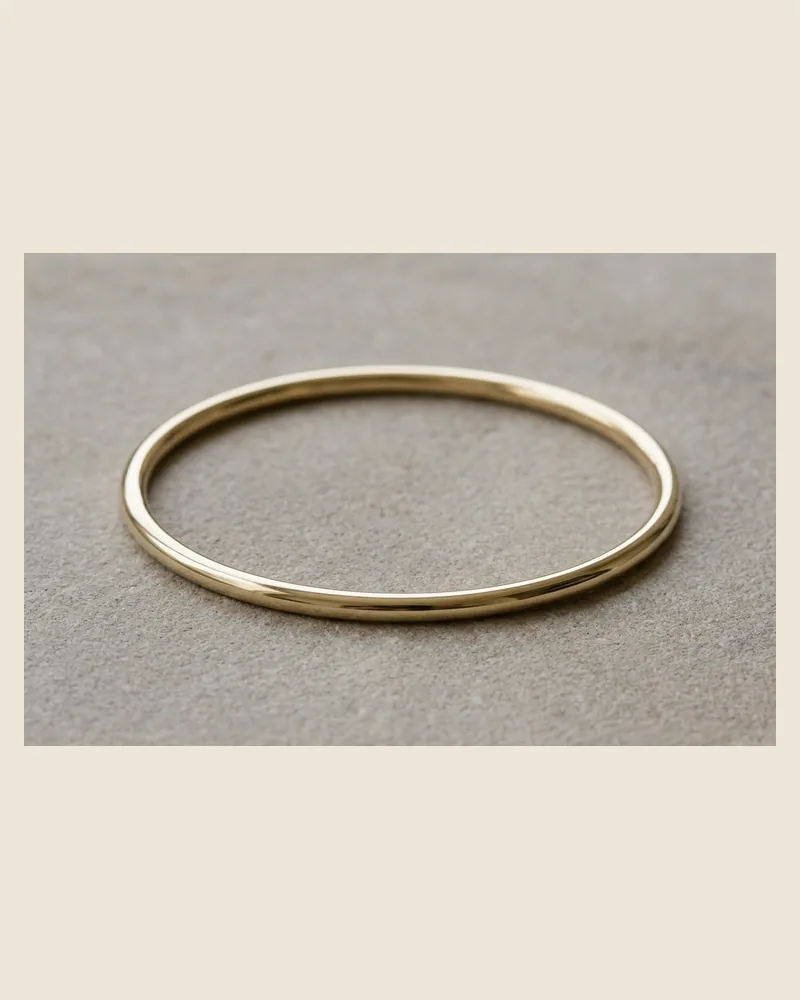
Bangle
A bangle keeps its shape. A closed slip-on bangle passes over the hand. A hinged bangle opens for entry and closes into a rigid loop.
- Closure
- None for slip-on; latch for hinged
- Movement
- Rigid, even when hinged
- Useful for
- Clean lines or a stack
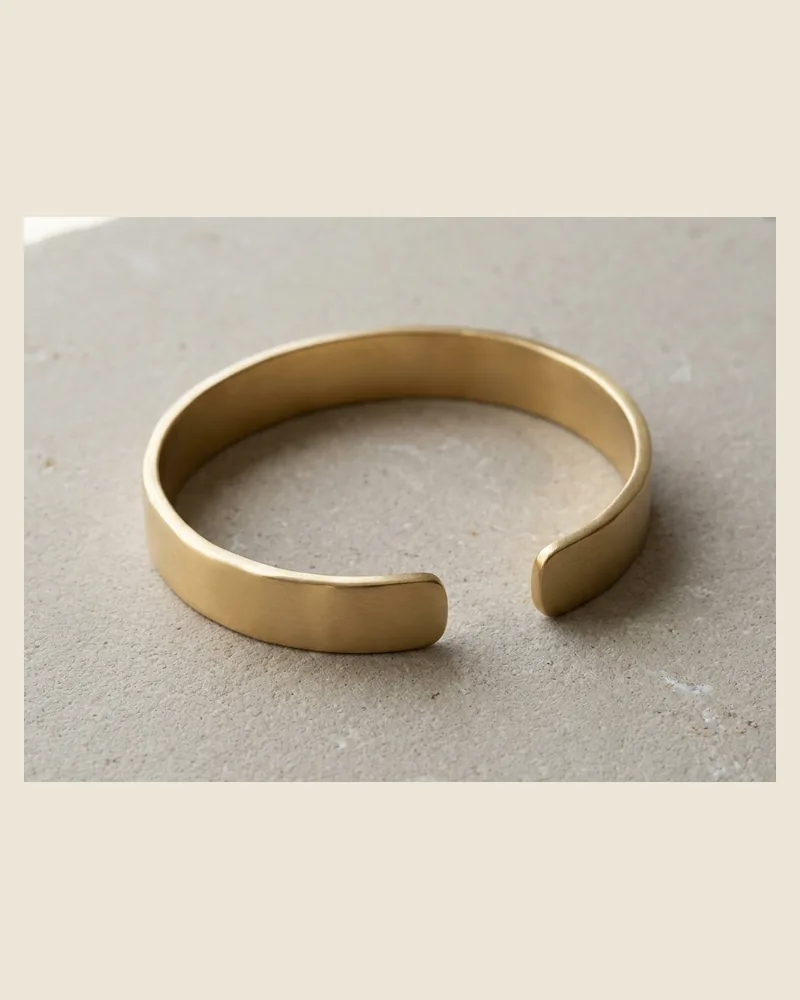
Cuff bracelet
An open cuff has a permanent gap between its ends. It goes on from the side and retains its curve around the wrist.
- Closure
- Typically none on an open cuff
- Movement
- Mostly rigid at the wrist
- Useful for
- A defined silhouette or statement
Wraps and soft bands
One wraps in several turns. The other gets its shape from flexible cord or thread.
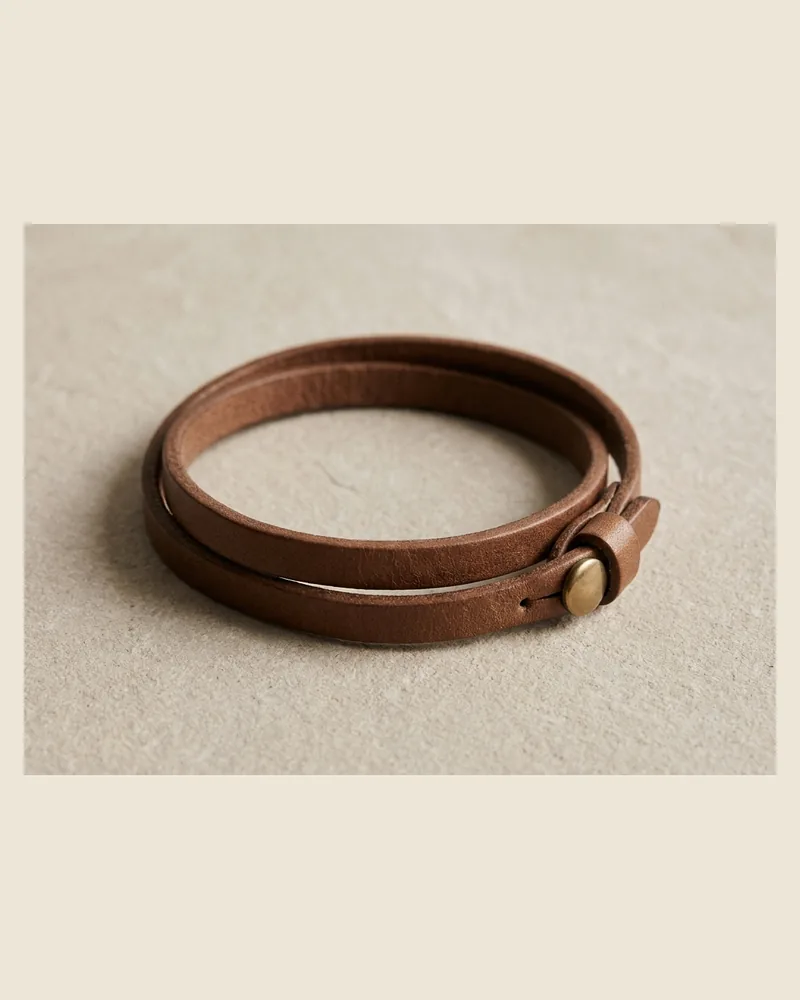
Wrap bracelet
A longer strap or strand makes more than one turn around the wrist. The turns belong to the same piece.
- Closure
- Button and loop, hook, or buckle
- Movement
- Follows the wrist in several turns
- Useful for
- A layered look from one piece
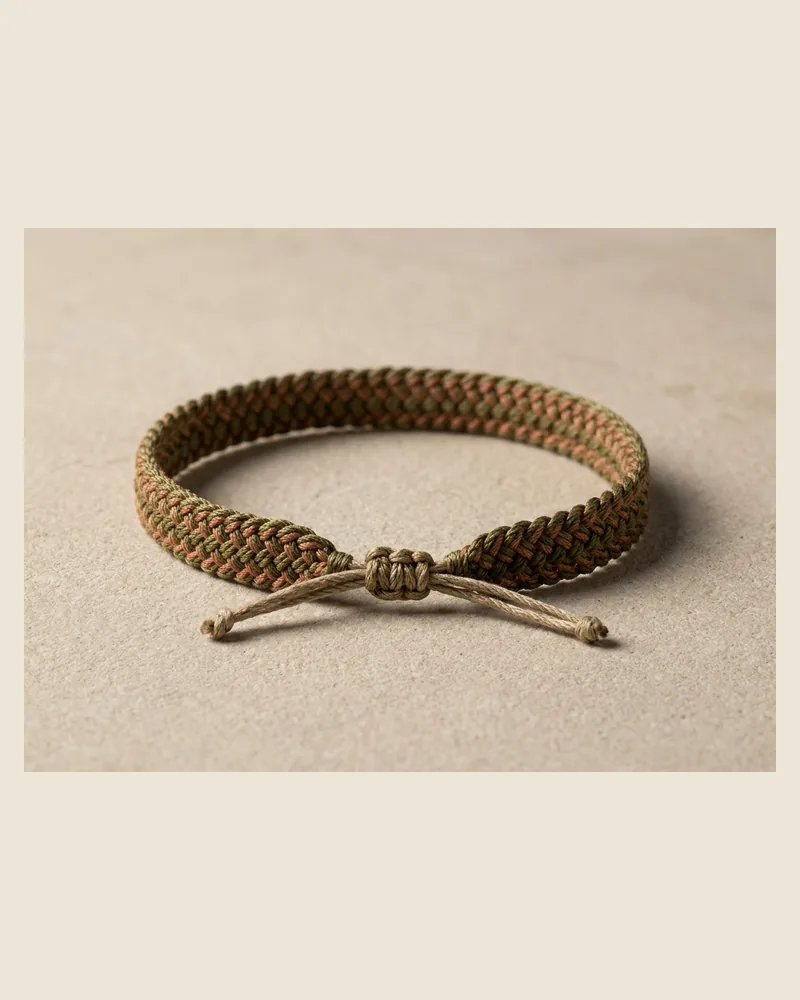
Cord and friendship styles
Cord can form the whole band. Friendship bracelets often use woven or knotted thread, with plain ties or adjustable ends.
- Closure
- Ties, sliding knots, or a clasp
- Movement
- Soft, flexible band
- Useful for
- Casual or adjustable wear
The catalog uses similar viewing angles and framing to show construction. See Jewelers of America’s overview for common chain, tennis, and bangle forms.
What bends, opens, or adjusts?
These diagrams show where movement happens. A hinge that opens a rigid hoop serves a different purpose from joints that let a bracelet drape.
Links move at the joint
Separate units rotate a little at their connections. That is how a chain or a line of stone settings follows the wrist.
A hoop and an open cuff
A slip-on hoop goes over the hand. An open cuff enters from the side. A hinged bangle opens at a joint and keeps a rigid shape when closed.
A slider changes the loop
Two ends pass through a slider. Moving the ends through it changes the loop. Bolo is a common name for this adjustment on a bracelet.
Schematic examples without a measurement scale. Closure details vary by model. Blue Nile’s bracelet guide shows several mechanisms and their basic operation.
Bracelet types compared
Use the fit column to see how each piece goes on or sits. Exact fit depends on the bracelet’s dimensions and your wrist.
| Type | Construction and flexibility | Common closure | Fit | Useful for | Watch for |
|---|---|---|---|---|---|
| Chain bracelet | Flexible interlocking links | Lobster or spring ring | Drapes; profile varies | Low-profile layering | Fine chains can snag or tangle. |
| Tennis bracelet | Articulated stone settings | Box clasp, sometimes with a safety catch | Follows the wrist curve | A continuous line of sparkle | Settings and clasp need inspection. |
| Mesh bracelet | Fine interlaced metal | End clasp or model-specific slider | Lies broad and relatively flat | An even, broad surface | A kink or a snag can distort fine mesh. |
| Beaded bracelet | Beads threaded on a flexible strand | Elastic loop or a clasp | Bead size affects inside room | Color and texture | Elastic and non-stretch strands fit differently. |
| Bangle | Rigid band, circular or oval | None for slip-on; latch for hinged | Closed type clears hand first | Clean lines or a stack | A slip-on must clear the widest part of the hand. |
| Cuff bracelet | Rigid band with an open gap | Typically none on an open cuff | Enters at the side of the wrist | A defined silhouette or statement | The size and position of the gap matter. |
| Wrap bracelet | Flexible strap or strand with multiple turns | Button and loop, hook, or buckle | Turns share one closure | A layered look from one piece | Turns can shift or feel bulky under a cuff. |
| Cord and friendship styles | Soft cord or textile body | Ties, sliding knots, or a clasp | Ease depends on the closure | Casual or adjustable wear | Tails and knots can sit against a sleeve. |
When two bracelet names both apply
A shop may name a bracelet for its body, closure, material, or design. Read the name as a set of clues.
- Link, Figaro, Cuban link, and rope
- Link is a broad word for connected units. Figaro alternates a longer link with shorter ones. Cuban belongs to the flattened curb family. Rope describes links arranged to look like a twisted cord.
- Charm, ID, and Claddagh
- A charm adds a decorative element and an ID style has a name or identification plate. A Claddagh describes a heart, hands, and crown motif. These details can appear on flexible or rigid bodies.
- Pearl, leather, and cord
- Pearl names the material of the beads or accents. Leather might make a wrap, a flat strap, or part of a mixed bracelet. Cord can form the body or carry beads and charms.
- Bolo and slider
- These terms describe adjustable closures. A slider can change the loop on a cord, a chain, or a bracelet with set stones.
Names can overlap even in museum records. The Smithsonian identifies this open-ended cuff by Art Smith by its title, “Link.” Metal labels are another layer. Compare gold filled and gold plated when those are the terms on the listing.
Which style suits how you wear jewelry?
Everyday and minimalist
Low-profile chain or plain bangleCheck how the closure and edges sit under your usual sleeve.
Formal occasions
Tennis bracelet or polished bangleChoose between a continuous line of stones and a plain, defined outline.
Layering and stacking
Fine chain, bead strand, or wrapConsider whether several pieces move separately or one piece creates the layers. Check for metal rubbing on settings.
Adjustable fit
Slider or sliding-knot cordCheck the full range and any extra tails. A fixed cuff keeps its own opening.
Statement jewelry
Broad cuff or mesh bandA cuff holds its outline. Mesh reads as a broad surface that bends with the wrist.
A gift
Verify fit and the closure firstAn adjustable style can help when the size is uncertain. For a slip-on bangle, check the hand opening as well.
Bracelet style questions
Can one bracelet belong to two types?
Yes. A chain can carry charms, and a pearl strand can wrap. Start with what makes the piece bend or hold its shape. Then add the terms for decoration, material, or closure.
Is every bracelet with diamonds a tennis bracelet?
No. A tennis bracelet normally forms a flexible line of closely set stones. Diamonds on a rigid hoop or in widely spaced stations can describe different constructions.
What are the bracelets without clasps called?
A rigid closed loop may be a slip-on bangle, a rigid open band may be a cuff, and a flexible bead loop may be a stretch bracelet. Look at the body and how it goes on.
Do mesh and flat chain mean the same thing?
Mesh describes fine elements interlaced into a fabric-like surface. A flat chain can use larger identifiable links. Product names overlap, so zoom in on the repeating units before deciding.
Does an adjustable bracelet fit every wrist?
No. Its opening size and adjustment range still matter. Check that it opens far enough to put on and closes without excess tails or a tight band.
Can you mix a rigid bangle with flexible bracelets?
Yes. Put them on together and move your wrist before deciding. Leave room for the flexible piece to drape, and check whether the rigid band rubs edges, charms, or stone settings.